


Security teams drown in alerts. Engineering teams struggle to fix them without breaking production. This disconnect costs organizations time, resources, and significantly increases risk.
Traditional cloud security tools excel at detection. They scan environments, identify misconfigurations, vulnerabilities, and compliance deviations, then present these as alerts. This identification is crucial, yet it's only half the battle. The real challenge begins when these alerts pile up, creating a backlog that overwhelms operational teams and leaves critical exposures unaddressed for extended periods. This remediation gap isn't just an inconvenience. It's a direct path to compromise.
Understanding the operational chasm between detection and effective remediation is key to building a more resilient cloud security posture. It requires a shift from simply finding problems to systematically fixing them, quickly and safely.
The Alert Overload Problem in Cloud Security
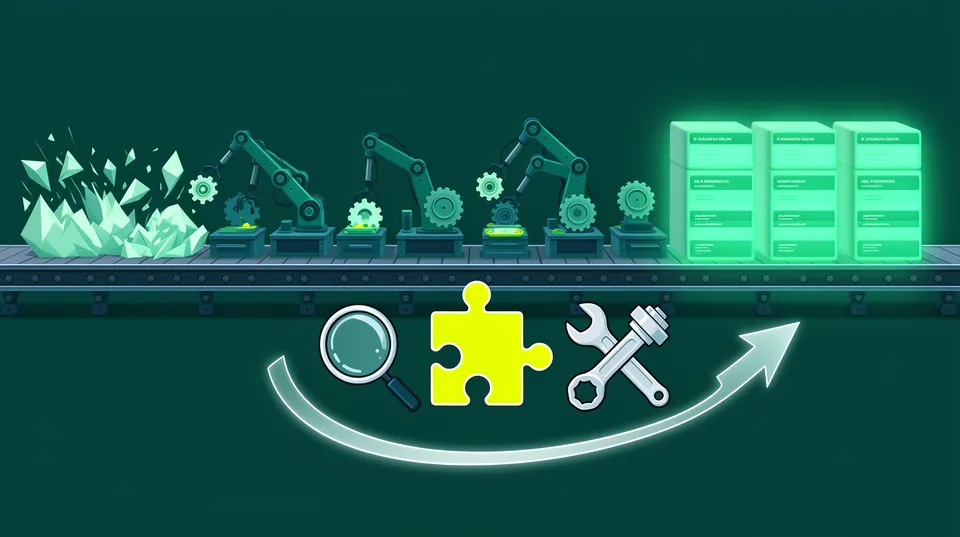
Cloud infrastructure complexity grows daily. Modern enterprises operate across multiple cloud providers like AWS, Azure, and GCP, managing thousands of services and configurations. This distributed, environment generates a torrent of security findings from CNAPP (Cloud Native Application Protection Platform) solutions such as Wiz, Orca Security, Palo Alto Cortex Cloud, and SentinelOne Singularity or even traditional vulnerability scanners like Qualys, Nessus, or Rapid7. While these tools are essential for visibility, they often leave security teams grappling with millions of alerts. A recent Tamnoon analysis of 14.86 million CNAPP findings across hundreds of enterprise environments and every major cloud illustrates the sheer volume of data involved. This volume creates alert fatigue. Security engineers spend more time triaging and assigning tasks than actually remediating.
This alert fatigue directly impacts mean time to remediation (MTTR). Organizations can't fix what they can't effectively prioritize or operationalize. The result is a growing backlog of unfixed vulnerabilities and misconfigurations that attackers can exploit. This creates a significant drag on operational efficiency and a heightened risk profile.
Why Detection Isn't Enough
Detection tools provide a critical service by identifying security flaws. They help security teams understand their exposure. However, the output from these tools needs another layer of orchestration to translate into concrete, production-safe action. A finding that an S3 bucket is publicly accessible, for example, requires more than just an alert. It needs a carefully planned remediation that considers the bucket's purpose, its dependencies, and the potential impact of changing its permissions. Blindly applying a fix can break applications, disrupt business operations, and erode trust between security and development teams.
The operational gap appears when an alert from a CSPM like Wiz or Prisma Cloud needs to be routed to the correct DevOps team, assessed for impact, and then a safe remediation applied. This multi-step, often manual, process introduces delays and potential for human error. Without a structured approach to remediation, the value of even the most advanced detection tools diminishes rapidly.
Introducing Remediation Operations (RemOps)
Remediation Operations, or RemOps, is a methodology and set of practices designed to systematically close the gap between detection and remediation. It focuses on transforming security alerts into actionable, production-safe fixes, efficiently and scalably. RemOps provides the framework needed to operationalize security findings from various cloud security platforms, ensuring that vulnerabilities don't linger.
RemOps It's making them more effective. It integrates with your current CNAPPs, CSPMs, and vulnerability scanners, pulling their findings into a centralized remediation workflow. This approach recognizes that identifying a problem is only the first step. Fixing it quickly and without collateral damage is the ultimate goal.
The Pillars of Effective RemOps
Effective RemOps relies on several key pillars:
- Centralized Alert Aggregation: Consolidating alerts from all security tools (e.g., Orca Security, Upwind, Cyera) into a single pane of glass allows for unified prioritization and management.
- Risk-Based Prioritization: Not all vulnerabilities are equal. RemOps uses context-aware prioritization to focus efforts on the most critical risks that pose the greatest threat to crown jewels or business continuity. This involves considering exploitability, blast radius, and asset criticality.
- Automated Remediation Workflows: Defining and automating standard operating procedures for common remediation tasks reduces manual effort and speeds up response times. This includes using tooling that can programmatically apply fixes.
- Human-in-the-Loop Oversight: For complex or high-risk remediations, human expertise remains crucial. RemOps integrates human validation points to ensure that automated fixes don't inadvertently cause production outages.
- Production-Safe Execution: Remediation must be non-disruptive. This pillar emphasizes pre-validated playbooks and rollback capabilities to ensure changes don't introduce new problems.
- Continuous Feedback Loop: Remediation isn't a one-time event. RemOps establishes feedback loops to continuously improve playbooks, reduce false positives, and refine detection rules.
By establishing these pillars, organizations can move from reactive firefighting to proactive, structured remediation. This proactive stance significantly reduces exposure windows and strengthens overall security posture.
Tamnoon's Approach to Smarter RemOps
Tamnoon understands that simply identifying problems doesn't solve them. The platform bridges the remediation gap by focusing on agentic, production-safe remediation at scale. It transforms raw alerts from your existing security ecosystem into executable fixes, eliminating the operational overhead that plagues many security teams.
Tamnoon integrates with a wide array of cloud security tools, including AWS Security Hub, Azure Defender for Cloud, Google Cloud Security Command Center, Wiz, Orca Security, Prisma Cloud, and many more. It's not a replacement for these tools but an orchestration layer that makes them more actionable. The platform streamlines the entire remediation lifecycle, from alert intake to verified fix.
AI-Powered Remediation Logic
Tamnoon employs AI-powered remediation to analyze security alerts and generate specific, contextual fix-actions. This isn't just about simple automation. It's about intelligent analysis that understands the implications of a vulnerability within your unique cloud environment. For instance, if Wiz flags an S3 bucket with overly permissive public access, Tamnoon's AI-driven logic assesses the bucket's usage, associated applications, and known dependencies to propose a targeted remediation. This might involve tightening ACLs, applying bucket policies, or even identifying if the bucket is unused and can be decommissioned.
# Example: AWS CLI command to restrict S3 bucket public access
# This is a sample action Tamnoon's AI might generate based on context
# Tamnoon would typically apply this via IaC or direct API calls aws s3api put-public-access-block \ --bucket your-s3-bucket-name \ --public-access-block-configuration "BlockPublicAcls=true,IgnorePublicAcls=true,BlockPublicPolicy=true,RestrictPublicBuckets=true"
This automated analysis reduces the cognitive load on security engineers and significantly decreases MTTR. Instead of manually researching every finding and crafting a remediation plan, engineers can review AI-generated proposals, validate them, and execute them with confidence. This is crucial given that 43% of organizations still detect and respond to significant cyberattacks as they happen, indicating a substantial delay in preventative remediation.
Human-in-the-Loop (Expert-led) Control
While AI drives much of the heavy lifting, Tamnoon recognizes the indispensable role of human expertise. For complex remediations or those impacting critical production systems, Tamnoon incorporates a human-in-the-loop mechanism. Tamnoon's cloud experts, or your internal team, can review, approve, and even modify AI-proposed fixes before they're applied. This expert-led oversight ensures that no change breaks production and that all remediations align with your organization's specific operational and security policies. It's a hybrid approach that combines the speed of AI with the precision and accountability of human intelligence.
This collaborative model is for building trust in automation. Teams know that even the most advanced AI operates under human guidance, reducing the fear of unintended consequences. For more on human oversight in remediation, see What is Agentic Remediation.
Production-Safe Playbooks and Ecosystem Integration
Tamnoon s a library of remediation playbooks. These are pre-configured, battle-tested workflows for common cloud threats, such as IAM misconfigurations, S3 bucket exposures, or vulnerable compute instances. Importantly, these playbooks are 'production-safe,' meaning they've been designed and verified to resolve issues without impacting application uptime or Introducing new vulnerabilities. This is achieved through careful testing, idempotent operations, and built-in rollback mechanisms where appropriate.
The platform's ecosystem integration extends beyond just ingesting alerts. Tamnoon can push remediation tasks into existing ITSM systems like Jira or ServiceNow, or trigger CI/CD pipelines to apply Infrastructure as Code changes. This ensures that remediation actions fit naturally into existing DevOps workflows. Suppose a misconfigured security group is detected. Tamnoon can identify the faulty rule, propose a corrected IaC snippet, and then integrate with your GitOps pipeline (e.g., via GitHub Actions or GitLab CI) to apply the change through familiar version control processes. This means developers can review pull requests for security fixes just like they would for feature code, making security a shared responsibility.
# Example: AWS CloudFormation modification to fix an overly permissive Security Group
# This snippet shows a rule restriction for SSH access (port 22) to specific IP ranges
# Tamnoon's playbook might generate similar IaC or apply via API Resources: MySecurityGroup: Type: AWS::EC2::SecurityGroup Properties: GroupName: "MyApplicationSecurityGroup" GroupDescription: "Security group for my application" SecurityGroupIngress: - IpProtocol: tcp FromPort: 22 ToPort: 22 CidrIp: 10.0.0.0/16 # Restricted IP range for SSH - IpProtocol: tcp FromPort: 80 ToPort: 80 CidrIp: 0.0.0.0/0
This integration eliminates the friction points commonly seen between security teams, who identify issues, and development/operations teams, who are responsible for fixing them. It's a critical step in turning security from a bottleneck into an enabler.
Operationalizing Remediation: A Step-by-Step Guide
Implementing smarter RemOps isn't a flip of a switch. It's a strategic shift. Here's a practical approach:
Step 1: Consolidate and Prioritize Alerts
Start by integrating all your cloud security detection tools into a central RemOps platform like Tamnoon. This means connecting Wiz, Orca Security, Prisma Cloud, or any other CNAPPs/CSPMs you use. The goal is to get a unified view of all findings.
Next, define a clear prioritization framework. This framework should consider the severity of the vulnerability, the criticality of the affected asset (e.g., a critical database versus a dev environment resource), and the potential blast radius. Tamnoon's platform automatically applies this context by incorporating asset tags, business criticality, and exploitability scores.
Actionable Tip: Map your critical applications and data stores. Tag these resources in your cloud environment (e.g., Environment: Production, BusinessCriticality: High). Ensure your CNAPP tools ingest these tags. RemOps platforms then use these tags to elevate the priority of findings associated with critical assets.
Step 2: Develop and Standardize Remediation Playbooks
For common issues, create or adapt remediation playbooks. These are predefined sequences of actions to fix specific types of vulnerabilities. For example, an IAM account with excessive permissions might have a playbook that includes:
- Identify the over-privileged policy.
- Generate a least-privilege policy based on actual usage (if possible, using tools like AWS IAM Access Analyzer).
- Test the new policy in a staging environment.
- Propose the policy change for approval.
- Apply the new policy.
- Verify the fix.
- Create a documented audit trail.
Tamnoon provides a library of such production-safe playbooks that you can customize. The focus here's on consistency and repeatability. Don't build everything from scratch. Leverage existing templates and iterate.
Actionable Tip: Start with the top 5-10 most frequent and impactful findings from your CNAPP. For each, document the manual remediation steps. Convert these steps into a structured playbook within your RemOps platform, identifying decision points and automated actions.
Step 3: Implement Automated Remediation with Human Oversight
Automate as much of the remediation process as possible, always maintaining a human-in-the-loop for high-risk changes. You don't want to accidentally shut down production because of an overzealous script. Tamnoon's AI-powered remediation excels here, generating precise fix proposals. Your team or Tamnoon's experts can then review these proposals.
For fully automated scenarios, focus on low-risk, high-volume issues (e.g., deleting untagged resources in dev environments, rotating non-critical API keys). For anything affecting production, ensure an explicit approval step.
# Scenario: Automated deletion of untagged resources in a non-prod environment
# This is a sample workflow excerpt that Tamnoon might execute based on a playbook # Step 1: Identify untagged EC2 instances in 'dev' environment
resources=$(aws ec2 describe-instances --filters "Name=instance-state-name,Values=running" --query "Reservations[*].Instances[?not_null(Tags[?Key==Project]) == false && contains(Tags[?Key==Environment].Value, dev)].InstanceId" --output text) if [ ! -z "$resources" ]; then echo "Identified untagged instances in dev: $resources" # Step 2: Stop and terminate instances after a grace period (e.g., 24 hours warning to resource owner) # This is a simplified example; Tamnoon would involve notification/approval steps # aws ec2 stop-instances --instance-ids $resources # aws ec2 terminate-instances --instance-ids $resources
else echo "No untagged instances found in dev environment."
fi
Actionable Tip: Classify remediations by risk level. Implement direct automation for low-risk, non-production findings. For medium-risk, introduce single-approver workflows. For high-risk, production-critical findings, mandate multi-level approval or direct expert review. Leverage Tamnoon's built-in human-in-the-loop features to manage these workflows.
Step 4: Integrate with DevOps Workflows
Remediation shouldn't be an isolated process. Integrate it into your existing CI/CD pipelines and change management processes. If a fix involves an Infrastructure as Code (IaC) change, have the RemOps platform generate a pull request (PR) in your Git repository. This lets DevOps teams review the change in a familiar context, run their own tests, and merge it when ready.
This approach fosters collaboration and ensures that security fixes are treated as first-class citizens in the development lifecycle. It shortens the feedback loop and helps inject security earlier in the process.
Actionable Tip: Configure webhooks or API integrations between your RemOps platform and your source code management (e.g., GitHub, GitLab) and CI/CD tools (e.g., Jenkins, GitHub Actions). When a remediation requires an IaC change, automatically create a PR with the proposed fix and link it back to the original security finding.
Step 5: Measure, Monitor, and Refine
Continuously monitor your remediation efforts. Track key metrics like MTTR, remediation success rates, and the number of open vulnerabilities. Use this data to identify bottlenecks, improve playbooks, and tune your prioritization logic. A Zafran report indicates a 44-day remediation gap, emphasizing the need for constant vigilance and improvement. Tamnoon provides comprehensive reporting dashboards to give you this visibility, helping you understand your security posture at a glance and track progress over time.
Regularly review your playbooks and automation scripts. Cloud environments change rapidly, and what worked last month might need an update this month. This continuous improvement cycle is fundamental to sustaining an effective RemOps program.
Actionable Tip: Establish weekly or bi-weekly meetings between security and DevOps teams to review remediation backlogs, discuss challenging fixes, and identify areas for process improvement. Use Tamnoon's reporting features to drive these discussions with concrete data. Focus on improving metrics like the time from alert detection to successful remediation closure.
The Impact of Smarter RemOps
Adopting a smarter RemOps strategy powered by platforms like Tamnoon offers tangible benefits beyond simply reducing alerts. It fundamentally transforms how organizations manage cloud security risk.
Reduced Mean Time to Remediation (MTTR)
By automating much of the assessment and execution of fixes, RemOps drastically shrinks the time it takes to address vulnerabilities. This is critical because every minute a critical vulnerability remains open is another minute an attacker has to exploit it. When you can move an IAM misconfiguration or an S3 exposure from detection to resolution in minutes or hours instead of days or weeks, your attack surface shrinks proportionally. For further reading, check out shrinking your cloud MTTR for misconfigurations.
Increased Operational Efficiency
Security and engineering teams become more efficient. SecOps engineers can focus on strategic initiatives and complex threats, rather than spending their days triaging alerts and chasing down owners. DevOps teams receive pre-validated, actionable remediation requests that integrate into their existing workflows, reducing friction and context switching. This frees up valuable engineering cycles that previously were lost to security firefighting.
Enhanced Security Posture
With a faster, more consistent remediation process, your overall security posture improves dramatically. Fewer vulnerabilities remain unaddressed, reducing the likelihood of successful attacks. This proactive stance moves organizations from a reactive security model to one that actively minimizes exposure, leading to a more resilient and secure cloud environment. A report indicates a 25x remediation gap in cybersecurity findings, highlighting how significant this improvement can be.
Improved Collaboration Between Teams
RemOps fosters better collaboration between security, development, and operations teams. By integrating remediation into existing engineering workflows and providing clear, actionable tasks, it helps break down silos. This shared responsibility and streamlined communication mean security becomes a natural part of the development lifecycle, rather than an afterthought. It also helps in conquering alert fatigue.
Shifting from solely detecting issues to orchestrating their safe, rapid, and verifiable remediation is no longer optional. It's an imperative for any organization operating in the cloud. Reduce your MTTR by automating remediation with Tamnoon.

Tamnoon helps security teams remediate cloud risks faster with AI-augmented managed services — combining human expertise with automation so nothing falls through the cracks.
Learn more at tamnoon.ioFAQs
What is the primary difference between detection and remediation in cloud security?
Detection involves identifying security vulnerabilities, misconfigurations, or threats using tools like CNAPPs, CSPMs, or vulnerability scanners. It tells you what's wrong. Remediation, on the other hand, is the process of fixing those identified issues. It's the execution of changes to rectify the flaw, remove the threat, or bring configurations back into compliance. Many organizations struggle with the transition from detection, which often generates a high volume of alerts, to effective, production-safe remediation that actually closes the security gap.
How does Tamnoon address 'alert fatigue' for security teams?
Tamnoon addresses alert fatigue by moving beyond simple detection to actionable remediation. Instead of just presenting a list of alerts, it analyzes these alerts using AI-powered logic to generate specific, contextual fix-actions. This reduces the manual effort required for triage and research. By orchestrating automated remediations with human-in-the-loop oversight, security teams can focus on validating fixes and addressing high-level strategic concerns, rather than sifting through and manually assigning thousands of individual findings.
What does 'production-safe remediation' mean in the context of Tamnoon?
'Production-safe remediation' means that security fixes are applied in a way that avoids disrupting operational services or introducing new vulnerabilities. Tamnoon achieves this through several mechanisms: using pre-configured, battle-tested remediation playbooks, incorporating human-in-the-loop validation for complex changes, and integrating with existing CI/CD and change management workflows. The platform prioritizes impact assessment and relies on verified code and scripts designed to maintain application uptime, offering rollback capabilities where necessary.
Can Tamnoon integrate with my existing cloud security tools?
Yes, Tamnoon is designed for broad ecosystem integration. It acts as an orchestration layer that works with your existing cloud security solutions like Wiz, Orca Security, Prisma Cloud, Palo Alto Cortex Cloud, SentinelOne Singularity, AWS Security Hub, Azure Defender for Cloud, and Google Cloud Security Command Center. Tamnoon ingests alerts and findings from these tools and then drives the remediation process, translating those alerts into actionable fixes without requiring you to replace your current detection infrastructure.
What role does AI play in Tamnoon's remediation process?
Tamnoon uses AI to power its remediation logic. This AI analyzes security alerts and generates specific, contextual fix-actions. It assesses the implications of a vulnerability within your unique cloud environment, considering dependencies and potential impact. This intelligent analysis helps in proposing precise remediation steps, whether it's adjusting an IAM policy, reconfiguring a storage bucket, or updating a network rule. The AI streamlines the process, making remediation faster and more efficient, often presenting solutions that would otherwise require significant manual research.