
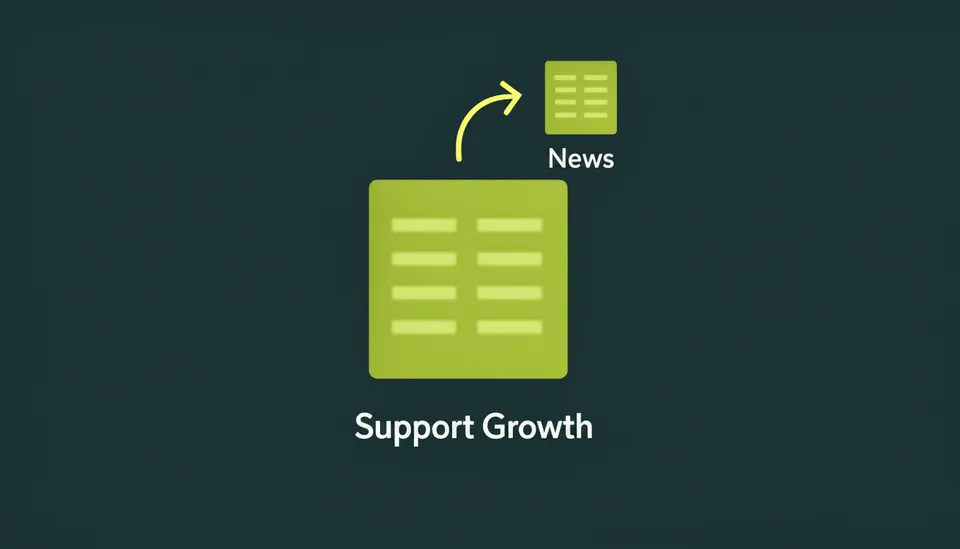

NIST's recent operational changes to the National Vulnerability Database (NVD) aren't just an administrative tweak; they're a seismic shift in how we'll consume vulnerability intelligence. Historically, the NVD has been the authoritative source for Common Vulnerabilities and Exposures (CVEs), providing detailed analysis, Common Vulnerability Scoring System (CVSS) metrics, and proper categorization. But the sheer volume of new CVEs has pushed the system to its breaking point. This isn't just about NIST falling behind; it's about a foundational change in how we must approach vulnerability management.
The problem is stark: the 2026 volume of CVE submissions is running 33% above Q1 2025. NIST simply can't keep up with enriching every single CVE with the historical detail we've come to expect. They've had to adapt, and that adaptation means we can't rely on the NVD for the same level of comprehensive, curated analysis as before, especially for less critical, non-Kev (Known Exploited Vulnerabilities) entries. This creates a data vacuum that security teams now need to fill themselves, or find tools that do.
So, what's changing? NIST has publicly stated they're updating NVD operations to address record CVE growth, implementing a new risk-based model. They're prioritizing critical vulnerabilities known to be exploited in the wild, or those with immediate, high-impact implications. They've enriched nearly 42,000 CVEs "faster than ever," which sounds great, but it implicitly means many others aren't getting the same treatment. We're getting a more focused, yet less exhaustive, NVD. That has profound implications for how we discover, prioritize, and remediate vulnerabilities in our cloud and on-prem environments.
Understanding the Operational Shift
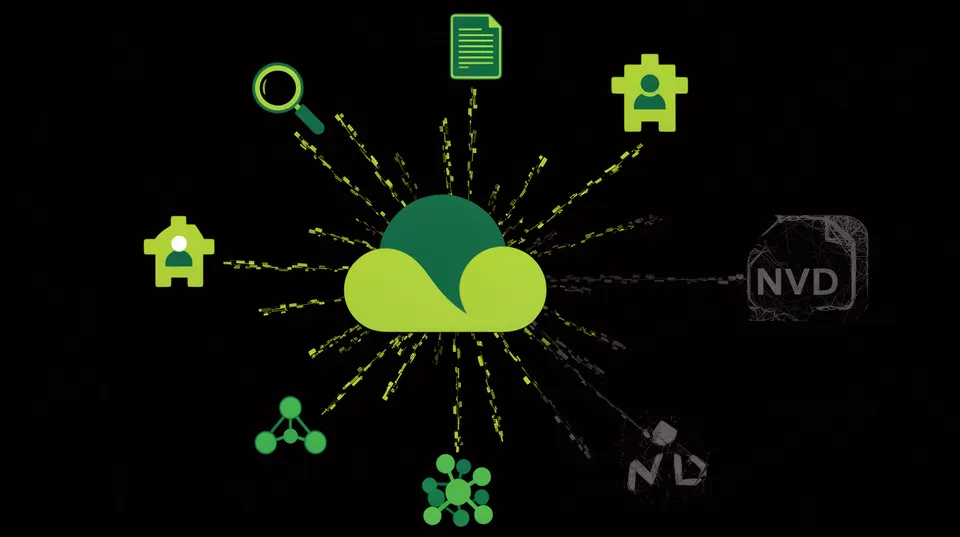
NIST's previous model aimed for comprehensive analysis of every CVE. They’d provide the description, affected software, CVSS v3.x scores, and often links to advisories and mitigation strategies. This was the gold standard for vulnerability intelligence. Now, with the overwhelming influx, they're narrowing their scope. Think of it as a triage system where only the most severe cases get full attention.
The practical upshot is that many CVEs, particularly those assessed as lower criticality or without immediate evidence of active exploitation, will receive minimal NVD enrichment or no enrichment at all. This leaves a significant gap for organizations that previously relied solely on NVD for detailed vulnerability metadata. Your vulnerability scanners might still identify a CVE, but the rich context,the “why it matters to us” and “how bad is it really”,will be absent from the NVD data feed.
This isn't just a hypothetical problem. If your vulnerability management program is built around ingesting NVD data and using its CVSS scores as the primary driver for prioritization, you're about to hit a wall. Many CVEs will report 'N/A' or default scores, making it impossible to perform meaningful risk-based prioritization based on NVD alone. This means your current approach to shrinking your cloud vulnerability MTTR is now compromised.
Impact on Vulnerability Management Programs
Without full NVD enrichment, several common practices become problematic:
- Automated Prioritization: Tools that rely on NVD's CVSS scores for automated prioritization of vulnerabilities will struggle. A missing or generic CVSS score means those vulnerabilities will either be ignored, treated as low priority by default, or require manual intervention to assess.
- Compliance Reporting: Many compliance frameworks and internal policies require reporting on vulnerabilities by CVSS score or NVD status. A lack of this data complicates demonstrating due diligence.
- Developer Engagement: When you hand a developer a task to fix CVE-2024-XXXXX, they'll often look to NVD for details. If it's sparse, they'll spend more time investigating, leading to slower remediation cycles and developer frustration.
- Supply Chain Security: Scanners for open-source components often link findings back to NVD. If those links are dead ends for context, assessing the true risk of third-party dependencies becomes harder.
Consider the scale: Oracle, a single vendor, patched 450 vulnerabilities with its April 2026 Critical Patch Update. Each of those needs assessment. Multiply that by countless vendors and open-source projects, and you grasp the immense data challenge NIST faces, and now, so do we.
Actionable Strategies for Cloud Security Architects
This isn't a call for panic, but a definite call for evolving your vulnerability management strategy. Your reliance on the NVD as a sole source of truth must diminish. You need to diversify your intelligence feeds and build more robust internal assessment capabilities.
1. Diversify Vulnerability Intelligence Sources
You can't rely just on NVD. Integrate additional reputable sources into your vulnerability ingestion pipeline.
- Vendor Advisories: Always consult direct vendor advisories (e.g., AWS Security Bulletins, Microsoft Security Response Center, particular open-source project announcement lists). These are often the most up-to-date and provide specific mitigation steps. Automate RSS feeds or API calls where possible.
- CISA KEV Catalog: The Cybersecurity and Infrastructure Security Agency (CISA) publishes a Known Exploited Vulnerabilities (KEV) Catalog. These are vulnerabilities that are actively being exploited in the wild. Prioritize these ruthlessly. Even if NVD data is sparse for some CVEs, if it's in the KEV, it's critical.
- Threat Intelligence Platforms (TIPs): Invest in or integrate with TI platforms that aggregate data from multiple sources, including commercial feeds, dark web monitoring, and exploit databases. These often provide critical context (e.g., exploitability, observed attacks) that NVD might now lack.
- Community Feeds: For open-source components, join relevant community mailing lists, forums, and GitHub discussions. Often, early warning and detailed context emerge here first.
2. Enhance Internal Prioritization with Contextual Data
Since NVD's CVSS scores might be unreliable or missing, you need to build a more sophisticated internal prioritization mechanism. This means moving beyond just the base CVSS score and incorporating environmental context.
- Asset Criticality: Not all assets are equal. A vulnerability on a production database server is far more critical than one on a development-environment ephemeral instance. Tag your assets in your cloud environment based on their business impact (e.g.,
criticality=high,data_classification=PII). Your vulnerability management system needs to ingest these tags. - Exploitability: Is there a known exploit? Is it easily exploitable? Threat intelligence feeds and security researchers often provide exploit POCs (Proof-of-Concepts) or exploitability ratings that go beyond basic CVSS.
- Exposure: Is the vulnerable service publicly exposed? Is it listening on a private subnet? Is it behind a WAF or firewall? Network and cloud configuration data are crucial for assessing exposure.
- Reachability (Lateral Movement): If compromised, what other systems can it reach? Understanding network segmentation and IAM permissions is vital here. This moves beyond the individual vulnerability to a graph-based risk assessment.
You need a system that correlates vulnerability scan findings, asset inventory, cloud configuration, and threat intelligence. Tools for risk-based vulnerability management are becoming essential, not just nice-to-haves.
Example: Cloud Asset Tagging for Prioritization
In AWS, you could use tags like this:
Resources: MyWebServer: Type: AWS::EC2::Instance Properties: ImageId: ami-0abcdef1234567890 InstanceType: t3.medium Tags: - Key: Environment Value: Production - Key: BusinessUnit Value: RevenueGen - Key: Criticality Value: High - Key: PubliclyAccessible Value: True MyInternalDatabase: Type: AWS::EC2::Instance Properties: ImageId: ami-0abcdef1234567890 InstanceType: m5.large Tags: - Key: Environment Value: Production - Key: BusinessUnit Value: RevenueGen - Key: Criticality Value: High - Key: PubliclyAccessible Value: False - Key: DataClassification Value: PII
Your vulnerability management platform should ingest these tags and use them to weight findings. A medium CVSS vulnerability on MyWebServer marked Criticality: High and PubliclyAccessible: True should be prioritized over a high CVSS vulnerability on an internal development instance.
3. Automate Remediation Where Possible
With the increased volume and potentially reduced NVD context, automating remediation for low-to-medium risk vulnerabilities becomes even more critical. You can’t afford to have your security team manually triaging every single CVE without rich NVD context.
- Patch Management Automation: For OS and application vulnerabilities, ensure your patch management systems are robust and scheduled. Automatically apply non-breaking patches to non-production environments first, then production.
- Infrastructure as Code (IaC) Remediation: Identify vulnerabilities that can be fixed by updating IaC templates. For example, if a base AMI has a vulnerability, update your Terraform or CloudFormation to use a patched AMI. This fixes the root cause for all future deployments.
- Cloud Native Fixes: Many cloud misconfigurations, often exposed as vulnerabilities, can be fixed via automation. For instance, closing an overly permissive S3 bucket policy or restricting an overly broad IAM role. Platforms specializing in automated cloud remediation are designed for this.
Example: Automated AMI Update (AWS SSM Patch Manager)
If your EC2 instances are managed by AWS Systems Manager (SSM), you can configure Patch Manager to automatically apply OS patches.
{ "SchemaVersion": "1.0", "Description": "Install security and critical updates weekly", "Type": "PatchBaseline", "Owner": "Self", "OperatingSystem": "AmazonLinux2", "ApprovalRules": { "PatchRules": [ { "PatchFilterGroup": { "PatchFilters": [ { "Key": "CLASSIFICATION", "Values": [ "Security", "CriticalUpdates" ] }, { "Key": "PRODUCT", "Values": [ "AmazonLinux2" ] } ] }, "ApproveAfterDays": 7, "ComplianceLevel": "CRITICAL" } ] }, "GlobalFilters": { "PatchFilters": [ { "Key": "PRODUCT", "Values": [ "AmazonLinux2" ] } ] }
}
This baseline ensures applicable security and critical updates are approved 7 days after release. You'd then link this baseline to an SSM maintenance window to execute patching on your target instances.
4. Integrate Security into Your SDLC (Shift Left)
The best way to deal with a flood of vulnerabilities is to prevent them from reaching production. Integrate security checks earlier in your development lifecycle.
- Static Application Security Testing (SAST): Scan your code for vulnerabilities before it's deployed.
- Software Composition Analysis (SCA): Understand the vulnerabilities in your third-party and open-source dependencies. Prioritize fixing these before they hit production.
- Developer Training: Educate developers on secure coding practices. The less vulnerable code they write, the fewer CVEs you'll deal with later.
- IaC Scanning: Scan your Terraform, CloudFormation, or other IaC templates for misconfigurations and vulnerabilities before deployment. This catches issues before infrastructure is provisioned.
Example: IaC Scan in CI/CD (Terraform with Checkov)
Integrate open-source tools like Checkov into your CI/CD pipeline:
# .github/workflows/ci.yml
name: IaC Security Scan
on: [push]
jobs: checkov_scan: runs-on: ubuntu-latest steps: - name: Checkout code uses: actions/checkout@v3 - name: Install Checkov run: pip install checkov - name: Run Checkov scan on Terraform files run: checkov -d . --framework terraform --output junitxml > checkov-results.xml continue-on-error: true # Adjust based on your build policy - name: Upload SARIF results uses: github/codeql-action/upload-sarif@v2 with: sarif_file: checkov-results.xml
This ensures that any basic misconfigurations in your Terraform code are caught before deployment, reducing the attack surface. This helps shrink your cloud blast radius significantly.
5. Focus on the NIST Risk Management Framework
This NVD change aligns with a broader industry push towards risk-based security. NIST itself provides guidance through the NIST SP 800-37 Rev. 2 - Risk Management Framework. This framework emphasizes understanding your organizational risk posture, which goes beyond just CVSS scores. It's about:
- Categorizing your systems and information.
- Selecting appropriate security controls.
- Implementing and assessing those controls.
- Authorizing your systems to operate.
- Continuously monitoring them.
The NVD changes mean you'll have to put more homegrown effort into steps 1, 2, and 5 of this framework. You'll need more granular asset categorization and continuous monitoring of diverse threat feeds to compensate for the NVD's narrower focus.
6. Embrace a Remediation-First Culture
Finding vulnerabilities is only half the battle; fixing them is the real challenge. The NVD changes underscore the fact that you can't just rely on external sources to do the heavy lifting of prioritization for you. You need to build a culture where remediation is a priority, not an afterthought.
- Define Clear SLAs: Establish specific Service Level Agreements (SLAs) for different classes of vulnerabilities based on your internal risk assessment, not just generic CVSS. For instance, a KEV on a public-facing asset might have a 24-hour remediation SLA, whereas a low-CVSS finding on a dev-only internal service could be 30 days.
- Automate Workflows: Integrate vulnerability findings directly into your development and operations ticketing systems. Use automation to assign, track, and validate fixes. Automated remediation workflows are critical here.
- Remediation Validation: Don't just tick a box; validate that the fix actually works and hasn't introduced new problems. Remediation validation is an often-overlooked but crucial step.
This shift requires a more proactive, internal-driven approach to vulnerability management. It's less about reacting to NVD updates and more about building a resilient, context-aware system that can handle the raw influx of vulnerability data and prioritize it based on your specific risk profile.
The Path Forward

NIST's NVD changes are a forcing function. They compel us to move beyond a passive, reactive stance on vulnerability management to a more active, intelligent, and automated one. Those who continue to rely solely on the NVD for comprehensive analysis will find themselves with significant blind spots and an inability to properly assess or prioritize risk. Your security posture will degrade.
Cloud Security Architects need to lead this charge. This means advocating for investments in advanced vulnerability management platforms, integrating diverse threat intelligence, and building automation into every stage of the vulnerability lifecycle. It means shifting your focus from simply identifying CVEs to contextualizing them against your unique environment and rapidly driving swift cloud security remediation. The NVD isn't going away, but its role has changed, and so must ours.
Looking Ahead
This situation also highlights the broader trend of rising vulnerability disclosures. Without NIST's comprehensive enrichment for every CVE, the industry must mature. Expect to see more vendors offering their own curated vulnerability intelligence feeds, and an increased demand for tools that can ingest raw CVE data and enrich it with contextual information from various sources. The burden of context will increasingly fall on the consumers of vulnerability data, meaning us.
It's an opportunity to build more robust, resilient, and automated security programs. Embrace the change, adapt your strategy, and ensure your organization stays ahead of the curve, not behind it, waiting for NVD to catch up.

Tamnoon helps security teams remediate cloud risks faster with AI-augmented managed services — combining human expertise with automation so nothing falls through the cracks.
Learn more at tamnoon.ioFAQs
What specifically is changing with NIST's NVD operations?
NIST is transitioning to a more focused, risk-based approach for the National Vulnerability Database (NVD). Due to the massive increase in CVE submissions, they will prioritize the most critical vulnerabilities, particularly those known to be actively exploited. This means many less severe or unexploited CVEs will receive minimal or no detailed NVD enrichment, such as comprehensive CVSS scoring, detailed descriptions, and mitigation advice, which were historically the cornerstone of NVD entries. You'll see more gaps in the metadata.
How will this impact my organization's vulnerability management program?
The primary impact is a potential data vacuum for vulnerability context. Programs relying solely on NVD for CVSS scores and detailed analysis for prioritization will struggle. Automated tools that ingest NVD data will have incomplete information, leading to less effective prioritization or even missed critical vulnerabilities. You'll need to diversify your intelligence sources, enhance internal asset criticality assessments, and contextually enrich vulnerability findings yourself to maintain accurate risk prioritization. This necessitates a shift in resource allocation.
What steps should I take to adapt to these NVD changes?
You need to adopt a multi-faceted approach. First, diversify your vulnerability intelligence by integrating CISA's KEV Catalog, direct vendor advisories, and commercial threat intelligence feeds. Second, enhance internal prioritization by incorporating asset criticality, exploitability, and exposure data into your risk assessment model, moving beyond basic CVSS. Third, boost automation for remediation, especially for lower-risk findings. And finally, shift security left in your SDLC with SAST, SCA, and IaC scanning to prevent vulnerabilities from reaching production.
What kind of tools or platforms will be most helpful in this new landscape?
Platforms that aggregate and correlate vulnerability data from multiple sources (scanners, threat intelligence, asset inventory) will be essential. Look for solutions offering risk-based vulnerability management capabilities that can factor in asset criticality, exploitability, and organizational context beyond just CVSS. Automation platforms for cloud security and DevSecOps tools (SAST, SCA, IaC scanning) will also be crucial for both preventing new vulnerabilities and accelerating the remediation of identified issues. You need orchestration and correlation to fill the data gaps.
Is NVD still relevant, or should we stop using it entirely?
NVD remains relevant as a foundational source, but its role has changed. It will continue to be a valuable index, especially for high-impact and actively exploited vulnerabilities that NIST prioritizes for enrichment. However, it can no longer be your sole or primary source for detailed vulnerability intelligence. Think of NVD as a high-level alert system that needs to be augmented with other, more context-rich intelligence feeds and internal risk assessments. It's a component, not the complete picture.