

The cybersecurity talent gap is a persistent operational drain. Organizations are struggling to find and retain skilled professionals capable of managing complex cloud environments. This isn't just about unfilled roles. It's about the increasing attack surface and the speed at which threats emerge, especially with the proliferation of AI in offensive and defensive security. Automation isn't a luxury. It's the only viable path to maintaining a secure cloud posture.
There are an estimated 4.8 million unfilled roles in cybersecurity globally, a figure that continues to grow. This shortage directly impacts cloud security, where specialist skills are even harder to come by. 74% of professionals will be impacted by security skills shortages on the cloud. This reality means security teams often operate in reactive modes, constantly fighting fires instead of proactive defense.
Faced with an overwhelming 95% of organizations reporting cybersecurity skills gaps, and cloud data protection skills, particularly around encryption and obfuscation, seen as highly necessary but scarce, the challenge is clear. Automating remediation isn't just about improving efficiency. It's about making security operational without an endless supply of human experts. It lets existing teams scale their impact, focusing on strategic initiatives rather than manual alert chasing.
Understanding the Skills Gap and its Impact
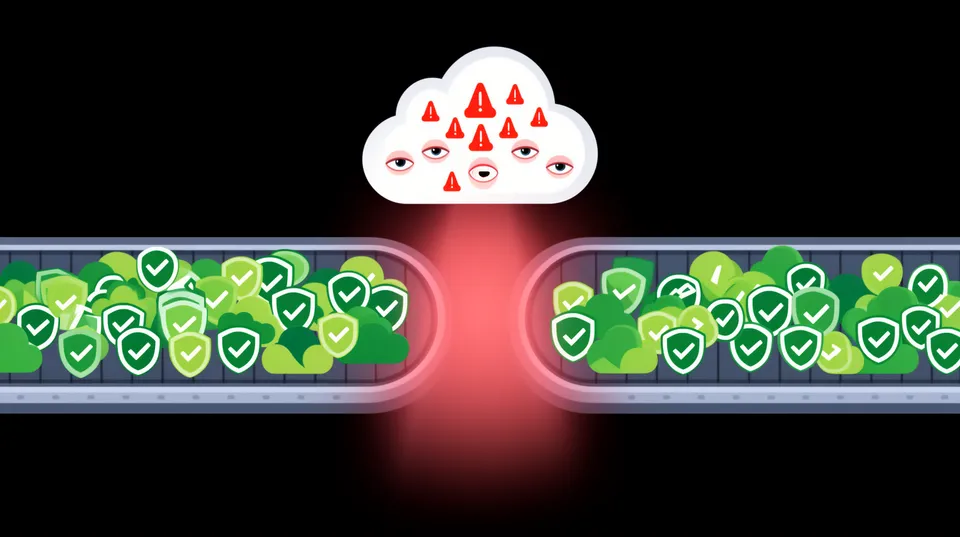
The cybersecurity skill shortage isn't a future problem. It's a current crisis. There are 4.8 million unfilled roles in cybersecurity, a staggering figure that underscores the operational strain on security teams. This shortage is particularly acute in cloud environments, where specialized knowledge in platforms like AWS, Azure, and GCP, coupled with an understanding of cloud-native security tools, is rare.
86% of organizations cite a shortage of skilled professionals, which means many cloud security configurations go unaddressed, or remediations are delayed. When we look at the specific skills, cloud data protection, including encryption, obfuscation, and tokenization, is among the most sought-after. This specialization gap leads to significant backlogs in vulnerability management and misconfiguration remediation.
The consequences of this gap are immediate and tangible. Without enough skilled personnel, organizations face higher mean time to detect (MTTD) and mean time to remediate (MTTR), increasing risk exposure. Two-thirds (60%) of study participants reported a cybersecurity staffing shortage is placing their organization at risk. This risk isn't theoretical, it translates into real incidents. For example, Anthropic disclosed that its Fable 5 AI model's safeguards were compromised, allowing someone to jailbreak it in 2026, highlighting how quickly exploits can emerge even in advanced systems. Similarly, a severe vulnerability in Red Hat's OpenShift AI platform allowed remote code execution, demonstrating the continuous need for rapid patching and remediation. These incidents illustrate that even platforms aren't immune without diligent and timely security practices.
The Remediation Bottleneck and Alert Fatigue
Cloud Security Posture Management (CSPM) tools, Network Detection and Response (NDR), and Cloud Detection and Response (CDR) platforms are excellent at detecting issues. Tools like Wiz, Orca Security, Prisma Cloud, and Palo Alto Cortex Cloud generate thousands of alerts daily. This capability, while necessary, often overwhelms lean security teams, leading to severe alert fatigue.
Security analysts spend much of their time sifting through false positives or low-priority alerts, delaying action on critical vulnerabilities. The sheer volume of alerts makes it difficult to prioritize and address the most significant threats. When asked about skills gaps, 60% of organizations say their teams lack the right skills to handle the influx of security data. This isn't just about missing one alert. It's about a systemic inability to react effectively and consistently across a constantly changing cloud environment.
This bottleneck extends to remediation. Even if a critical vulnerability is identified, manual remediation often involves a lengthy process of ticket creation, assigning tasks to various teams (DevOps, SRE, infrastructure), waiting for their availability, and then verifying the fix. This can take days or weeks, leaving critical vulnerabilities exposed for extended periods. This is where the gap between detection and effective remediation becomes a gaping security hole, often exacerbated by the existing talent shortage. The focus must shift from simply identifying every possible issue to actively reducing MTTR for the issues that truly matter. Organizations need to transition from alerting to remediation excellence.
Automating Remediation: A Strategic Imperative
Automating cloud security remediation directly addresses the talent shortage and alert fatigue by operationalizing fixes at scale. It removes the reliance on manual processes that are slow, error-prone, and unsustainable given the volume and complexity of cloud environments. Automation acts as an force multiplier for existing security teams, allowing them to focus on complex, strategic tasks instead of routine, repetitive fixes.
This isn't about replacing human experts but augmenting their capabilities, making them more efficient and impactful. By automatically generating and applying production-safe fixes, teams can drastically reduce their MTTR and improve overall security posture. This approach is essential for scaling security operations to meet the demands of modern cloud infrastructure, where changes are constant and manual intervention simply can't keep pace.
For example, if a CSPM like Wiz or Orca Security flags an S3 bucket with public write access, an automated remediation system can immediately revoke public write permissions based on a predefined playbook. These playbooks are pre-validated to ensure they don't break production applications. This prevents data exfiltration or unauthorized uploads without human intervention. Instead of an engineer filing a ticket and waiting for a DevOps team to manually adjust the bucket policy, the fix is applied within minutes.
Implementing Automated Remediation Playbooks
Automated remediation relies on intelligent playbooks that define specific actions for identified security findings. These playbooks are not generic scripts. They're context-aware and production-safe. Tamnoon's platform excels in this area, bridging the gap between detection and actual fixing.
Step 1: Ingesting Security Findings
The first step involves consolidating findings from various security tools. Tamnoon integrates with leading solutions like AWS Security Hub, Azure Defender for Cloud, Wiz, Orca Security, and Palo Alto Cortex Cloud. This creates a unified view of all cloud security issues.
# Example: AWS Security Hub integration (pseudo-code for conceptual understanding)
# This would typically be configured via API integrations or cloud events
def ingest_aws_security_hub_finding(finding_data): # Parse finding_data to extract relevant information resource_id = finding_data['Resources'][0]['Id'] finding_type = finding_data['ProductFields']['severity'] description = finding_data['Description'] print(f"Ingesting finding for resource: {resource_id}, Type: {finding_type}, Description: {description}") # Further processing to classify and prioritize
This integration capability ensures that no finding is missed and provides a single pane of glass for security operations. Instead of security teams toggling between multiple dashboards, alerts are normalized and fed into a central remediation engine.
Step 2: Defining Remediation Playbooks
Remediation playbooks are pre-configured workflows that dictate the corrective actions for specific misconfigurations or vulnerabilities. These aren't just 'disable public access' instructions. They often involve a sequence of steps, conditional logic, and safety checks. For instance, fixing an overprivileged IAM role might involve:
- Identify the role and its current permissions.
- Analyze cloud activity logs to determine actual necessary permissions.
- Generate a least-privilege policy based on usage.
- Apply the new policy safely, potentially in a dry-run mode first.
- Verify that services continue to function without disruption.
Tamnoon provides a library of remediation playbooks. These are battle-tested and often incorporate Human-in-the-Loop oversight for complex or high-risk changes. This ensures that fixes are applied quickly but also safely. For instance, automating safe cloud vulnerability patching relies heavily on well-defined playbooks.
# Example: Pseudocode for a production-safe S3 public access remediation playbook
# This playbook is triggered by a CSPM alert for public S3 bucket. def remediate_s3_public_access(bucket_name): print(f"Attempting to remediate public access for S3 bucket: {bucket_name}") # Step 1: Check if bucket policies are currently public if is_s3_bucket_public(bucket_name): print("Bucket is currently public. Proceeding with remediation.") # Step 2: Generate a non-public bucket policy (e.g., restrict to VPC or specific IAM roles) new_policy = generate_least_privilege_s3_policy(bucket_name) # Step 3: Apply the new policy in a safe, non-disruptive manner try: apply_s3_bucket_policy(bucket_name, new_policy) print(f"Successfully applied new policy to {bucket_name}.") # Step 4: Verify the change (e.g., re-scan with CSPM or check access externally) if not is_s3_bucket_public(bucket_name): print(f"Verification successful: {bucket_name} is no longer public.") send_notification("S3 public access remediated successfully.", bucket_name) else: print(f"Verification failed for {bucket_name}. Manual review needed.") send_alert("S3 public access remediation failed to verify.", bucket_name) except Exception as e: print(f"Error applying policy to {bucket_name}: {e}") send_alert("S3 public access remediation failed due to error.", bucket_name, error=str(e)) else: print(f"Bucket {bucket_name} is not public, no remediation needed or already fixed.")
Step 3: Integrating Human-in-the-Loop Control
While automation is critical, not every remediation can be fully automated, especially for sensitive production systems. Tamnoon incorporates an Expert-led, Human-in-the-Loop model. This means that for complex or potentially disruptive remediations, a cloud security expert reviews and approves the automated fix before it's applied. This approach combines the speed of automation with the critical judgment of a human, minimizing the risk of breaking production. This is especially important for areas like IAM access key rotation, which has hidden costs if not handled carefully. This hybrid model ensures production stability while still accelerating remediation.
For example, rotating an IAM access key associated with a critical application might require human verification to ensure the new key is properly propagated and doesn't cause downtime. The automated system prepares the change, but an expert provides the final approval. This model is crucial for production-safe playbooks.
Step 4: Continuous Remediation and Validation
Security isn't a one-time fix. Automated remediation systems continuously monitor for new findings and re-evaluate existing ones. After a remediation is applied, it's validated to ensure the fix was successful and didn't introduce new issues. If a misconfiguration reappears due to an infrastructure-as-code (IaC) drift or a new deployment, the system can automatically re-trigger the remediation process. This continuous loop ensures that the cloud environment remains compliant and secure over time, reducing the burden on security teams.
This includes features like dry-run remediations and rollbacks. Before committing a change to production, the system can simulate the impact. If issues arise, it can revert the change, preventing disruption. This capability is paramount for maintaining operational stability and is a core component of the Tamnoon platform.
Key Areas for Automation
Several areas in cloud security are ripe for automation, providing immediate and significant returns:
Identity and Access Management (IAM) Misconfigurations
Overprivileged IAM roles and policies are common and highly risky. Automating the identification and least-privilege enforcement of IAM policies can prevent lateral movement and reduce blast radius. Tamnoon's playbooks for fixing overprivileged IAM roles quickly reduce an organization's attack surface without human intervention.
# Example: AWS CLI command to attach a new least-privilege policy to a role
# This would be part of an automated workflow after policy generation.
aws iam attach-role-policy \ --role-name MyOverprivilegedRole \ --policy-arn arn:aws:iam::123456789012:policy/MyLeastPrivilegePolicy # Example: AWS CLI command to detach an old, overprivileged policy
aws iam detach-role-policy \ --role-name MyOverprivilegedRole \ --policy-arn arn:aws:iam::123456789012:policy/MyOldPolicy
Storage Misconfigurations (e.g., S3 Buckets)
Publicly accessible storage buckets are a frequent cause of data breaches. Automated remediation can detect and revoke public access, enforce encryption, and apply appropriate access controls. This is typically one of the first and most impactful areas to automate, often using default remediation playbooks.
# Example: CloudFormation snippet to enforce S3 bucket public access block
# This snippet ensures a new bucket is created with public access blocked.
Resources: MySecureS3Bucket: Type: AWS::S3::Bucket Properties: BucketName: my-secure-app-data PublicAccessBlockConfiguration: BlockPublicAcls: true BlockPublicPolicy: true IgnorePublicAcls: true RestrictPublicBuckets: true
Network Security Group (NSG) and Security Group Misconfigurations
Open ports or overly permissive ingress/egress rules can expose critical services. Automating the adjustment of NSGs and security groups to reflect least-privilege network access significantly reduces attack vectors. Tamnoon’s platform helps operationalize network segmentation strategies.
# Example: Azure CLI command to update a Network Security Group rule
# This revokes an overly permissive ingress rule for SSH.
az network nsg rule update \ --resource-group MyResourceGroup \ --nsg-name MyNSG \ --name AllowSSHInbound \ --destination-port-ranges 22 \ --source-address-prefixes 10.0.0.0/24 # Restrict to internal network --priority 100 --access Deny # Change from 'Allow' to 'Deny' if not needed
Secrets Management and Credential Exposure
Vulnerabilities often arise from leaked credentials or API keys. Automated systems can detect these exposures (e.g., in git repositories, logs) and trigger automatic rotation or invalidation of compromised secrets. This is a critical component of preventing supply chain attacks and is addressed through automated secret rotation.
# Example: AWS Secrets Manager rotation configuration (simplified conceptual view)
# This would be part of an IaC configuration for Secrets Manager.
resource "aws_secretsmanager_secret_rotation" "example" { secret_id = aws_secretsmanager_secret.example.id rotation_lambda_arn = aws_lambda_function.example.arn rotation_rules { automatically_after_days = 90 }
}
Integrating AI for Smarter Remediation
The role of AI in security is growing, not just in detection but also remediation. The percentage of respondents assessing the security of AI tools has nearly doubled from 37% in 2025 to 64% in 2026, reflecting its increasing importance. AI can greatly enhance automated remediation through intelligent analysis and predictive capabilities.
Contextual Analysis and Prioritization
AI can analyze cloud configuration data, threat intelligence, and application usage patterns to provide more accurate context for security findings. This helps in prioritizing remediations based on actual risk to the business, rather than generic severity scores. For instance, an AI might identify that a publicly exposed S3 bucket contains critical customer data, escalating its priority over a similar bucket holding only static web assets.
Automated Policy Generation
AI-powered remediation can learn from existing secure configurations and ally generate least-privilege policies or network rules tailored to specific resources. This moves beyond static playbooks to more adaptive and precise remediation actions. This is especially valuable for managing cloud AI identity permissions.
# Example: Conceptual AI-driven policy generation based on observed behavior
def generate_ai_driven_iam_policy(resource_group, observed_actions): policy = { "Version": "2012-10-17", "Statement": [ { "Effect": "Allow", "Action": list(observed_actions), # Actions observed by AI "Resource": f"arn:aws:ec2:*:*:instance/*", } ] } return policy
Predictive Remediation and Drift Detection
AI can predict potential misconfigurations before they occur by analyzing IaC templates and deployment patterns. It can also detect configuration drift from established baselines and automatically trigger corrective actions. This proactive approach significantly reduces the sheer volume of reactive remediations required, contributing to a more stable cloud environment and establishing an impervious cloud security configuration baseline.
AI is also becoming a target. In 2026, Anthropic disclosed that the safeguards protecting its Fable 5 AI model had been compromised. This incident highlights the need for continuous vigilance and automated remediation even for AI systems themselves. The Red Hat OpenShift AI vulnerability, allowing remote code execution, further underscores this.
The Tamnoon Approach: Bridging Detection to Production-Safe Remediation
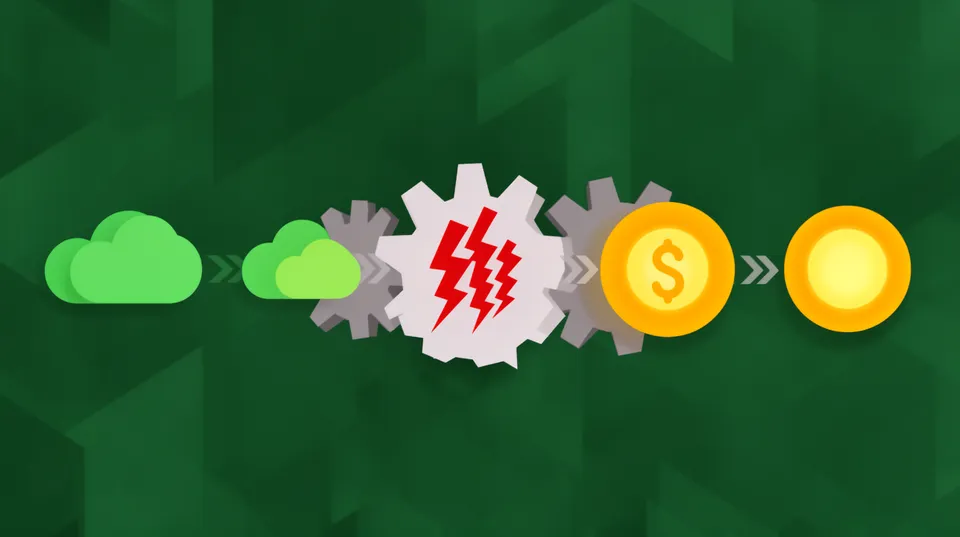
Tamnoon understands that identifying vulnerabilities is only half the battle. The critical challenge lies in fixing them rapidly and safely in production environments. The platform's core value is its ability to operationalize security findings by automating their remediation.
Tamnoon goes beyond typical CSPM or CDR tools that mostly focus on detection. It provides the mechanism to turn alerts into actual, production-safe fixes. Unlike many other solutions, Tamnoon doesn't just present a list of problems for security teams to solve manually. It offers a comprehensive remediation ecosystem, incorporating AI-powered remediation and human oversight.
Key features include:
- AI-Powered Remediation: Intelligent analysis of security findings to suggest and generate specific, optimal fix-actions. This adapts to your environment and minimizes human effort.
- Human-in-the-Loop (Expert-led): For critical or complex remediations, Tamnoon's cloud experts, or your own team, review and approve automated actions. This guarantees zero-downtime fixes and builds trust in automation.
- Production-Safe Playbooks: A growing library of pre-configured, battle-tested workflows for common cloud threats like IAM misconfigurations, S3 exposure, and network misconfigurations. These playbooks are designed and validated to run without impacting application uptime. This dramatically reduces a security team's Mean Time to Remediate (MTTR).
- Ecosystem Integration: works with your existing security stack, including Wiz, Orca Security, Prisma Cloud, AWS, Azure, and GCP. This maximizes your investment in current tools by adding the missing remediation layer. Tamnoon is the bridge that connects the insights from detection tools to operational action, enabling a true RemOps strategy.
By implementing Tamnoon, organizations can significantly reduce the burden on their limited security staff, accelerate their remediation efforts, and improve their overall cloud security posture. It's about ing your existing team to achieve more, faster, and safer.
Automated remediation It's elevating them. It re-focuses skilled engineers on strategic security architecture, threat intelligence, and custom solution development, rather than routine, manual fixes. This shift is critical for addressing the national talent shortage of 225,200 skilled cybersecurity professionals and future-proofing an organization's cloud security operations.
Reduce your MTTR by automating remediation with Tamnoon.

Tamnoon helps security teams remediate cloud risks faster with AI-augmented managed services — combining human expertise with automation so nothing falls through the cracks.
Learn more at tamnoon.ioFAQs
What is the primary cause of the cloud security talent shortage?
The cloud security talent shortage stems from a combination of factors, including the rapid increase in cloud adoption, the complexity of cloud-native security, and the specialized skill sets required. Traditional cybersecurity professionals often lack specific cloud expertise, and the demand for new talent far outstrips the supply. This situation creates a significant operational challenge for organizations trying to maintain a secure cloud posture. The market for professionals skilled in cloud data protection, encryption, obfuscation, and tokenization is particularly competitive and under-resourced.
How does alert fatigue contribute to the cloud security problem?
Alert fatigue occurs when security teams are overwhelmed by the sheer volume of alerts generated by various detection tools like CSPMs, CDRs, and NDRs. Many of these alerts might be low-priority, false positives, or simply repeat findings. This constant influx makes it difficult for analysts to identify and prioritize truly critical threats, leading to delayed responses. The cumulative effect is a decrease in vigilance, increased stress for security personnel, and a higher risk of critical vulnerabilities remaining unaddressed for extended periods, directly impacting an organization's security posture.
What are remediation playbooks and how do they benefit cloud security?
Remediation playbooks are pre-defined, automated, or semi-automated sequences of actions designed to address specific cloud security misconfigurations or vulnerabilities. They outline step-by-step instructions for fixing issues like overprivileged IAM roles, publicly exposed storage buckets, or misconfigured network security groups. These playbooks benefit cloud security by standardizing and accelerating the remediation process, reducing human error, and ensuring fixes are production-safe. They allow security teams to scale their efforts and significantly reduce the Mean Time to Remediate (MTTR) for common issues.
How does 'Human-in-the-Loop' improve automated remediation?
Human-in-the-Loop (HITL) in automated remediation combines the speed and efficiency of automation with human oversight and judgment. For complex, high-risk, or potentially disruptive remediations, a cloud security expert reviews and approves the proposed automated fix before it's applied to production. This approach minimizes the risk of unintended consequences, such as breaking critical applications or causing downtime. HITL builds trust in automation, allows for continuous learning and refinement of playbooks, and ensures that sensitive changes are always vetted by a knowledgeable professional, balancing speed with safety.
Which specific cloud security tasks can be effectively automated to alleviate the talent shortage?
Several cloud security tasks are highly amenable to automation, directly addressing the talent shortage. These include the remediation of overprivileged IAM roles through least-privilege policy enforcement, the detection and correction of publicly exposed storage buckets (e.g., S3 buckets, Azure Blobs), adjustments to overly permissive Network Security Group (NSG) and Security Group rules, and the automated detection and rotation of leaked credentials or API keys. Automating these common, yet critical, tasks frees security personnel to focus on more strategic initiatives, threat hunting, and the development of new security controls, maximizing the impact of limited human resources.