

Your Software Composition Analysis (SCA) tool is working perfectly, but your attack surface isn't shrinking.
Every day, scanners from Wiz, Prisma Cloud, or Orca Security dutifully report thousands of vulnerabilities buried in open-source dependencies. Those alerts pile up in dashboards and backlogs, creating a state of constant, low-grade panic. The real problem isn't detection; it's the operational paralysis that follows, where the risk of breaking production by patching outweighs the perceived risk of a potential exploit.
This gap between finding a vulnerability and safely fixing it's where supply chain security fails. It's a world of overwhelming alert noise, ambiguous ownership, and a Mean Time to Remediation (MTTR) that stretches into months. Effective DevSecOps requires moving beyond just generating lists of problems and into a structured, automated, and production-safe remediation workflow.
Move Beyond Raw Alert Lists
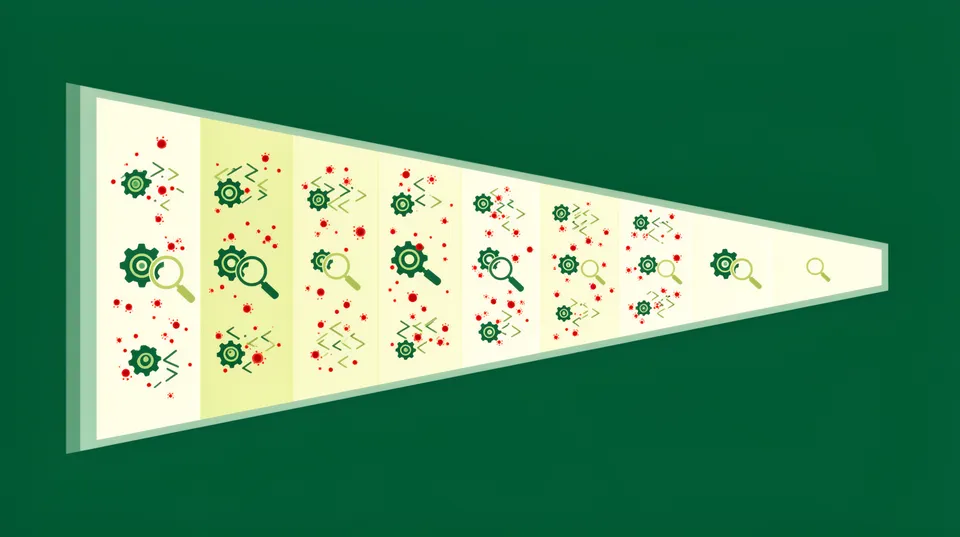
The first step is acknowledging that the output of a scanner is not a remediation plan. It's raw data. A typical enterprise might face tens of thousands of alerts for vulnerable open-source packages across hundreds of applications and microservices. Manually triaging this volume is impossible and leads directly to the alert fatigue that plagues security operations centers (SOCs).
It's no surprise that 86% of risk-assessed codebases contain vulnerable open source. DevSecOps teams simply can't keep up. The sheer volume forces them to make crude judgment calls, often ignoring anything not labeled 'Critical' or lacking a known public exploit, which is a dangerous gamble.
The reality is that a 'High' severity vulnerability in a public-facing, business-critical service is far more dangerous than a 'Critical' one in an internal, non-essential batch processing job. Without context, an alert list is just noise. This is why teams need to move away from scanner-centric views and toward a remediation-centric one that prioritizes fixes based on actual risk. This is the only way to manage the operational burden and avoid having critical alerts linger for months, a common problem detailed in the /blog/alert-fatigue-s-price-halting-remediation-and-boosting-exposure.
The True Cost of Context Switching
Every alert that requires manual investigation pulls a developer or an ops engineer away from their primary tasks. They have to stop what they're doing, navigate to the security dashboard, understand the CVE, locate the affected repository, and try to determine the impact. This context switching kills productivity and breeds resentment between security and development teams.
The goal is to automate this initial triage. A remediation platform should ingest alerts, deduplicate them, and enrich them with context from the cloud environment. Is this service internet-facing? Does it process sensitive data? What's its blast radius? Answering these questions automatically turns a long list of problems into a short, prioritized list of actions.
Map the Blast Radius Before You Patch
Before any code is changed, you must understand the potential impact of a fix. The cautionary tale of the Log4j vulnerability (CVE-2021-44228) wasn't just about the flaw itself; it was about the frantic, global scramble to find every single instance of a ubiquitous library across millions of systems. Simply running grep isn't enough.
A production-safe remediation starts with precise discovery. This requires a deep understanding of dependency trees, both direct and transitive. A vulnerability might not be in your package.json or pom.xml but buried four levels deep in a dependency you didn't even know you were using. This is where a Software Bill of Materials (SBOM) becomes indispensable.
Generating an SBOM in a standardized format like CycloneDX or SPDX during your CI/CD build process provides a complete inventory. When a new CVE drops, you can query your SBOM database to instantly identify every affected application, container image, and serverless function. This reduces discovery time from days or weeks to minutes.
From Component to Kill Chain
Mapping the blast radius goes beyond just finding the vulnerable component. You need to understand its role in a potential attack chain. A remote code execution (RCE) flaw in a library used by an internal metrics-gathering API is a problem. That same flaw in a library powering the authentication service for your primary customer-facing application is a catastrophe waiting to happen.
Effective analysis requires correlating the vulnerability information with runtime context from your cloud environment. This means looking at network paths, IAM permissions, and data access patterns. A tool that can show you that a vulnerable container has an overly permissive IAM role and public network access can immediately elevate that fix to the top of the priority list. This is the level of detail needed to make informed decisions, especially when you learn that attackers have systematically targeted DevSecOps tools themselves to compromise infrastructure.
Implement a Production-Safe Remediation Workflow
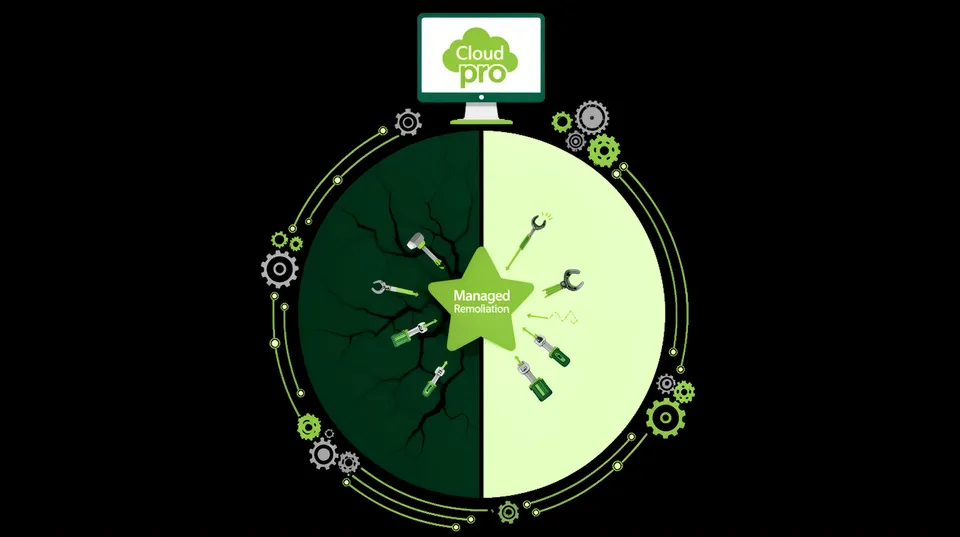
With a prioritized list of vulnerabilities and a clear understanding of their potential impact, it's time to build a workflow for fixing them. The goal is to make remediation as routine and predictable as a standard code deployment. This process must be automated, validated, and transparent.
A mature workflow integrates into existing developer tools and practices. The fix shouldn't be a PDF report emailed to a distribution list. It should be a pull request, ready for review, with the necessary changes already made.
This is where a remediation platform like Tamnoon excels. It bridges the gap between the security finding and the developer's IDE. By ingesting an alert from a CSPM, the platform can automatically generate the correct code change, such as updating a dependency version in a build file, and submit it directly to the right code repository.
Automating the Pull Request
Consider a Node.js application with a vulnerable version of the express framework. A manual process involves a developer finding the right version, running npm install express@latest --save, testing locally, and then creating a PR. An automated workflow condenses this into a single, orchestrated action.
The remediation platform would:
- Identify the vulnerable
expressversion inpackage.json. - Determine the latest non-vulnerable, compatible version.
- Generate a new branch in Git.
- Update
package.jsonandpackage-lock.jsonwith the new version. - Create a pull request with a clear title like "Fix for CVE-2023-XXXX in express."
The developer's only job is to review, approve, and merge the change. This approach anoints development teams as the owners of the fix, but it removes the tedious and error-prone busywork. Teams that successfully move toward automated remediation are reclaiming up to 30% of developer time and seeing massive reductions in open CVEs.
Integrating with CI/CD for Validation
The PR itself triggers the next critical step: validation. The change must run through the full CI/CD pipeline, including unit tests, integration tests, and security scans. This ensures the dependency upgrade doesn't introduce breaking changes or new vulnerabilities.
Here’s a simplified example of what a GitHub Actions workflow step might look like for validating a fix:
name: Validate Dependency Fix on: pull_request: branches: - main jobs: build-and-test: runs-on: ubuntu-latest steps: - uses: actions/checkout@v3 - name: Use Node.js uses: actions/setup-node@v3 with: node-version: '18.x' - name: Install Dependencies run: npm ci - name: Run Unit & Integration Tests run: npm test - name: Run SCA Scan on PR uses: snyk/actions/node@master env: SNYK_TOKEN: ${{ secrets.SNYK_TOKEN }} with: command: 'test' args: '--severity-threshold=high'
If all these checks pass, the PR can be safely merged. This automated validation loop is fundamental to building trust in the remediation process and accelerating the mean time to remediate (MTTR).
Prove Remediation with Closed-Loop Validation
The job isn't done when the pull request is merged. The final and most critical phase is proving that the remediation was effective and that the vulnerability is truly gone from the production environment. This is known as closed-loop validation.
First, the remediation platform must confirm that the fix was deployed successfully. It should track the CI/CD pipeline and verify that the updated code or container image has reached production. This prevents situations where a fix is merged into the main branch but never actually makes it to live servers.
Next, the platform must trigger a rescan of the specific asset. It should instruct the original detection tool (Wiz, Orca, etc.) to re-evaluate the resource. The goal is to see the alert status change from 'Open' to 'Closed' or 'Resolved', providing an auditable record that the risk has been neutralized. This automated feedback loop is what transforms security operations from a whack-a-mole game into a systematic risk reduction engine. It's a key reason why enterprise software engineering teams adopting supply chain security tools will increase from 60% in 2025 to 85% by 2028.
Building a Library of Safe Fixes
Over time, this process builds an institutional memory of what works. Each successful, validated remediation becomes a blueprint for the next one. Tamnoon uses this concept to create production-safe playbooks that codify expert knowledge for fixing common vulnerabilities.
These playbooks contain not just the technical steps but also the operational guardrails. For example, a playbook for a critical database driver vulnerability might include pre-flight checks to ensure no active transactions will be interrupted, a specific rollback procedure, and post-fix validation steps to confirm database connectivity is stable.
By transforming tribal knowledge into executable automation, organizations can ensure that every fix is applied consistently, safely, and in line with best practices. This approach finally closes the gap between detection and remediation, which is the core promise of modern DevSecOps and a necessity for anyone serious about improving their security posture. For a deeper look at this process, see how to /blog/closing-the-cloud-security-gap-from-detection-to-production-safe-remediation.
Stop drowning in alerts and start fixing what matters. See how Tamnoon orchestrates production-safe remediation from detection to deployment.

Tamnoon helps security teams remediate cloud risks faster with AI-augmented managed services — combining human expertise with automation so nothing falls through the cracks.
Learn more at tamnoon.ioFAQs
How does automated remediation differ from simple 'auto-patching'?
Automated remediation is a holistic process, while auto-patching is just a single action. Auto-patching blindly applies updates, often leading to production failures because it lacks context. In contrast, a sophisticated automated remediation platform like Tamnoon analyzes the vulnerability's business context, blast radius, and potential impact first. It then generates a fix, validates it through CI/CD pipelines and integrates human-in-the-loop approvals for complex changes, ensuring the fix is both effective and safe before deployment.
What role does an SBOM play in a post-breach scenario?
In a post-breach scenario, a Software Bill of Materials (SBOM) is a critical incident response tool. When a zero-day vulnerability is announced, like Log4j, an accurate and up-to-date SBOM allows response teams to bypass the chaotic discovery phase. Instead of manually searching for the vulnerable component, they can immediately query their SBOM inventory to identify every single affected application, service, and host. This dramatically accelerates containment and remediation efforts, shrinking the window of exposure from weeks to hours.
Can automated fixes handle complex dependencies and breaking changes?
Yes, but it requires a mature platform. Simple dependency bumping can fail when facing breaking changes. An advanced remediation platform uses several strategies. It analyzes changelogs and semantic versioning to predict breaking changes. It runs the proposed fix through a full suite of automated tests in a staging environment to catch failures before they reach production. For truly complex cases, it uses a human-in-the-loop model, where the platform generates the proposed fix, but an expert reviews and validates it to ensure it won't disrupt service.
How does this approach improve developer productivity?
It significantly reduces the cognitive load and manual toil placed on developers. Instead of being bombarded with raw security alerts they must investigate, they receive a validated pull request with a pre-built fix. They don't have to switch context, interpret CVE reports, or manually update files. Their role shifts from firefighter to quality reviewer, allowing them to approve fixes with confidence and stay focused on building features. This transforms security from a roadblock into a streamlined part of their native workflow.
Is it possible to achieve 100% automated remediation for all open-source vulnerabilities?
Achieving 100% automation for all findings is unrealistic and often undesirable. The goal isn't to remove humans entirely but to automate the automatable. Routine, well-understood vulnerabilities—like updating a non-critical library with a known-good patch—can be fully automated. However, complex fixes that risk major production impact, involve architectural changes, or affect business-critical functions benefit from a human-in-the-loop validation step. The ideal state is a hybrid model where ~80% of issues are handled automatically, freeing up experts to focus on the 20% that require strategic intervention.