
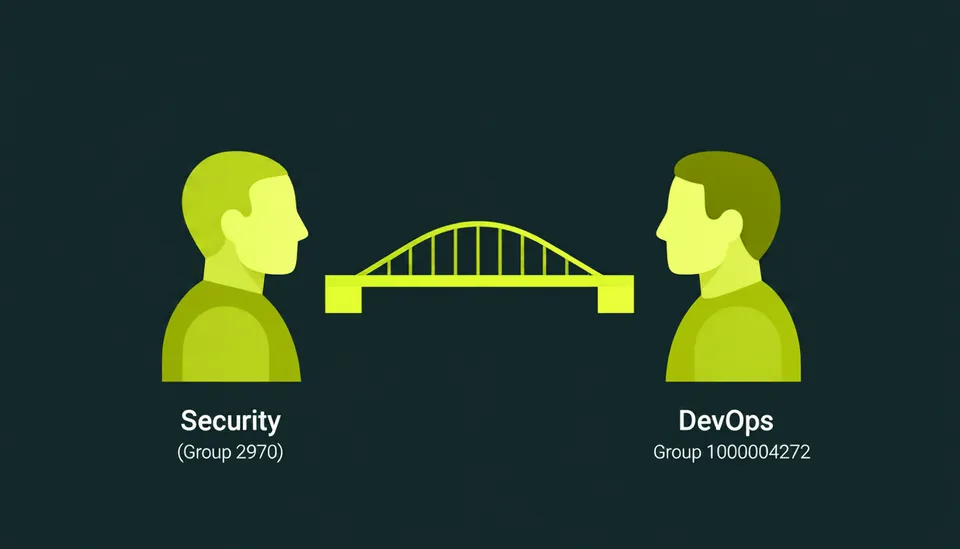

Security and DevOps often feel like two different planets, orbiting the same application but with vastly different priorities. This disconnect creates a chasm in the remediation pipeline, where vulnerabilities are detected but fixes either stall or introduce new problems. True DevSecOps collaboration means aligning these priorities not just in theory, but in every production change.
The cost of this misalignment isn't just alert fatigue. It's operational instability, increased Mean Time To Remediation (MTTR), and tangible business risk. Understanding the specific points where collaboration breaks down and the operational consequences helps teams build a more resilient and secure development lifecycle. This involves moving beyond simply identifying issues to actively implementing safe, verified fixes.
Integrating security actions directly into CI/CD pipelines isn't enough unless those actions are production-safe. This requires a level of communication and trust between security and development teams that often doesn't exist. Without a common language and shared ownership of both security and operational stability, the handoff between detection and remediation remains a bottleneck.
The Remediation Gap Widens Without Collaboration
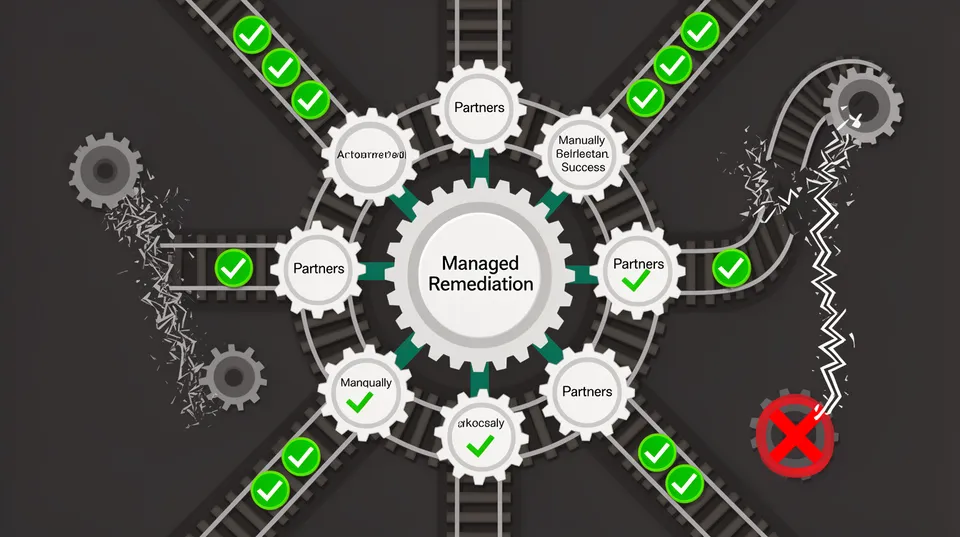
Cloud-native application development scales quickly, bringing new security challenges. The DevSecOps market in 2026 is valued between USD 8.58 billion and USD 10.88 billion, with 48% driven by cloud-native applications. This growth means more code, more infrastructure as code (IaC), and consequently, more potential vulnerabilities. While tools like Wiz, Orca Security, or Prisma Cloud identify these issues, the remediation is where the friction often starts.
Security teams flag issues, but their suggested fixes might not account for the operational nuances of a production environment. DevOps teams, focused on application uptime and performance, often push back on changes that could introduce instability or require significant refactoring. This back-and-forth delays remediation. For example, an overly broad IAM policy flagged by a CSPM might be critical for an application to function. A security team might recommend the principle of least privilege, but without a detailed understanding of the application's actual needs, implementing this could break functionality.
The state of vulnerability remediation reflects this challenge. Only 9% of organizations report fixing more than 90% of vulnerabilities within 90 days, despite 96% of respondents indicating their organization would use DevSecOps. This statistic highlights a significant gap: detection is improving, but action is lagging. This lag isn't always about a lack of effort. It's often about a lack of coordinated, production-safe action.
Impact of Uncoordinated Remediation
When security and DevOps aren't working together on remediation, the blast radius of a failed fix expands. Imagine a situation where a security engineer pushes an automatic change to an S3 bucket policy without consulting the development team. If that bucket hosts static assets for a critical web application, suddenly users can't access parts of the site. This kind of incident leads to production downtime, customer complaints, and a rapid erosion of trust between teams.
The operational consequences include:
- Increased MTTR: Every back-and-forth, every rollback, adds minutes or hours to the time it takes to resolve a security issue.
- Production Incidents: Ill-considered or untested fixes can bring down applications, causing direct business impact.
- Alert Fatigue Amplified: When fixes are slow or risky, alerts begin to lose their urgency, contributing to the existing problem of alert overload.
- Operational Burden: DevOps teams spend valuable time debugging security-related production incidents instead of feature development or infrastructure improvements.
This cycle perpetuates itself, making both teams reluctant to engage with the other's recommendations. Developers avoid security scanning tools because they fear the overhead of fixing issues, while security teams become frustrated by development's perceived slowness to act. This is where a platform like Tamnoon bridges that gap by providing AI-Powered Remediation designed to be production-safe from the start.
Establishing Production-Safe Remediation Workflows
Building effective DevSecOps collaboration means integrating security into every phase of the development lifecycle, not just as a gate. This requires standardized processes for identifying, prioritizing, and remediating vulnerabilities with an embedded understanding of their production impact. Rather than a security team throwing alerts over the fence, a shared workflow should exist.
Consider the process for IAM misconfigurations, a common threat. Tools like Palo Alto Prisma Cloud or AWS Security Hub will detect overprivileged roles or unused access keys. The challenge is fixing them without triggering downtime. A direct remediation often involves modifying IAM policies, which can affect existing applications. If a service account's permissions are tightened too much, its associated microservice might fail to access required resources, leading to cascading failures.
Effective collaboration here means:
- Early Identification: Integrating static analysis (SAST) and software composition analysis (SCA) into the CI/CD pipeline. Libraries published in 2025 had, on average, 1.3 vulnerabilities. Catching these early reduces the cost and complexity of remediation significantly.
- Contextual Prioritization: Not every vulnerability is equally critical in a production environment. Security and DevOps need to agree on a prioritization matrix that considers exploitability, impact, and the effort required for a safe fix.
- Remediation Playbooks: Pre-approved, production-safe remediation steps for common issues. These are essentially IaC snippets or scripts that apply fixes while considering runtime dependencies and potential fallbacks.
# Example: IAM Policy Remediation Playbook (pseudo-code)
# This is a highly simplified example. Real playbooks are far more complex. # PROBLEM: IAM role 'DevServiceRole' has '*' permissions on S3.
# POTENTIAL FIX: Restrict S3 permissions to specific buckets/actions. # STEP 1: Identify dependent services/applications using 'DevServiceRole'.
# This requires querying historical CloudTrail logs or application configuration. # STEP 2: Generate proposed least-privilege policy based on identified usage patterns.
# Example: Allow s3:GetObject on 'AppBucketA', s3:PutObject on 'LogsBucketB'. # STEP 3: Create a temporary "shadow" role with the proposed policy.
# Attach the shadow role to a non-production instance of the affected service.
# Monitor for access denied errors for a defined period (e.g., 24-48 hours). # STEP 4: If no issues, update CloudFormation/Terraform template for 'DevServiceRole'.
# Apply the updated template to non-production environments. # STEP 5: Gradually roll out to production environments using blue/green deployment or similar.
# Monitor metrics and CloudWatch/Splunk logs for regressions. # ROLLBACK PLAN:
# If issues occur at any stage, revert to the previous CloudFormation/Terraform version for 'DevServiceRole'.
# Notification to Security Engineer and responsible DevOps team immediately.
Tamnoon provides AI-Powered Remediation that includes Production-Safe Playbooks. These aren't just scripts. They're verified, contextualized actions developed by cloud security experts. This means when an alert from platforms like Upwind, Cyera, or Sentinel One Singularity comes in, the remediation steps are already designed to prevent production breakage. This effectively shifts the burden from DevOps having to vet every security recommendation to pre-vetted, expert-driven solutions.
Automating Safe Remediation and Collaboration
Effective DevSecOps collaboration won't happen if every remediation requires manual coordination and custom scripting. Automation is the key to scaling security without sacrificing operational stability. This includes not just automated scanning, but automated, production-safe fixes.
For instance, an exposed AWS S3 bucket is a critical vulnerability. Detection tools will flag it immediately. Without collaboration, a security team might just change the bucket policy to private. If that bucket serves public content, the website breaks instantly. A collaborative, automated approach involves:
- Detection: CSPM identifies the public S3 bucket.
- Contextual Analysis: The system determines if the bucket is expected to be public (e.g., static website assets) or if it's an accidental exposure. This often involves checking tags, naming conventions, or referencing a CMDB.
- Automated Proposal: If accidental, a proposed remediation (e.g., block all public access, apply specific IP restrictions, or move sensitive data) is generated. This proposal includes an explanation of potential impact.
- Approval Workflow: DevOps or the affected application owner reviews the proposed change. This could be a pull request in an IaC repository (Terraform, CloudFormation) or an automated notification in a Slack channel.
- Automated Execution: Once approved, the change is applied through the CI/CD pipeline, ideally with automated monitoring and a built-in rollback mechanism.
This structured approach ensures that security is baked into operations. 28% of the DevSecOps market is driven by secure CI/CD automation, emphasizing this need. Tamnoon's CDR Copilot integrates with existing security tools and cloud environments (AWS, Azure, GCP), as well as popular CI/CD systems. It analyzes alerts and generates suggested remediation actions that are vetted for production safety, reducing the need for manual, risky interventions. You can explore shrinking MTTR for misconfigurations for more details on specific strategies.
Overcoming Production Impact Concerns
The primary reason for friction between security and DevOps on remediation is fear of production impact. DevOps teams are on the hook for uptime. Introducing a security fix that breaks an application is a direct failure for them. To overcome this, remediation efforts must address these concerns head-on.
- Pre-validated Changes: Every remediation action should be tested against non-production environments first. This includes integration testing and performance testing to ensure the fix doesn't introduce new instability.
- Blast Radius Analysis: Before any change, understanding the potential components, services, or applications that could be affected is crucial. Tamnoon's platform helps understand blast radius for a given remediation. This helps in scoping the impact and planning fallbacks.
- Automated Rollbacks: If a problem occurs post-remediation, an automated rollback to the previous stable state is non-negotiable. This minimizes downtime and strengthens trust.
- Expert Human Oversight: For complex or high-risk remediations, Tamnoon's Human-in-the-Loop model ensures that cloud security experts validate the AI-generated remediation playbooks before execution. This hybrid approach combines the speed of automation with the wisdom of experienced engineers, providing an extra layer of assurance against production issues.
By making fixes transparent, predictable, and reversible, security teams can gain the confidence of their DevOps counterparts. This shift from alerting to assisting with safe remediation is what transforms a contentious relationship into a truly collaborative one.
The Role of AI in Bridging the Collaboration Gap
AI isn't just for detection anymore. It's proving critical in automating and making remediation safer. Workforce Security Summits in 2026 are addressing AI-native threats, recognizing both the challenge and the opportunity AI presents. For security teams inundated with alerts, AI can help cut through the noise and propose intelligent fixes.
AI-powered systems, like Tamnoon's, don't just identify misconfigurations. They analyze the context of an alert from tools like Orca, Wiz, or Microsoft Defender for Cloud and then recommend precise remediation playbooks. This means for overprivileged IAM roles, the AI can suggest policy reductions based on observed access patterns, rather than a generic Deny All that breaks everything. For S3 bucket exposures, it can differentiate between a public website bucket and a sensitive data bucket, proposing an appropriate fix for each.
This expert-led AI approach fundamentally changes the DevSecOps . Security no longer just points out problems. It provides actionable, production-safe solutions. DevOps receives proposed changes that are already contextualized, vetted, and come with a clear understanding of their impact and rollback procedures. This significantly reduces the overhead for DevOps teams, enabling quicker acceptance and deployment of security fixes.
Operational Benefits of AI-Driven Remediation
The practical benefits extend beyond just reducing friction:
- Faster MTTR: Decisions are made, and actions are taken quicker because the proposed solutions are intelligent and vetted.
- Reduced Alert Fatigue: Actionable alerts with clear remediation paths are less likely to be ignored. Instead of a list of problems, security teams offer a list of solutions. This is critical for tackling alert fatigue.
- Consistency: Automated playbooks ensure that remediation steps are applied consistently across all environments, reducing human error.
- Improved Security Posture: The cumulative effect of faster, safer remediations is a stronger overall security posture. Vulnerabilities are closed more quickly, reducing the attack surface.
- Resource Optimization: Security teams spend less time manually investigating and validating fixes, freeing them for more strategic work. DevOps engineers spend less time debugging security-induced production issues. This helps close the cloud security remediation gap.
Ultimately, AI-driven remediation transforms security from a bottleneck into an accelerant for development. It creates the common ground where the needs of security and the realities of operations can finally meet.
Integrating Remediation into the Software Delivery Pipeline
Seamless DevSecOps collaboration means embedding security remediation directly into the software delivery pipeline. This It's shifting security left and providing tools that enable developers to fix issues themselves, or at least to receive fixes that are ready for immediate deployment.
Consider the detection of sensitive data exposure in source code or configuration files. Tools like GitGuardian or GitHub Advanced Security will flag these as part of a pre-commit hook or CI/CD scan. Traditionally, this might stop the pipeline, requiring manual intervention. With integrated remediation, a security tool could:
- Detect Secret: A sensitive API key is detected in a developer's branch.
- Suggest Remediation: The system automatically suggests removing the secret from code, revoking the compromised key, and initiating key rotation.
- Automated Pull Request: An automated pull request is generated with the proposed fix and details on the severity and impact.
- Developer Review: The developer reviews the PR, understands the fix, and can merge it, effectively self-remediating with security guidance.
# Example: Automated Secret Remediation (pseudo-code)
# Detected sensitive hardcoded AWS Access Key in main.py # PROBLEM: main.py contains AWS_ACCESS_KEY_ID = 'AKIA...' # STEP 1: Scan for hardcoded secrets using a SAST tool (e.g., Bandit or a commercial solution).
# Integrate this scan into a pre-commit hook or CI/CD stage. # STEP 2: If secret detected, trigger an automated remediation workflow.
# This workflow should ideally:
# a. Revoke the detected key (via AWS API).
# b. Generate a new key and update a secure secrets manager (e.g., AWS Secrets Manager, HashiCorp Vault).
# c. Create a pull request (PR) to remove the hardcoded key from the main.py file.
# d. Update the application to retrieve the key from the secrets manager. # Example PR comment generated:
# "Security Alert: Hardcoded AWS Access Key 'AKIA...' found in main.py`.
# This key has been revoked and a new one generated in Secrets Manager. Please review this PR to remove the hardcoded key and update access logic." # STEP 3: Automated notification to relevant team (e.g., Slack, Jira ticket). # STEP 4: Merge PR after developer review and verification.
This approach transforms security from an external auditor into an integral, helpful part of the development process. DevOps teams get fewer blockers and more assistance. Platforms like Tamnoon can take this a step further by orchestrating these complex, multi-step remediations, ensuring that the process is not only automated but also production-safe. This includes intricate actions like managing IAM access key rotation without service disruption.
The Shift to Remediation Orchestration
The goal isn't just individual fixes, but orchestral remediation. This means coordinating multiple security issues across different cloud services and applications, ensuring that fixes are applied in the correct order and don't conflict with each other. For example, fixing an overly broad firewall rule might expose an internal service if the service itself isn't properly authenticated. Remediation orchestration ensures these dependencies are understood and managed.
Tamnoon excels here by providing a central platform that aggregates alerts from various CNAPPs and security tools (like those from Wiz, Upwind, or Orca). It then uses its AI to generate and orchestrate remediation playbooks that account for interdependencies and business context. The AI-driven prioritization ensures that the most critical issues, with the safest remediation paths, are tackled first. This move towards intelligent orchestration is essential for organizations dealing with thousands of alerts and trying to reduce their security backlog. It allows organizations to move beyond simple detection to actual, production-safe remediation, a crucial step in maturing DevSecOps practices.
Moving forward, the emphasis remains on making remediation as seamless and production-safe as possible. This is the only way to genuinely unite security and DevOps, reduce MTTR, and build truly resilient cloud environments.
Frequently Asked Questions
What breaks in production when security and DevOps don't collaborate on remediation?
When security and DevOps don't collaborate on remediation, production environments face several critical risks. The most immediate impact is often application downtime. Security teams might implement fixes, such as tightening IAM policies or firewall rules, without a full understanding of the application's dependencies and operational requirements. This can lead to services losing necessary permissions, connectivity issues, or data access failures, causing immediate outages. Secondly, uncoordinated efforts can introduce new vulnerabilities while attempting to fix old ones, for example, by misconfiguring a different service during a hurried change. The Mean Time To Remediation (MTTR) also increases significantly, as teams spend time in inefficient back-and-forth communication, debugging, and rolling back failed fixes, directly impacting business continuity and customer satisfaction.
What is the typical blast radius of a failed security remediation?
The blast radius of a failed security remediation varies depending on the nature of the fix and the architecture of the affected system. For cloud environments, a failed fix to a central component like an identity provider or networking construct can have a wide blast radius, potentially affecting all applications and services dependent on it. Modifying an S3 bucket policy without proper checks could make public content unavailable or, conversely, expose sensitive data if the wrong policy is applied. Changes to a core Kubernetes service or an API gateway could take down multiple microservices. The lack of proper testing and collaboration means changes pushed directly to production without understanding these dependencies often have a larger, unanticipated impact, extending beyond the intended scope and causing widespread service degradation or outages.
How can automated remediation prevent production breakage?
Automated remediation prevents production breakage by integrating intelligence, validation, and rollback mechanisms into the fix process. Platforms like Tamnoon use AI to analyze security alerts in context, generating precise, least-privilege remediation playbooks tailored to specific cloud resources and application needs. These playbooks are often pre-verified by cloud security experts and tested against non-production environments. Before deployment, an automated system can perform sanity checks, assess potential blast radius, and integrate into existing CI/CD pipelines as pull requests for review. Crucially, automated remediation strategies include built-in rollback capabilities, allowing for an immediate reversion to a stable state if any issues arise, minimizing downtime and human error. This systematic approach ensures that fixes are not only applied quickly but also safely.
What concrete steps can teams take to improve their DevSecOps collaboration for remediation?
To improve DevSecOps collaboration for remediation, teams should focus on several concrete steps. First, establish shared ownership of security posture, making both security and DevOps teams accountable for vulnerabilities from detection through to resolution. Second, implement standardized remediation playbooks for common issues, ensuring these playbooks are pre-vetted for production safety and include clear rollback procedures. Third, integrate security analysis and automated remediation directly into the CI/CD pipeline, enabling developers to incorporate fixes earlier in the development cycle. Fourth, use a common platform for tracking and orchestrating remediations, like Tamnoon, which bridges the gap between detection tools and operational actions. Finally, foster continuous communication and cross-training between teams, helping each understand the other's priorities and constraints. This reduces friction and builds trust, leading to more efficient and safer remediation processes.
How does Tamnoon specifically address the collaboration gap between security detection and remediation?
Tamnoon addresses the collaboration gap between security detection and remediation by operating as an orchestration layer that translates security alerts into production-safe, actionable fixes. Instead of just flagging vulnerabilities from CNAPPs like Wiz or Orca Security, Tamnoon's AI-Powered Remediation analyzes the context of these alerts, understands potential production impact, and generates specific remediation playbooks. These playbooks are designed by cloud security experts and are often verified via a Human-in-the-Loop process, ensuring they won't break existing services. Tamnoon integrates with existing tooling and CI/CD pipelines, allowing proposed fixes to flow through familiar development workflows (e.g., pull requests). This means DevOps receives clear, vetted, and often automated remediation steps that they can trust, eliminating the need for extensive manual investigation or risky interventions. This approach reduces MTTR, mitigates alert fatigue, and fosters genuine alignment between security and operational stability goals.

Tamnoon helps security teams remediate cloud risks faster with AI-augmented managed services — combining human expertise with automation so nothing falls through the cracks.
Learn more at tamnoon.ioFAQs
What breaks in production when security and DevOps don't collaborate on remediation?
When security and DevOps do not collaborate on remediation, production environments face several critical risks. The most immediate impact is often application downtime. Security teams might implement fixes, such as tightening IAM policies or firewall rules, without a full understanding of the application's dependencies and operational requirements. This can lead to services losing necessary permissions, connectivity issues, or data access failures, causing immediate outages. Secondly, uncoordinated efforts can introduce new vulnerabilities while attempting to fix old ones, for example, by misconfiguring a different service during a hurried change. The Mean Time To Remediation (MTTR) also increases significantly, as teams spend time in inefficient back-and-forth communication, debugging, and rolling back failed fixes, directly impacting business continuity and customer satisfaction.
What is the typical blast radius of a failed security remediation?
The blast radius of a failed security remediation varies depending on the nature of the fix and the architecture of the affected system. For cloud environments, a failed fix to a central component like an identity provider or networking construct can have a wide blast radius, potentially affecting all applications and services dependent on it. Modifying an S3 bucket policy without proper checks could make public content unavailable or, conversely, expose sensitive data if the wrong policy is applied. Changes to a core Kubernetes service or an API gateway could take down multiple microservices. The lack of proper testing and collaboration means changes pushed directly to production without understanding these dependencies often have a larger, unanticipated impact, extending beyond the intended scope and causing widespread service degradation or outages.
How can automated remediation prevent production breakage?
Automated remediation prevents production breakage by integrating intelligence, validation, and rollback mechanisms into the fix process. Platforms like Tamnoon use AI to analyze security alerts in context, generating precise, least-privilege remediation playbooks tailored to specific cloud resources and application needs. These playbooks are often pre-verified by cloud security experts and tested against non-production environments. Before deployment, an automated system can perform sanity checks, assess potential blast radius, and integrate into existing CI/CD pipelines as pull requests for review. Crucially, automated remediation strategies include built-in rollback capabilities, allowing for an immediate reversion to a stable state if any issues arise, minimizing downtime and human error. This systematic approach ensures that fixes are not only applied quickly but also safely.
What concrete steps can teams take to improve their DevSecOps collaboration for remediation?
To improve DevSecOps collaboration for remediation, teams should focus on several concrete steps. First, establish shared ownership of security posture, making both security and DevOps teams accountable for vulnerabilities from detection through to resolution. Second, implement standardized remediation playbooks for common issues, ensuring these playbooks are pre-vetted for production safety and include clear rollback procedures. Third, integrate security analysis and automated remediation directly into the CI/CD pipeline, enabling developers to incorporate fixes earlier in the development cycle. Fourth, use a common platform for tracking and orchestrating remediations, like Tamnoon, which bridges the gap between detection tools and operational actions. Finally, foster continuous communication and cross-training between teams, helping each understand the other's priorities and constraints. This reduces friction and builds trust, leading to more efficient and safer remediation processes.
How does Tamnoon specifically address the collaboration gap between security detection and remediation?
Tamnoon addresses the collaboration gap between security detection and remediation by operating as an orchestration layer that translates security alerts into production-safe, actionable fixes. Instead of just flagging vulnerabilities from CNAPPs like Wiz or Orca Security, Tamnoon's AI-Powered Remediation analyzes the context of these alerts, understands potential production impact, and generates specific remediation playbooks. These playbooks are designed by cloud security experts and are often verified via a Human-in-the-Loop process, ensuring they won't break existing services. Tamnoon integrates with existing tooling and CI/CD pipelines, allowing proposed fixes to flow through familiar development workflows (e.g., pull requests). This means DevOps receives clear, vetted, and often automated remediation steps that they can trust, eliminating the need for extensive manual investigation or risky interventions. This approach reduces MTTR, mitigates alert fatigue, and fosters genuine alignment between security and operational stability goals.