

Security and operational resilience hinge on continuous compliance. Ignoring it creates significant technical debt, making production environments fragile and susceptible to violations, configuration drift, and eventual breaches.
Integrating compliance directly into DevSecOps workflows isn't just about meeting audit requirements. It's about proactive risk reduction and maintaining a stable, secure operational posture. This approach significantly reduces the time and effort spent on manual checks, allowing teams to focus on innovation rather than reactive firefighting.
Organizations that adopt continuous automated compliance see direct benefits in operational stability, accelerated delivery, and reduced remediation overhead. The payoff comes from catching non-compliance early, before it escalates into production incidents.
The Production Impact of Manual Compliance Checks
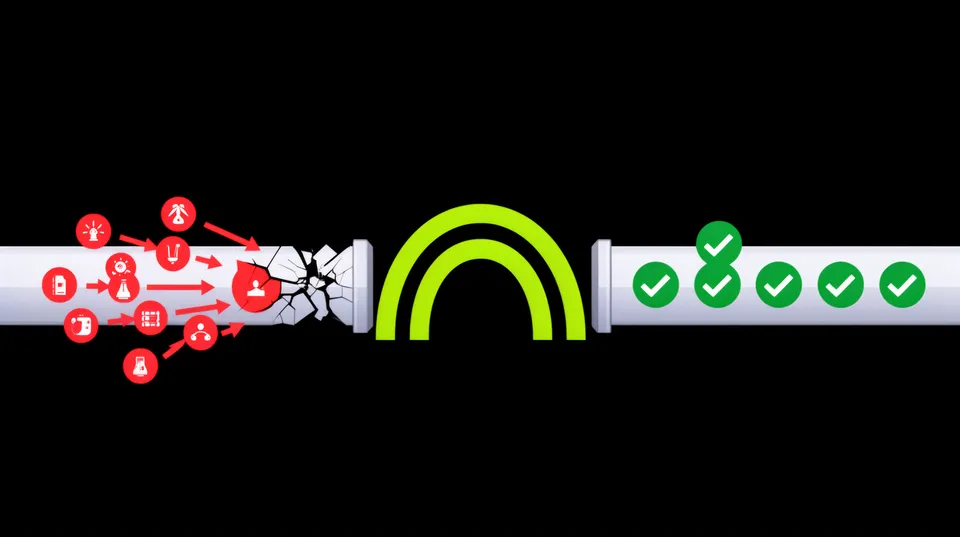
Manual compliance checks are inherently reactive and contribute directly to production instability. They involve periodic reviews, often months apart, leaving vast windows for non-compliant configurations to drift into production environments. When issues are finally found, they often require significant re-work, leading to delays and potential outages.
Consider the impact of a misconfigured S3 bucket. If manual checks only happen quarterly, that bucket could be publicly exposed for weeks, enabling data exfiltration without detection. The blast radius expands rapidly; an exposed resource isn't just a compliance failure but a critical security incident waiting to happen. Remediation, when it finally occurs, often requires emergency changes to production systems, increasing the risk of unintended consequences and further downtime.
Configuration Drift and Unforeseen Outages
Production environments are dynamic. Continuous integration and continuous deployment (CI/CD) pipelines push updates multiple times a day in many organizations. Without automated compliance, configuration drift is inevitable. A compliant state identified during an audit quickly becomes non-compliant due to a rapid deployment or an overlooked change. This drift is a security vulnerability and a potential cause of operational failure.
For instance, an application relying on a specific network security group (NSG) rule might suddenly fail if that rule is inadvertently modified or deleted during a deployment that wasn't adequately checked for compliance with networking policies. This could lead to application downtime, service degradation, or even a full outage. The cost of such outages can be substantial; for cyber-physical systems, one hour of downtime can outweigh an entire annual security budget. Manual processes simply can't keep pace with the velocity of modern cloud deployments.
Increased Remediation Time and Costs
When compliance issues are discovered late in the development lifecycle or, worse, in production, the cost and effort of remediation skyrocket. Developers and security teams must context-switch, drop current priorities, and re-investigate code or infrastructure that might have been deployed weeks ago. This interrupts development cycles, reduces productivity, and diverts resources from new feature development to reactive problem-solving.
- Late Discovery: Finding a compliance violation in production code means changes need to be backported, re-tested, and redeployed.
- Context Switching: Engineers lose significant time switching between tasks and understanding old codebases.
- Emergency Fixes: Rushing fixes increases the likelihood of introducing new bugs or unintended side effects.
- Financial Penalties: Non-compliance can lead to regulatory fines, reputational damage, and lost business, as seen in Nevada's cybersecurity incident, highlighting the importance of robust internal controls.
This reactive model stands in stark contrast to the highly efficient, automated remediation workflows discussed in operational playbooks for swift cloud security remediation.
Establishing Continuous Automated Compliance
The solution involves embedding compliance checks directly into every stage of the DevSecOps pipeline. This shifts compliance left, making it an integral part of development rather than a post-deployment audit. It ensures that security and compliance requirements are baked into the infrastructure as code (IaC), application code, and deployment configurations from the outset.
Integrate Policy as Code
Policy as Code (PaC) is foundational to continuous automated compliance. It translates regulatory requirements, security best practices, and internal policies into machine-readable code. This code can then be version-controlled, tested, and applied automatically across environments. Tools like Open Policy Agent (OPA), AWS Config Rules, Azure Policy, and Google Cloud Policy are essential here. For instance, using AWS Config, a rule can automatically flag or remediate S3 buckets that aren't encrypted or that allow public access.
Example Terraform with OPA for S3 Bucket Policy
Here's a simplified example of how you might use OPA with a Terraform plan to enforce S3 bucket encryption. You'd typically integrate OPA as a gate in your CI/CD pipeline, checking the Terraform plan before execution.
# policy.rego (OPA policy for S3 bucket encryption)
package terraform.plan denied_resource_type[resource_id] { resource := input.resource_changes[_] resource.type == "aws_s3_bucket" resource.change.after.bucket_prefix // Check if a new bucket is being created (or replace) not resource.change.after.server_side_encryption_configuration resource_id := resource.address
} denied[msg] { resource_id := denied_resource_type[_] msg := sprintf("S3 bucket '%v' must have server_side_encryption_configuration enabled", [resource_id])
}
This Rego policy denies any Terraform plan that attempts to create an aws_s3_bucket without server_side_encryption_configuration defined. Your CI/CD step would then run opa eval -d policy.rego -i plan.json "data.terraform.plan.denied" against the Terraform plan output (plan.json).
Automated Checks in CI/CD Pipelines
Every commit, every pull request, and every deployment should automatically trigger compliance checks. This includes static application security testing (SAST), software composition analysis (SCA), infrastructure as code (IaC) scanning, and container image scanning. This allows finding compliance violations and security vulnerabilities immediately, when they're cheapest and easiest to fix.
Organizations should apply this principle to all CI/CD components. Tools such as Checkmarx, Veracode, and Cycode provide comprehensive scanning capabilities that can be integrated directly into Jenkins, GitLab CI, GitHub Actions, or Azure DevOps pipelines. They can enforce policies like "no public S3 buckets" or "all EC2 instances must have logging enabled" against your IaC templates.
Example GitLab CI/CD Job for IaC Compliance Scan
This GitLab CI/CD snippet demonstrates integrating an IaC scanner (like Wiz or Checkmarx's IaC security module) that s policy as code.
iac_compliance_scan: stage: test image: your/iac-scanner-cli:latest # Replace with your scanner's Docker image script: - echo "Starting IaC compliance scan..." - cd infrastructure/terraform # Navigate to your Terraform root - iac-scanner scan . --config ../compliance-policies.yaml --output report.json - iac-scanner enforce report.json --fail-on-severity critical,high - echo "IaC compliance scan complete." artifacts: reports: compliance_scan: infrastructure/terraform/report.json rules: - if: $CI_PIPELINE_SOURCE == "merge_request_event"
This job runs an IaC scan on Terraform files, using a compliance-policies.yaml file for custom rules. It's configured to fail the pipeline if critical or high-severity compliance violations are detected, preventing non-compliant infrastructure from being provisioned.
Continuous Monitoring and Remediation
Post-deployment, continuous monitoring ensures that the deployed environment remains compliant and secure. Cloud Security Posture Management (CSPM), Cloud Workload Protection Platform (CWPP), and Cloud Native Application Protection Platform (CNAPP) solutions continually assess cloud resources against policies, alert on deviations, and, critically, can trigger automated remediation workflows. Shrinking MTTR for vulnerabilities depends heavily on this automation.
For example, if an administrative action manually changes a security group in AWS to be overly permissive, a CSPM tool like Prisma Cloud, Orca Security, or Wiz can detect this deviation from the established policy. These platforms can then trigger an alert, and in many cases, initiate an automated rollback or corrective action to restore the compliant state. This proactive approach prevents manual errors from becoming long-term exposures.
The Role of Tamnoon in Continuous Compliance Automation
Tamnoon specializes in addressing the critical gap between security detection and actual remediation. While many tools can identify compliance violations and security misconfigurations, fewer offer comprehensive, automated, and production-safe remediation. Tamnoon focuses on closing this gap by orchestrating remediation workflows and ensuring that fixes are applied effectively and without introducing new risks.
Tamnoon integrates with existing security tools, bringing their findings into a centralized platform for prioritization and automated action. For example, if your CSPM identifies a critical non-compliance on an S3 bucket due to unencrypted data, Tamnoon can initiate a pre-approved remediation playbook to apply default encryption without manual intervention. This dramatically reduces Mean Time To Remediate (MTTR) and ensures consistency across your cloud estate.
Orchestrating Complex Remediation Playbooks
Compliance often involves multi-step remediation processes that span different cloud services and teams. Tamnoon's platform allows defining and automating complex remediation playbooks. These playbooks can include steps such as:
- Identifying the resource owner.
- Notifying relevant teams via Slack or Jira.
- Automatically applying a configuration change (e.g., enabling encryption, tightening IAM policies).
- Validating the change through re-scanning.
- Documenting the remediation action for audit purposes.
This orchestration capability is crucial for scaling DevSecOps practices across large, complex organizations. It moves beyond simple alerts to actionable, verifiable fixes. The platform helps avoid automated remediation risks in complex environments by allowing careful construction and validation of these playbooks.
Unified Compliance Posture and Reporting
Tamnoon provides a unified view of your compliance posture across multiple cloud environments and security tools. This eliminates the need to manually aggregate data from disparate systems for audits. It provides real-time reporting on compliance status against various frameworks (NIST, CIS, PCI-DSS, ISO 27001), showing trends and demonstrating continuous adherence.
This granular visibility helps auditors and internal stakeholders verify that continuous automated compliance is effectively implemented. The platform delivers actionable insights, enabling teams to proactively address high-risk areas rather than waiting for a breach. By providing clear evidence of controls, it streamlines the audit process and improves overall security governance.
Integrating with Developer Workflows
For continuous compliance to truly thrive in a DevSecOps model, security must integrate into developer workflows. Tamnoon achieves this by pushing remediation tasks directly into developer tools like Jira, GitHub Issues, or ServiceNow. This means developers receive specific, actionable tasks related to compliance violations in the tools they already use.
Instead of receiving vague security reports, a developer might get a Jira ticket detailing an S3 bucket with specific public access permissions, a link to the non-compliant resource, and a suggested code snippet or Terraform change to fix it. This approach reduces friction, accelerates remediation, and fosters a shared responsibility for security within development teams. The shift from periodic reports to continuous, automated compliance is a fundamental change in operational mindset.
Choosing the Right Tools for Continuous Compliance
A host of tools support continuous automated compliance, each with specific strengths. Selecting the right combination is key to building an effective DevSecOps pipeline.
IaC Security Scanners
These tools analyze your infrastructure as code (Terraform, CloudFormation, ARM templates) for security misconfigurations and compliance violations before deployment. They prevent insecure infrastructure from ever reaching your cloud environment.
- Checkmarx: Offers IaC security scanning as part of its suite, integrating with CI/CD.
- Bridgecrew (Palo Alto Networks): Provides policy enforcement for IaC, especially strong with Terraform.
- Terrascan: An open-source static code analyzer that scans IaC.
Cloud Security Posture Management (CSPM)
CSPM tools continuously monitor your cloud environment for misconfigurations, compliance deviations, and security risks. They provide a real-time view of your security posture across multi-cloud deployments.
- Wiz: Focuses on agentless scanning and comprehensive cloud security from code to cloud.
- Prisma Cloud (Palo Alto Networks): Offers a broad CNAPP solution with strong CSPM capabilities.
- Orca Security: Provides agentless cloud security with deep visibility into misconfigurations and vulnerabilities.
Application Security Testing (AST)
These tools, including SAST, DAST, SCA, and IAST, scan application code and running applications for vulnerabilities and compliance issues. Proactive NPM malware protection, for instance, falls under SCA.
- Veracode: Provides a full suite of application security testing services.
- Snyk: Specializes in developer-first security, focusing on open-source dependencies and code vulnerabilities.
- Mend.io (formerly WhiteSource): Offers comprehensive SCA capabilities for managing open-source risk.
Compliance Management Platforms
Platforms like Tamnoon, RegScale, and Gartner's offerings in this space help operationalize compliance by automating evidence collection, risk assessments, and reporting against various regulatory frameworks. Gartner provides software for DevOps Continuous Compliance Automation, for instance, streamlining workflows and audit readiness.
A platform like RegScale enables continuous automation of risk assessments and compliance workflows, generating self-updating paperwork.
Overcoming Challenges in Implementation
Implementing continuous automated compliance isn't without its challenges. The primary hurdles often involve integrating disparate tools, managing false positives, and securing adequate buy-in from development teams.
Tool Integration and Orchestration
A common pitfall is deploying multiple best-of-breed tools without proper integration. This leads to siloed findings, manual data correlation, and alert fatigue. The goal isn't just to have tools but to ensure they communicate and orchestrate remediation actions .
Tamnoon addresses this with its ability to ingest data from various security tools and create unified, actionable remediation plans. This acts as an orchestration layer, ensuring that findings from your CSPM, IaC scanner, and AST tools are correlated and routed to the correct teams for automated or manual remediation.
Managing False Positives and Alert Fatigue
Automated scanning can generate a large volume of alerts, many of which might be false positives or low-priority issues that drown out critical findings causing SOC alert fatigue. This leads to alert fatigue, where teams start ignoring security warnings, defeating the purpose of automation.
Effective management requires:
- Fine-tuning Policies: Regularly review and refine policies to minimize irrelevant alerts.
- Prioritization: Use context (asset criticality, exploitability, regulatory impact) to prioritize findings.
- Automated Triage: Implement automated processes to filter out known false positives or low-risk issues.
Tamnoon's platform helps contextualize alerts, providing risk scores and linking findings to specific resources and owners, making prioritization more effective. This enables teams to focus on the highest-impact issues, preventing compliance-related alert overload.
Developer Buy-in and Cultural Shift
DevSecOps is ultimately a cultural shift. Developers need to understand that security and compliance are part of their responsibility, not just an afterthought handled by a separate team. This requires education, training, and providing tools that streamline security activities rather than hinder development velocity.
By integrating security checks directly into development pipelines and providing clear, actionable feedback within familiar tools, organizations can foster a security-conscious culture. When developers receive immediate feedback on non-compliant code or infrastructure, they learn and adapt quickly, embedding security into their daily development practices. 96% of organizations already see benefits in automating security and compliance, indicating broad recognition of the value, but execution remains key.
The Future of Compliance Automation in DevSecOps
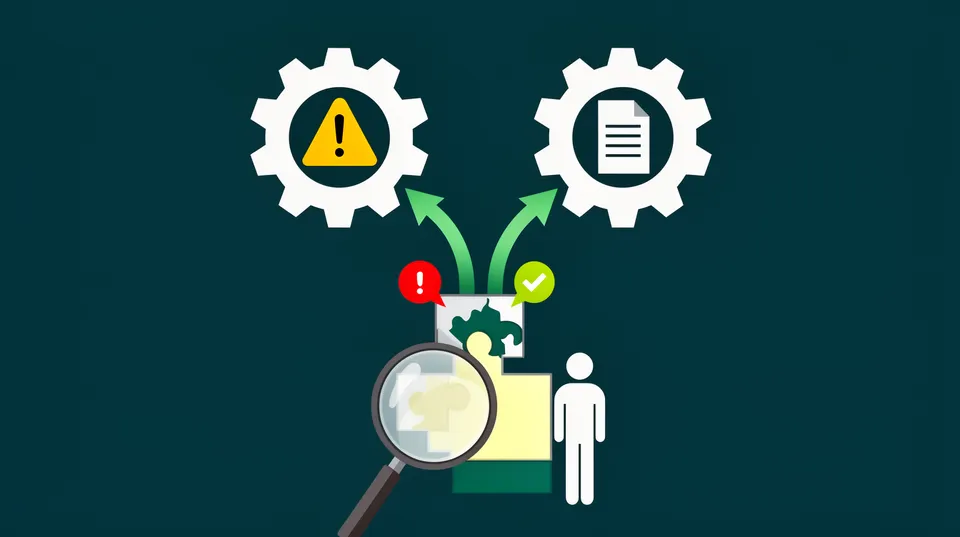
The landscape of threats and regulations constantly evolves. Software supply-chain attacks, for example, represent the primary threat shaping the 2026 security landscape, mandating even deeper integration of security and compliance controls throughout the software development lifecycle.
The ongoing trend towards AI-driven security and compliance automation will further refine these processes. AI can help in predicting compliance deviations, identifying complex attack patterns missed by traditional rule-based systems, and optimizing remediation strategies. The DoD CIO's Guidebook, for instance, s automated risk characterization and monitoring through DevSecOps phases and continuous feedback loops.
Continuous automated compliance will move from a desirable practice to a mandatory component of resilient cloud operations. Organizations that embrace this shift will reduce their attack surface, accelerate delivery, and ensure their production environments remain stable and secure against a backdrop of increasing complexity and threats. The goal is to make compliance an invisible, always-on part of doing business, rather than a periodic, expensive headache.
Operationalizing these advanced capabilities is the next step for organizations looking to mature their DevSecOps practices. Achieving this level of automation ensures security isn't just a gate but an integrated, continuous quality control measure.

Tamnoon helps security teams remediate cloud risks faster with AI-augmented managed services — combining human expertise with automation so nothing falls through the cracks.
Learn more at tamnoon.ioFAQs
What is continuous automated compliance in a DevSecOps context?
Continuous automated compliance involves embedding policy and security checks directly into the entire DevSecOps pipeline, from code development to production deployment. It relies on automation to continuously monitor, assess, and remediate compliance violations and security misconfigurations in real time or near real-time. This approach moves beyond traditional periodic audits, ensuring that systems are always in a compliant state and that any deviations are immediately detected and addressed, reducing risk and manual effort. It transforms compliance from a reactive bottleneck to a proactive accelerator for secure development.
How does integrating compliance into CI/CD prevent production outages?
Integrating compliance into CI/CD pipelines prevents production outages by catching non-compliant configurations and security vulnerabilities at the earliest possible stage. By running automated checks like static code analysis, infrastructure-as-code scanning, and dependency analysis before changes reach production, teams can identify and fix issues during development or testing. This significantly reduces the likelihood of deploying insecure or misconfigured resources that could lead to service disruptions or breaches. Early detection means issues are resolved before they can impact live systems, thereby maintaining operational stability.
What role does Policy as Code play in this process?
Policy as Code (PaC) is fundamental to continuous automated compliance. It defines security and compliance rules in a machine-readable format, such as Rego (for Open Policy Agent) or YAML. These policies are version-controlled, testable, and automatically enforced across different stages of the development lifecycle, including during IaC provisioning, container image builds, and even runtime configuration evaluations. PaC ensures consistency, transparency, and scalability in applying compliance rules, making it easier to track, audit, and update policies as requirements evolve. It transforms otherwise abstract rules into concrete, executable controls.
Which specific tools are commonly used for continuous automated compliance?
Several types of tools are essential for continuous automated compliance. For Infrastructure as Code (IaC) security, tools like Checkmarx, Bridgecrew, and Terrascan are used. Cloud Security Posture Management (CSPM) solutions such as Wiz, Prisma Cloud, and Orca Security continuously monitor cloud environments. Application Security Testing (AST) is covered by Veracode, Snyk, and Mend.io for SAST, DAST, and SCA. For overarching compliance orchestration and reporting, platforms like Tamnoon, RegScale, and Gartner-recognized solutions help manage the complete compliance lifecycle, automating workflows and evidence collection.
What are the biggest challenges when implementing automated compliance and how can they be addressed?
Key challenges include integrating disparate security tools, managing the volume of alerts (alert fatigue), and fostering developer buy-in. To address tool integration, organizations should seek platforms capable of orchestrating findings from various sources into unified remediation workflows, like Tamnoon. Alert fatigue can be mitigated by fine-tuning policies, prioritizing findings based on contextual risk, and automating the triage of low-priority issues. Gaining developer buy-in requires cultural shifts, providing actionable feedback within familiar developer tools, and demonstrating how automation streamlines their work rather than creating additional burdens. Education and internal advocacy are vital here.