

Why Cloud Security Alert Overload Continues
Cloud security alert overload continues because modern cloud environments are inherently complex, generating an astronomical number of potential security events that overwhelm traditional human-centric analysis and remediation workflows. The scale and dynamism of cloud infrastructure mean new risks appear constantly, leading to a relentless stream of alerts from increasingly specialized security tools. Cloud environments change at a pace traditional security operations weren't designed for. A single misconfigured S3 bucket, for instance, can trigger alerts from multiple tools,CSPM, DSPM, and potentially a CDR platform,each signaling the same underlying issue but presenting it in a slightly different format. This redundancy contributes heavily to alert volume. The OX 2025 Application Security Benchmark reports the average organization receives over 500,000 alerts, with 95-98% being non-critical or false positives. This isn't just a nuisance. It's a direct threat to the mental well-being and effectiveness of security teams. Consider the impact: 70% of SOC teams are emotionally overwhelmed by the volume of security alerts. This emotional toll translates directly into operational failures. When teams are overwhelmed, they disengage. 43% of SOC teams occasionally or frequently turn off alerts, a dangerous reaction that effectively blinds them to real threats. Tools like Sentinel One Singularity and AWS Security Hub are excellent at what they do,finding issues. The next step, however, requires a different approach.
The Perpetual Cycle of Cloud Alert Generation
Cloud providers introduce new services and features constantly, each with its own security implications and configuration nuances. This expansion means more potential attack surface and more settings that can be misconfigured. As security teams deploy more comprehensive tools to cover this expanding surface, the alert volume escalates correspondingly. It's a never-ending cycle., the sheer volume of telemetry data produced by cloud logs, network flows, and application events means that even with advanced filtering, many alerts will still be low-fidelity. The Microsoft SOC 2026 report found that 46% of all alerts turn out to be false positives. This percentage underscores the need for better alert correlation and, critically, better methods for moving from detection to resolution.The Damaging Effects of Alert Fatigue on SOC Teams
Alert fatigue severely damages SOC team morale, efficiency, and organizational security posture by leading to missed critical incidents, increased mean time to remediation (MTTR), and burnout among analysts. When security professionals are constantly bombarded with non-actionable alerts, their ability to distinguish real threats from background noise diminishes, directly impacting an organization's ability to respond to actual breaches promptly. The human cost is significant. Security analysts, who possess specialized skills, burn out quickly when their day is spent sifting through thousands of benign alerts. The 2024 KPMG cybersecurity survey indicated that 30% of security leaders reported alert fatigue as one of their top challenges. This isn't just a survey statistic. It represents tangible problems such as high employee turnover and difficulty in retaining experienced staff. When teams miss critical alerts because of fatigue, the blast radius of an incident can expand dramatically. For example, an over-privileged IAM role might go unaddressed for weeks, creating an open door for an attacker. Learn more about remediating over-privileged IAM roles in your cloud environment.Operational Impact and MTTR
Every alert, whether legitimate or not, requires some level of attention. Triage, investigation, and context gathering consume valuable time. If 95% of alerts are non-critical, as recent benchmarks suggest, then 95% of an analyst's time is spent on issues that aren't reducing material risk. This directly inflates a security team's MTTR. The 2025 SANS Detection and Response Survey found 73% of security teams name false positives as their single biggest detection challenge."Alert overwhelm makes staff feel like they're falling behind, causing stress and decreasing productivity. They can't possibly keep up with fixing issues when new ones appear faster than old ones are resolved."This sentiment highlights the critical need for solutions that don't just detect, but also effectively filter and remediate. Without this, security teams become reactive rather than proactive, always playing catch-up. This problem intensifies particularly for smaller teams, where alert fatigue hits even faster since they often lack dedicated analysts for every security domain. Remediation orchestration platforms are proving essential in addressing this. Platforms like Tamnoon help accelerate incident resolution significantly by reducing MTTR.
World Informatix, "Alert Fatigue in the SOC: 2026 Causes, Costs & Fixes"
Strategies for Taming the Alert Stream
Effective strategies for taming the alert stream involve a multi-pronged approach focusing on intelligent alert suppression, robust correlation, and proactive automated remediation rather than just improving detection. It's about shifting from a volume-based security model to a value-based one, ensuring that only truly actionable security issues reach human analysts for complex decision-making. First, optimize alert sources. Fine-tune your existing CNAPPs and security tools,Wiz, Orca, Prisma Cloud,to generate high-fidelity alerts. This requires a deep understanding of your cloud environment and the specific risks it faces. For instance, configuring custom policies in Wiz to only flag critical misconfigurations based on specific asset tags or network boundaries greatly reduces noise. This helps the platform detect toxic combinations where multiple risks intersect, rather than treating all findings equally. Tools like Tonic Security are also helping by integrating business context into alert generation to improve signal-to-noise ratio.Intelligent Alert Prioritization and Correlation
After optimizing sources, the next step involves intelligent prioritization. Not all alerts are created equal. Use risk scoring models that factor in asset criticality, potential impact, and exploitability. Solutions like AWS Security Hub or Azure Defender for Cloud offer some level of prioritization, but custom frameworks often provide better alignment with organizational risk appetite. Machine learning plays a crucial role here, identifying patterns and anomalies that indicate higher-risk events. Machine learning algorithms can identify incidents of interest using signature-based or anomaly-based detection schemes. This helps filter out the deluge. Leverage SIEM and SOAR platforms to correlate alerts from disparate sources. A single S3 public exposure alert might be low priority on its own, but if combined with an alert from your EDR stating that a compromised EC2 instance has IAM permissions to modify that bucket, the risk profile changes dramatically. Security Orchestration, Automation, and Response (SOAR) platforms can automate this correlation, reducing manual effort significantly. This reduces the number of raw alerts that reach human eyes and ensures that those alerts are meaningful. For teams looking to enhance their capabilities, exploring advancements like AlphaEvolve on Google Cloud for code optimization might offer additional benefits in processing complex security data.Automated Remediation as the Ultimate Solution
Automated remediation is the ultimate solution to cloud security alert fatigue because it directly addresses the action gap, transforming detected issues into production-safe fixes without requiring constant human intervention. While detection tools excel at identifying problems, automated remediation platforms ensure those problems don't linger, drastically reducing the volume of outstanding alerts that need human attention. Tamnoon's approach focuses on bridging the gap between detection and resolution. Instead of just presenting a list of alerts, it takes the output from your existing CNAPPs,Wiz, Palo Alto Prisma Cloud, Orca,and translates them into specific, production-safe remediation actions. This isn't just about scripting. It's about intelligent, AI-powered remediation that understands the cloud context and ensures fixes don't introduce new risks or break existing applications. Tamnoon uses AI-powered remediation to analyze alerts and generate specific fix-actions, ensuring fixes are targeted and effective. This moves beyond merely identifying issues to actively solving them.From Alert to Automated Fix
The process begins with Tamnoon's integration into your security ecosystem. When a tool like Upwind or Cyera flags an IAM misconfiguration, Tamnoon receives this alert. Its AI engine analyzes the alert's context, including the affected resource, its criticality, and potential blast radius. It then proposes a precise remediation. For example, if an S3 bucket is publicly exposed, Tamnoon could generate an IaC snippet in Terraform or CloudFormation to restrict public access. Here's a conceptual Terraform snippet:
resource "aws_s3_bucket_public_access_block" "secure_bucket" { bucket = "${aws_s3_bucket.my_sensitive_bucket.id}" block_public_acls = true block_public_policy = true ignore_public_acls = true restrict_public_buckets = true
}
The Role of Human-in-the-Loop in Remediation
While automation is powerful, not every fix can be fully automated without human validation, especially in highly sensitive production environments. Tamnoon incorporates a human-in-the-loop approach where cloud experts validate complex remediations. They review the proposed changes, ensure they align with organizational policies, and confirm that triggering the fix won't disrupt critical services. This blend of machine speed and human intelligence provides both velocity and safety. It ensures that even with automated systems, the operational stability remains paramount. This approach enables cloud security misconfigurations to be addressed with robust, actionable remediation strategies. You can find more about this by learning about Automated Remediation Playbooks for Production-Safe Cloud Environments. By systematically addressing the root cause of alert fatigue,the inability to efficiently remediate,Tamnoon helps organizations effectively scale their security posture. It turns the endless stream of alerts into a manageable workflow, allowing security teams to focus on strategic initiatives rather than being drowned in operational noise. This shift significantly reduces the mean time to remediation (MTTR) and strengthens overall cloud security without increasing staff burnout. Reduce your MTTR by automating remediation with Tamnoon.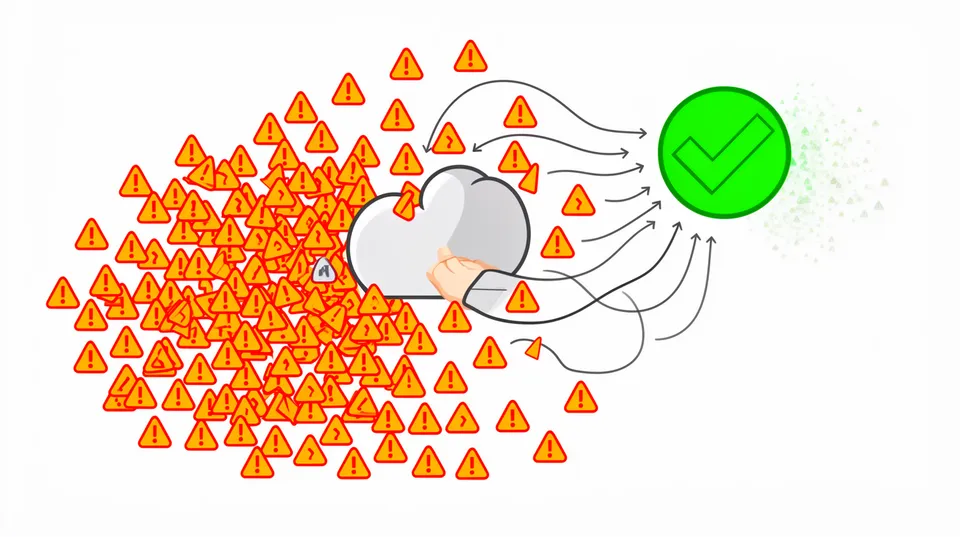

Tamnoon helps security teams remediate cloud risks faster with AI-augmented managed services — combining human expertise with automation so nothing falls through the cracks.
Learn more at tamnoon.ioFAQs
What specifically causes alert fatigue in cloud security operations?
Alert fatigue in cloud security operations stems from the sheer complexity and dynamic nature of cloud environments. Organizations often use multiple security tools like CNAPPs, CSPMs, and CDRs, each generating a high volume of alerts. Many of these alerts are false positives or low-priority issues, as highlighted by benchmarks showing that up to 98% of alerts can be non-critical. This constant barrage saturates security teams, making it difficult to distinguish genuine threats from background noise. The rapid introduction of new cloud services and misconfigurations also perpetually expands the attack surface, creating more potential security events than teams can realistically manage. This combination leads to a critical backlog of unaddressed issues, overwhelming analysts.
How does alert fatigue impact a security team's effectiveness?
Alert fatigue significantly diminishes a security team's effectiveness by causing burnout, increasing investigation times, and leading to missed critical incidents. When analysts are overwhelmed with alerts, their ability to focus and prioritize decreases, resulting in longer mean times to remediation (MTTR). This emotional and psychological toll can contribute to high turnover rates within SOC teams. More dangerously, it can cause security professionals to ignore or disable alerts, leaving the organization vulnerable to real threats that go undetected. The constant effort spent on triaging non-critical issues means less time is available for proactive security improvements or strategic threat hunting.
What is the difference between alert suppression and automated remediation?
Alert suppression involves reducing the number of alerts generated by filtering out false positives or low-priority noise at the source, or through correlation engines. It's about making sure fewer irrelevant alerts reach analysts. Automated remediation, on the other hand, takes actionable alerts and automatically applies changes to fix the underlying security issue. It moves beyond simply reducing alert volume to actually resolving the problem that triggered the alert. While suppression helps manage the symptom of too many alerts, automated remediation directly addresses the root cause of the security vulnerability or misconfiguration, effectively closing the security gap.
Can automated remediation break production environments?
Automated remediation, when poorly implemented, certainly carries the risk of breaking production environments. This is why a production-safe approach is critical. Platforms like Tamnoon mitigate this risk by using AI-powered remediation that understands the cloud context, leveraging battle-tested remediation playbooks, and incorporating a human-in-the-loop validation process. These playbooks are designed to apply fixes that are verified to not disrupt critical services. For complex or sensitive remediations, a cloud expert can review and approve the proposed changes before they are deployed, combining the speed of automation with the safety of human oversight to ensure operational stability.
What tools integrate with automated remediation platforms like Tamnoon?
Automated remediation platforms like Tamnoon are designed for ecosystem integration, working seamlessly with existing cloud security tools. They typically ingest alerts from leading CNAPPs, CSPMs, and CDRs such as Wiz, Orca Security, Palo Alto Prisma Cloud, Upwind, Cyera, Sentinel One Singularity, AWS Security Hub, and Azure Defender for Cloud. The platform acts as an orchestration layer, taking the findings from these detection tools and transforming them into actionable, automated fixes. This allows organizations to maximize their existing security investments by converting detection into tangible risk reduction, rather than replacing their current security stack.