

Security patching in cloud environments often feels like a high-stakes surgical procedure. You know it needs doing, but the risk of collateral damage makes everyone hesitant. The challenge isn't just identifying vulnerabilities. It's fixing them safely and efficiently without triggering production outages or cascading failures. This friction leads to significant delays, increasing exposure windows and operational stress.
Traditional patching processes often involve manual steps, extensive testing cycles, and a cautious, slow approach. This method conflicts directly with the rapid deployment cycles of modern cloud-native applications and the accelerated pace of threat actors. Patching is no longer an infrequent, scheduled event. It's a continuous operational requirement that demands speed and precision.
Safe automation of cloud security patching bridges this gap. It provides the mechanism to address vulnerabilities quickly, reduce the mean time to remediation (MTTR), and maintain operational stability. This It's intelligent, production-aware automation that respects the delicate balance of complex cloud systems.
The Production Impact of Manual Patching Delays
Manual patching introduces significant delays, increasing the window of exposure to active threats and contributing directly to security incidents. When remediation isn't automated and safe, organizations face extended downtimes, higher operational costs, and an elevated risk of breach.
The average window between a CVE publication and its active exploitation has shrunk dramatically. It's contracted from approximately 56 days in 2024 to roughly 10 hours by mid-202X, according to Cloud Security Alliance Labs research. This accelerated threat landscape renders manual, slow-moving patching processes obsolete. A human-driven, multi-stage approval workflow designed for on-premises infrastructure simply can't keep pace.
Organizations often struggle with the sheer volume of vulnerabilities. Cloud Security Posture Management (CSPM) tools like Wiz, Orca Security, and Palo Alto Cortex Cloud excel at identifying misconfigurations and vulnerabilities across vast cloud estates. However, turning those thousands of alerts into production-safe fixes is where the bottleneck occurs. This volume, coupled with the speed of exploitation, means that manual patching efforts often fall behind before they even start. For instance, over 80% of organizations that miss a 24-hour patch window report security incidents involving known vulnerabilities, as highlighted by a Cloud Security Alliance press release.
Blast Radius: What Breaks During Failed Patches
A failed patch isn't just an inconvenience. It can trigger a significant incident. The 'blast radius' describes the extent of impact from a security incident or a remediation attempt that goes wrong. In cloud environments, misapplied patches or updates can:
- Cause service outages: Incorrect package versions, library dependencies, or configuration changes can halt critical applications. A patch on a core service, if not properly validated, might cascade into an unavailability of downstream services.
- Introduce new vulnerabilities: Sometimes, a patch isn't compatible with an existing configuration, rolling back a security setting or exposing new attack vectors. For example, a Linux kernel update might break specific network drivers, leading to connectivity issues or even insecure fallbacks.
- Corrupt data: Database patches, if not executed flawlessly, can lead to data loss or integrity issues. Imagine an Amazon RDS patch that corrupts a transaction log. Recovery can be lengthy and expensive.
- Trigger compliance violations: An erroneous patch might inadvertently change security group rules, exposing resources publicly, or alter audit logging configurations, violating regulatory requirements.
Understanding and minimizing this blast radius is paramount. Production-safe automation needs to incorporate mechanisms to detect and prevent such outcomes before they happen. This isn't just about speed. It's about precision and pre-validation. You can read more about understanding this concept in the context of remediation here: Understanding Blast Radius in Cloud Security Remediation.
The Need for Safe, Automated Patching
Automated patching, when implemented safely with validation and rollback capabilities, drastically reduces MTTR, improves security posture, and frees up engineering resources. This approach moves beyond simple vulnerability detection to actionable, production-ready fixes.The goal isn't just to patch quickly, but to patch correctly without disrupting business operations. This involves more than just scripting. It requires intelligent orchestration that understands the cloud environment's context and dependencies. When security alerts come in from tools like SentinelOne Singularity or AWS Security Hub, the question is no longer if a vulnerability exists, but how to fix it without breaking production.
Consider the scale: 71% of business leaders reported a high rise in attack frequency in 2025-26, according to SentinelOne research. This heightened threat landscape means organizations can't afford long remediation cycles. Security teams need the ability to respond to threats at cloud speed.
"Effective security in the cloud requires an operational model that prioritizes automated, context-aware remediation. Simply detecting issues isn't enough. Organizations must be equipped to fix them with confidence, minimizing human error and maximizing system uptime."
Cloud Security Alliance
Key Principles of Safe Automation
Safe automation It's augmenting their capabilities and ensuring that automated actions are always within defined guardrails. This approach relies on several core principles:
- Contextual Awareness: Automated systems must understand the resource's role, its dependencies, and its impact on critical services. A patch on a development environment's test server has a different risk profile than one on a production database.
- Pre-validation: Before deployment, potential fixes should undergo automated validation against existing configurations, policies, and known compatibility issues. This can involve dry runs, static analysis of proposed IaC changes, or even deployment to a canary environment.
- Rollback Mechanisms: Every automated remediation action must have a clearly defined, tested, and automated rollback plan. If a patch fails or causes an unforeseen issue, the system must revert to a stable state quickly.
- Human-in-the-Loop: For critical or high-risk remediations, human oversight and approval are essential. Automation prepares the fix, but an expert verifies its safety before execution. This balances speed with necessary caution.
- Idempotence: Patching actions should be repeatable without causing unintended side effects. Applying the same patch multiple times shouldn't break anything.
- Granularity: Patching should target the smallest possible blast radius. Instead of updating an entire cluster, can we update a specific set of instances or a single component?
Building Production-Safe Patching Workflows
Implementing safe automated patching requires integrating security insights with operational pipelines, remediation playbooks, and adopting a human-in-the-loop validation model. This ensures fixes are both fast and secure.Tamnoon provides a platform specifically designed to orchestrate this remediation lifecycle. It moves beyond detection tools from vendors like Cyera or Upwind by providing the actual fix. This involves converting security alerts into executable remediation playbooks that are production-safe. These playbooks are pre-configured, battle-tested workflows for common cloud threats, such as IAM misconfigurations or S3 bucket exposures.
For example, if a CSPM flags an S3 bucket with overly permissive access, Tamnoon's AI-Powered Remediation engine can generate a proposed fix (e.g., updating the bucket policy via an AWS CloudFormation template or direct API call). This proposed fix is then passed through a Human-in-the-Loop validation step. Tamnoon's cloud experts, or the customer's SecOps team, review the proposed change, simulate its impact, and approve its execution. This hybrid approach ensures zero downtime and minimizes the risk of production impact.
Step-by-Step Implementation
Here's a practical breakdown of how to integrate safe automated patching into your cloud operations:
- Centralize Alerts and Prioritize: Aggregate security alerts from all your detection tools (e.g., Wiz, Palo Alto Cortex Cloud, Orca) into a central platform like AWS Security Hub or Tamnoon. Use Tamnoon's Agentic Prioritization to cut through alert fatigue and focus on high-impact vulnerabilities. Tamnoon doesn't just prioritize. It helps fix these critical issues.
- Develop Remediation Playbooks: Create standardized, version-controlled playbooks for common vulnerabilities. These aren't just shell scripts. They're Infrastructure as Code (IaC) templates, API calls, or configuration management scripts (e.g., Ansible, Terraform). Tamnoon comes with an extensive library of Production-Safe Playbooks. For example, a playbook for fixing an exposed S3 bucket might involve:
resource "aws_s3_bucket_public_access_block" "restrict_public_access" { bucket = var.bucket_name block_public_acls = true block_public_policy = true ignore_public_acls = true restrict_public_buckets = true
}
This Terraform snippet restricts all public access to an S3 bucket. A Tamnoon playbook would wrap this, handle variable injection (
var.bucket_name), and orchestrate its deployment. - Implement Human-in-the-Loop Validation: For critical changes, require explicit approval. Tamnoon's platform ensures that remediation actions, especially those touching production environments, are reviewed by an expert before execution. This is where human expertise validates the AI's proposed fix.
- Automate Execution with Rollback: Once approved, the playbook is executed. The automation engine should track the state of the resource before the change and be capable of reverting to that state if the remediation fails or causes an issue. For instance, using AWS CloudFormation Change Sets allows you to preview changes and roll back if necessary.
- Monitor and Verify: Post-remediation, continuously monitor the affected resource and related services to ensure the fix was successful and didn't introduce new issues. CSPM tools can re-scan and verify compliance.
This process transforms reactive patching into a proactive, controlled, and efficient operation. It's how you reduce your MTTR significantly, bridging the gap between detection and actual remediation. More on this topic can be found here: Slash MTTR in Cloud Security Operations with Proactive RemOps Strategies.
The Role of AI and Ecosystem Integrations
AI-powered remediation engines analyze complex alerts and generate precise fixes, while deep integrations with existing security and cloud tools ensure seamless operation and continuous improvement. This accelerates patching and reduces manual effort.Artificial intelligence is a force multiplier in cloud security. AI models are increasingly accelerating vulnerability discovery, meaning the volume and complexity of security findings will only grow. Tamnoon's AI-Powered Remediation engine acts as a 'copilot' for SecOps teams, analyzing alerts from various sources and suggesting the most appropriate, production-safe remediation steps. It learns from past remediations, constantly refining its playbooks and reducing the need for manual intervention on repetitive tasks.
The shared responsibility model in cloud computing often leads to misunderstandings about who patches what. False assumptions, such as thinking the cloud provider automatically patches every workload, lead to misconfigurations. This creates a critical need for customers to manage their security posture proactively. Technologies like ASPM frameworks are gaining traction. 40% of organizations developing proprietary applications will deploy them by 2026, according to Palo Alto Networks estimates. These frameworks, integrated with AI-driven remediation, can automate much of the patch management for custom applications.
Integrating with Your Existing Stack
Effective automation doesn't replace your existing security investments. It enhances them. Tamnoon integrates with a wide array of tools to create a cohesive security remediation ecosystem:
- Cloud Security Posture Management (CSPM): Tools like Wiz, Orca Security, and Prisma Cloud detect misconfigurations. Tamnoon ingests these alerts and initiates remediation workflows. Tamnoon's integration with Wiz is a prime example of this .
- Cloud Workload Protection Platforms (CWPP): Solutions from vendors like SentinelOne Singularity or CrowdStrike Falcon identify runtime vulnerabilities. Tamnoon can orchestrate the patching of underlying infrastructure or application components based on these findings.
- Developer Tools: Integration with CI/CD pipelines (e.g., GitHub Actions, GitLab CI) allows for remediation as part of the development lifecycle, shifting left.
- Cloud Providers: Direct API integrations with AWS, Azure, and GCP enable Tamnoon to execute remediations and verify changes programmatically. Oracle also provides monthly Critical Security Patch Updates (CSPU), starting in May 2026, which platforms like Tamnoon can help orchestrate and apply. Source for Oracle CSPU.
These integrations mean security teams don't need to switch contexts constantly. They get a unified view of vulnerabilities and a streamlined path to remediation, regardless of the detection source. Cloud security posture management is forecast to grow 33.4% in 2026, as per the Software Strategies Blog forecasts, indicating a continued reliance on these detection layers which remediation platforms can then act upon.
The Future of Remediation: AI-Powered Orchestration
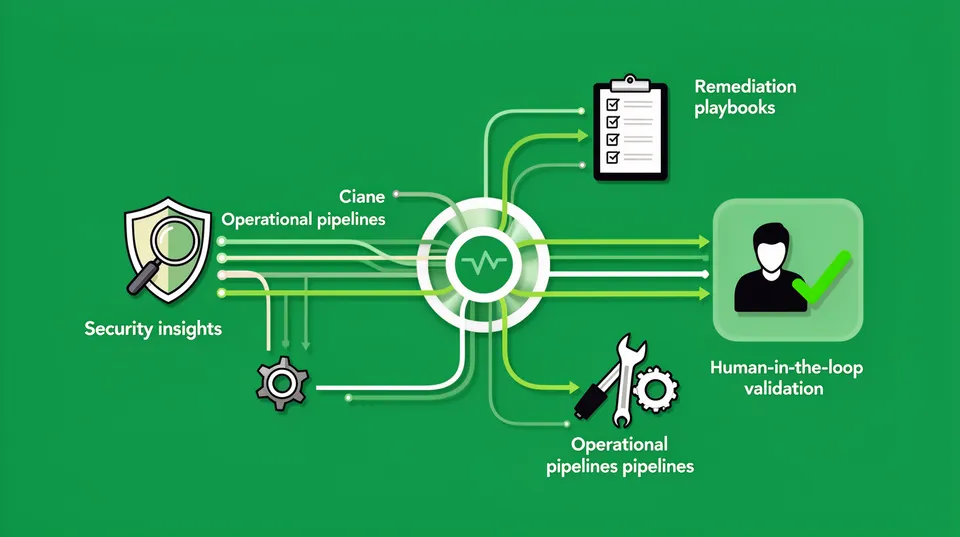
The next wave of cloud security involves increasingly sophisticated AI driving remediation. This isn't just about scripting known fixes. It's about AI analyzing novel attack paths, predicting the impact of changes, and even generating new remediation code snippets on the fly. This level of AI-Powered Remediation, coupled with expert Human-in-the-Loop validation, ensures that even complex, novel vulnerabilities can be addressed safely and at speed.
By treating remediation as an integral, automated part of the security lifecycle, organizations can significantly reduce their risk posture. It shifts the focus from an endless cycle of alert generation to actual problem solving, ensuring security teams are no longer just detectors but active protectors of the cloud environment. This is how you address the root cause of alert fatigue and enable SecOps teams to scale their impact effectively.
Reduce your MTTR by automating remediation with Tamnoon.

Tamnoon helps security teams remediate cloud risks faster with AI-augmented managed services — combining human expertise with automation so nothing falls through the cracks.
Learn more at tamnoon.ioFAQs
What is safe automation in cloud security patching?
Safe automation in cloud security patching means applying security fixes automatically without causing unintended disruptions to production environments. It involves intelligent orchestration, pre-validation of changes, robust rollback mechanisms, and often a human-in-the-loop review for critical actions. This approach ensures that while vulnerabilities are addressed quickly, operational stability and business continuity remain paramount. It moves beyond simple scripting to context-aware, risk-minimized remediation.
How does Tamnoon ensure production-safe remediation?
Tamnoon ensures production-safe remediation through a combination of AI-powered analysis, expert-led Human-in-the-Loop validation, and battle-tested Production-Safe Playbooks. Its AI engine generates precise fix-actions, which are then reviewed and approved by cloud experts before execution. Each remediation includes built-in rollback capabilities and operates with a deep understanding of the cloud environment's dependencies, minimizing the blast radius and preventing operational impact. This hybrid model balances speed with critical oversight.
What are the common risks of manual patching in the cloud?
Manual patching in the cloud carries several significant risks. It's slow, leading to extended vulnerability exposure windows that threat actors can exploit. Manual processes are also prone to human error, which can result in misconfigurations, service outages, data corruption, or even the introduction of new vulnerabilities. The sheer volume and velocity of cloud changes make it nearly impossible for manual efforts to keep pace, contributing to alert fatigue and a constantly growing remediation backlog.
Why is Human-in-the-Loop validation crucial for automated patching?
Human-in-the-Loop validation is crucial for automated patching because it injects expert judgment into complex or high-risk remediation processes. While AI can propose fixes, a human expert can assess the broader operational context, potential edge cases, and unique environmental factors that an automated system might miss. This oversight acts as a critical safety net, preventing unintended consequences, confirming the proposed fix won't break production, and building confidence in automated workflows. It ensures intelligent automation, not blind automation.
How do remediation playbooks contribute to accelerating patching?
Remediation playbooks accelerate patching by standardizing and automating the steps required to fix common cloud vulnerabilities. Instead of starting from scratch for each alert, pre-configured playbooks provide battle-tested workflows that can be executed rapidly. These playbooks encapsulate best practices, include necessary checks and balances, and often integrate with existing cloud APIs or IaC tools. This reduces manual effort, minimizes errors, and drastically cuts down the mean time to remediation (MTTR), allowing security teams to address threats at cloud speed.