

A CNAPP flags an issue, the suggested fix seems simple, yet the team hesitates because they don't know what else that change might touch. This hesitation has a name: unknown blast radius. Addressing this specifically is crucial for reducing Mean Time To Remediation (MTTR) as Cloud Security Managers and SecOps teams well know.
CNAPPs like Wiz, Orca, and Prisma Cloud are proficient at detection, but the jump from alert to production-safe fix remains a challenge. The core problem usually isn't the fix itself, but fear of the unknown blast radius. This uncertainty often relegates critical alerts to backlogs, delaying necessary security postures.
What blast radius means in cloud security
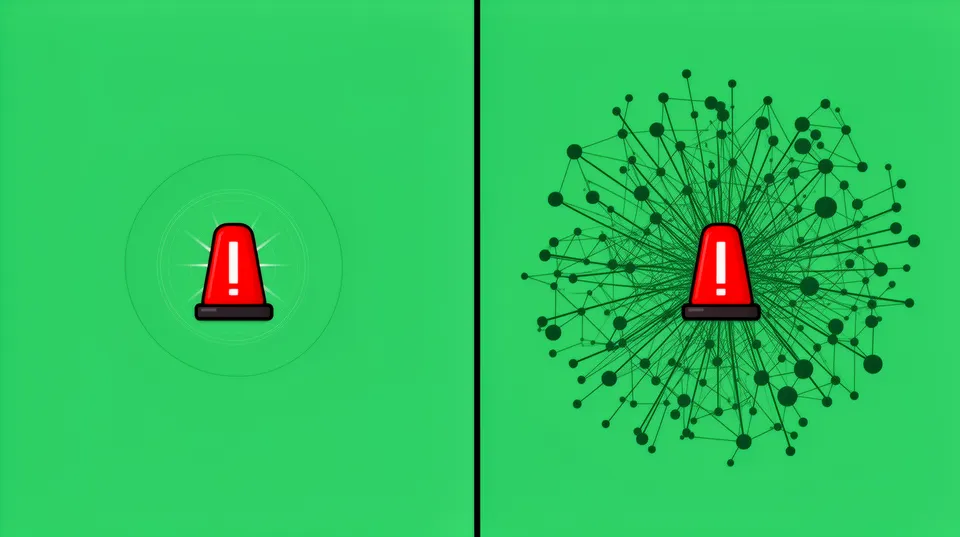
In cloud security, blast radius defines the set of systems, services, dependencies, and users a single change could affect. It's a critical concept, but its interpretation shifts based on context. For incident response, it means the scope of an attack's damage. Imagine an Airbus subsidiary experiencing a ransomware attack, involving a significant data breach. The blast radius there refers to every system and data store compromised. For context, many business leaders reported a high rise in attack frequency in 2025-26, making attack blast radius identification a frequent exercise.
This article focuses on the blast radius cloud security teams contend with when applying a fix. This is the scope of impact when a remediation is applied. Gartner's CNAPP guidance also uses the term, particularly regarding scoping agent authorization. Understanding this is because an incomplete picture often prevents teams from acting. Tools like Forward Enterprise and Datadog Security Graph offer features to identify this, though often from a monitoring rather than a pre-remediation perspective.
Why blast radius determines whether a fix is safe to apply
Remediation risk is heavily influenced by blast radius, sometimes in counter-intuitive ways. Two identical alerts in different environments can pose vastly different remediation risks. For example, a publicly accessible S3 bucket serving static website assets is one thing. A public S3 bucket containing sensitive customer data or logs is another. The fix may be the same, but the impact of a temporary outage or configuration change isn’t. Teams need to understand the blast radius of a fix.
Most security platforms excel at surfacing alerts but fall short on presenting the blast radius of potential fixes. Security teams often map this manually, sifting through CloudTrail logs, running IAM analyzers, constructing dependency graphs, and relying on tribal knowledge. This manual effort is a primary bottleneck. It's why MTTR for critical cloud alerts averaged 128 days in 2026, according to a March 2026 Gartner report. The gap isn't detection. It's the exhaustive, time-consuming process of figuring out what a fix will break before it runs.
The manual toil spent mapping potential impact adds significant friction. In 2025, each cloud asset had 115 vulnerabilities on average, creating an overwhelming volume of alerts. Without clear blast radius analysis, fixing one issue risks creating another, leading to an operational Catch-22. This issue is foundational to effective cloud security remediation.
Three things that shape blast radius
Multiple factors contribute to the complexity of the remediation blast radius, making each fix a unique operational challenge.
- Dependencies and references: Cloud resources rarely exist in isolation. IAM roles might be tied to dozens of services, a security group change could affect multiple EC2 instances, and Lambda functions often trigger downstream services. Understanding these intricate webs is critical. An example of this complexity is a change to an IAM policy which, without blast radius analysis, could unwittingly cripple a production application.
- Active traffic and usage patterns: A configuration that looks dormant in a dependency graph might be part of an active request path. Conversely, a seemingly critical configuration might be unused. Analyzing CloudTrail logs and other real-time usage metrics helps determine if a component is actively processing traffic or if it's a stale artifact.
- Configuration coupling: Shared state, encryption keys, or policies can mean a change in one place propagates broadly. For instance, modifying a KMS key policy could inadvertently affect numerous services encrypting data with that key. Unraveling these interconnected configurations is essential to prevent cascading failures.
These elements combine to form a complex picture that alert-generating tools don't typically provide. With many companies experiencing serious cloud security issues, the need for robust pre-remediation analysis is clear.
How TAMI V2 assesses blast radius before remediation
TAMI V2 streamlines this complex analysis. Before suggesting any remediation, it runs an agentic investigation pass. This process meticulously maps dependencies across your cloud environment, analyzes CloudTrail for actual usage patterns, and checks configuration relationships. This automated, data-driven approach means you're no longer guessing about the potential impact.
TAMI V2 then produces a Remediation Confidence Score (RCS). This score, based on the calculated blast radius, is classified as SAFE, RISKY, or UNSAFE. Crucially, it provides a plain-language explanation for why a fix falls into a particular category. This isn't just about alert severity alone. It's about the real-world operational risk of the fix. This agentic investigation offers immediate clarity on whether a remediation can proceed with minimal human oversight or requires careful coordination.
Closing the alert-to-fix gap

Understanding blast radius decides whether a fix runs automatically, needs coordination, or requires more evidence before execution. Teams who can see this blast radius move faster, and those who can't remain stuck in the 128-day MTTR cycle. Bringing blast radius analysis to the forefront of remediation is key for improving security posture.
Bring your top 10 unresolved CNAPP alerts to a 30-minute session and see the blast radius behind each one. Visit /demo/ to schedule a session.

Tamnoon helps security teams remediate cloud risks faster with AI-augmented managed services — combining human expertise with automation so nothing falls through the cracks.
Learn more at tamnoon.ioFAQs
What is the 'blast radius' in the context of cloud security remediation?
In cloud security remediation, the 'blast radius' refers to the potential scope of impact and damage that a security incident or vulnerability could cause if exploited. It encompasses all the resources, data, and services that would be compromised or affected if a particular security control fails or a vulnerability is successfully attacked. Understanding the blast radius is crucial for prioritizing remediation efforts, as it helps organizations identify which vulnerabilities pose the greatest systemic risk and require immediate attention to minimize potential harm.
Why is minimizing the blast radius a critical aspect of cloud security remediation strategies?
Minimizing the blast radius is paramount in cloud security remediation because it directly impacts an organization's resilience and ability to recover from security incidents. A smaller blast radius means that if a breach occurs, fewer assets are compromised, less data is exposed, and the disruption to services is contained. This significantly reduces financial losses, reputational damage, and the effort required for recovery. By designing systems and remediation processes with a focus on limiting the blast radius, organizations can build more robust and fault-tolerant cloud environments.
What are some common strategies organizations employ to reduce their cloud security blast radius?
Organizations employ several strategies to reduce their cloud security blast radius. These include implementing granular access controls (least privilege), network segmentation (micro-segmentation), immutable infrastructure, using serverless functions for critical tasks, and maintaining isolated environments for different applications or data criticality levels. Additionally, adopting a well-architected framework and regularly performing security audits, penetration testing, and incident response drills further help identify and mitigate potential blast radius expansion points before a real incident occurs.
How does 'least privilege' relate to the concept of blast radius in cloud security?
'Least privilege' is a fundamental security principle that directly impacts the blast radius. It dictates that users, applications, and services should only be granted the minimum necessary permissions to perform their intended functions. By strictly adhering to least privilege, even if an account or service is compromised, the attacker's ability to move laterally and access other resources is severely limited. This containment dramatically shrinks the potential blast radius of an exploit, preventing a localized breach from escalating into a widespread compromise across multiple cloud resources.
What role does automation play in effectively managing and reducing the blast radius during cloud security remediation?
Automation plays a pivotal role in effectively managing and reducing the blast radius during cloud security remediation. Automated tools can quickly detect and respond to anomalies, isolate compromised resources, revoke unnecessary permissions, and deploy patches or configuration changes across an entire environment with speed and consistency. This rapid response capability is crucial because the longer a vulnerability remains unaddressed or an incident propagates, the larger the blast radius becomes. Automation ensures that remediation actions are executed promptly and accurately, significantly minimizing the potential impact and scope of security incidents.