

Security teams receive a constant deluge of alerts from cloud environments, often struggling to translate these detections into meaningful, production-safe remediation at speed. The core challenge isn't detection. It's the operationalization of fixes, particularly in the cloud where infrastructure changes are constant.
MTTR, or Mean Time To Remediate, remains stubbornly high for many organizations. This isn't just an inconvenience. It represents an open window for potential breaches and increased operational risk. Streamlining this process requires a shift from reactive security to proactive, automated remediation operations, often termed RemOps.
Understanding the common bottlenecks in the remediation workflow is the first step toward reducing MTTR dramatically. This involves looking beyond simple alert correlation and into how fixes are discovered, validated, and applied in cloud settings.
Automating Initial Triage and Context Gathering
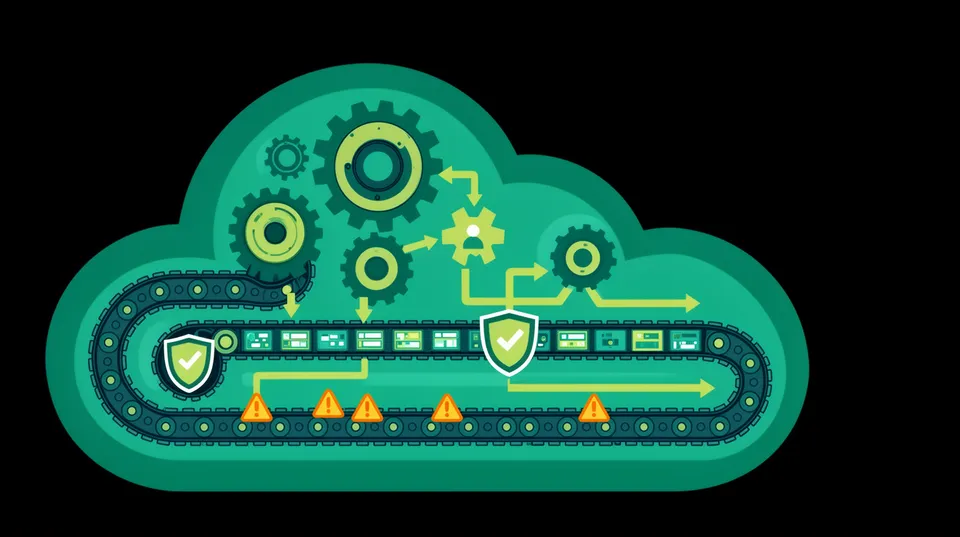
Automatically gathering context and performing initial triage significantly reduces the time security analysts spend on manual investigation, allowing them to focus on true exceptions. Cloud environments generate a high volume of alerts from tools like Wiz, Orca Security, Palo Alto Cortex Cloud, and Azure Defender for Cloud. Each alert description needs enrichment with contextual data to assess its true severity and potential impact. This context includes asset metadata, owner information, network reachability, and existing security controls. Without automation, this process is slow and prone to human error, directly contributing to high MTTR.
Consider an alert about an S3 bucket misconfiguration: it's publicly accessible. An analyst might spend an hour or more correlating this with sensitive data presence, the bucket's purpose, its associated applications, and recent access patterns. Automated systems can pull this information programmatically. For instance, using AWS Config rules and Lambda functions, you can trigger automatic data classification scans and access policy retrievals when a bucket's public access settings change. Similarly, Google Security Operations offers a unified experience across SIEM, SOAR, and threat intelligence to streamline alert triage and response orchestration like a centralized hub. This automated data collection provides a richer understanding without human intervention, leading to faster, more accurate decisions.
Tamnoon's AI-powered remediation engines ingest alerts from various security tools and immediately enrich them with critical context about the affected cloud resources. This includes metadata from AWS, Azure, and GCP, alongside insights from existing CI/CD pipelines, allowing for a more accurate risk assessment from the outset. Automated correlation of findings with organizational policies and STIXTM and TAXIITM standards further refines the understanding of the threat, presenting security teams with pre-vetted, actionable insights instead of raw alerts.
Developing and Implementing Remediation Playbooks
Pre-defined, production-safe remediation playbooks allow security teams to respond to common vulnerabilities with speed and consistency, eliminating guesswork and reducing the risk of production impact. Many cloud security issues are recurring. IAM over-permissioning, unencrypted storage, and exposed network ports are not novel threats. Developing standardized, battle-tested playbooks for these common scenarios is crucial. These aren't just theoretical steps. They're executable code snippets or Infrastructure as Code (IaC) templates designed to fix issues without disrupting production. For example, a playbook for an over-privileged IAM role might involve updating an inline policy or attaching a more restrictive managed policy. A well-crafted playbook includes pre-checks, the actual fix, and post-validation steps.
Consider an AWS S3 bucket with overly permissive policies identified by Orca Security or Wiz. A remediation playbook could be a Terraform module that explicitly restricts public access and enforces encryption. Here's a conceptual example:
# Terraform module for S3 public access remediation
resource "aws_s3_bucket_public_access_block" "restrict_public_access" { bucket = var.s3_bucket_id block_public_acls = true block_public_policy = true ignore_public_acls = true restrict_public_buckets = true
} resource "aws_s3_bucket_server_side_encryption_configuration" "encrypt_bucket" { bucket = var.s3_bucket_id rule { apply_server_side_encryption_by_default { sse_algorithm = "AES256" } }
} # Add validation checks post-remediation
output "public_access_blocked" { value = aws_s3_bucket_public_access_block.restrict_public_access.block_public_acls description = "Confirms if public access is blocked."
}
Tamnoon specializes in these Production-Safe Playbooks. They're not just scripts. They're verified workflows developed by cloud security experts, designed to address threats like IAM misconfigurations or S3 exposure with zero downtime. This expert-led, human-in-the-loop approach ensures complex remediations are validated before execution, preventing unintended consequences. Moreover, 28% of the DevSecOps market is driven by secure CI/CD automation, highlighting the need for remediation to integrate into existing development workflows.
Integrating Remediation into CI/CD Pipelines
Embedding security remediation directly into CI/CD pipelines ensures that misconfigurations and vulnerabilities are caught and corrected before they ever reach production, significantly reducing the security debt. Security issues introduced during development are substantially cheaper and faster to fix than those discovered in production. Integrating security checks and automated remediation into the CI/CD pipeline acts as a preventative measure. This means tools like static application security testing (SAST), application security testing (DAST), and Infrastructure as Code (IaC) scanning are run early. More importantly, when these tools identify issues, automated remediation steps are triggered, either to fix the code or the IaC template directly or to halt the pipeline until manual intervention resolves the issue.
Consider a scenario where a developer commits a Terraform file that creates an internet-facing EC2 instance without proper security group restrictions. An IaC scanner like Checkov or OpenTofu could flag this. Instead of merely reporting it, a pipeline integrated with a remediation platform could automatically apply a more restrictive security group rule, or at least suggest the corrected IaC code. This shift-left approach is powerful. For example, GitHub Actions or GitLab CI runners can execute Tamnoon's Remediation Playbooks as part of a pre-merge check or post-deployment validation.
Here's a simplified GitHub Actions workflow snippet that could integrate IaC scanning and a hypothetical automated fix:
name: IaC Security Scan and Auto-Remediate
on: [push, pull_request]
jobs: security_scan: runs-on: ubuntu-latest steps: - uses: actions/checkout@v4 - name: Install Terraform uses: hashicorp/setup-terraform@v2 with: terraform_version: 1.5.0 - name: Install Checkov run: pip install checkov - name: Run Checkov IaC Scan id: checkov_scan run: checkov --directory . continue-on-error: true - name: Detect and Apply Remediation with Tamnoon if: failure() run: | # This is a placeholder for Tamnoon's integration point # In a real scenario, this would involve calling the Tamnoon API # with the scan results to trigger a specific playbook. echo "IaC misconfiguration detected. Attempting automated remediation via Tamnoon." # curl -X POST https://api.tamnoon.io/remediate \ # -H "Authorization: Bearer ${{ secrets.TAMNOON_API_KEY }}" \ # -d "{\"issue_type\": \"overly_permissive_sg\", \"repo_url\": \"${{ github.repositoryUrl }}\", \"commit_sha\": \"${{ github.sha }}\"}" # For demo, just simulate a fix suggestion echo "Tamnoon suggests fixing: Replace '0.0.0.0/0' with specific IP CIDRs in security group rules." exit 1 # Fail pipeline to enforce review before merge
This automated integration moves beyond mere detection. It initiates the remediation process directly within the development workflow. This proactive stance significantly reduces the MTTR for issues that would otherwise propagate into production, where fixing them is costlier and riskier. Tamnoon's CDR Copilot integrates with existing security tools and cloud environments, as well as popular CI/CD systems, allowing for this kind of direct, early-stage remediation.
AI for Contextual Remediation Suggestions
AI-driven analysis of security alerts and environmental context speeds up the remediation process by offering highly specific, production-safe fix recommendations tailored to each unique situation. Security alerts often lack the granular detail needed for immediate action. An alert might say "S3 bucket public," but it doesn't specify which policy is causing it, what data it contains, or the business criticality. AI can bridge this gap by analyzing multiple data points,network configurations, IAM policies, resource tags, application dependencies, vulnerability scan results from tools like Sentinel One Singularity, and even developer commit history,to understand the full blast radius and suggest the most appropriate fix. This moves beyond simple signature-based remediation to a more intelligent, context-aware approach.
An AI engine can analyze an alert from Wiz or Orca Security regarding a non-compliant EC2 instance. It can then cross-reference this with the existing security group rules, network ACLs, associated application load balancers, and even historical changes to the instance. Based on this comprehensive view, it wouldn't just suggest "fix security group," it would recommend: "Modify security group sg-xxxxxxxx to remove ingress rule for port 22 from 0.0.0.0/0 and replace with bastion host IP 10.0.0.5/32. This change has a low impact as only internal SSH access is permitted through the bastion." This level of detail s engineers to act quickly and confidently. Organizations with up to 1,000 employees surveyed over 500 IT and security leaders, highlighting the growing need for efficient security operations a problem only AI can address effectively.
"AI's strength in cloud security operations lies not just in identifying anomalies, but in its ability to synthesize vast amounts of disparate data to pinpoint the exact root cause and then propose an optimal, contextually aware solution. This dramatically reduces the cognitive load on security analysts and accelerates decision-making around remediation."
Resilient Cyber
Tamnoon's AI-Powered Remediation is designed precisely for this. It takes the output from your existing security tools, processes it through advanced analytics, and generates specific fix-actions. These actions are often presented as executable code or IaC snippets, ready for review and deployment. This greatly reduces the "time to understand" and "time to propose fix" components of MTTR. For example, if a misconfigured database is detected, Tamnoon's AI could suggest applying a specific encryption key policy, adjusting firewall rules, and even creating an automated backup routine if none exists, all within a single remediation proposal.
Implementing Human-in-the-Loop Validation
Incorporating human oversight into automated remediation workflows balances the speed of automation with the need for critical judgment, ensuring production environments remain stable. While automation greatly accelerates remediation, not every fix can be fully autonomous, especially in complex or highly sensitive production environments. A "human-in-the-loop" (HITL) model is essential. This means proposed automated fixes are reviewed and approved by a security engineer or DevOps professional before execution. This prevents accidental service outages or unintended security regressions. The HITL review process itself needs to be efficient, providing all necessary context to the reviewer.
A human reviewer should see the original alert, the proposed automated fix (e.g., the Terraform code or CLI command), the expected impact, and any pre-computed blast radius analysis. This allows for a quick, informed decision. For instance, rather than a security team member spending hours drafting the correct CloudFormation template to restrict IAM permissions, Tamnoon's AI might generate the precise JSON policy. The human then reviews this generated policy, green-lights it, and the system executes the change. This method acknowledges that even with advanced AI, certain decisions require human expertise, particularly when managing blast radius implications.
Tamnoon's platform inherently uses a Human-in-the-Loop model. Its expert-led remediation service means that while AI generates specific fix-actions, human cloud security experts validate complex remediations to ensure zero downtime. This is particularly for critical incidents or those involving sensitive data. The platform provides a clear interface for approving, modifying, or rejecting proposed remediations, making the human intervention efficient. This hybrid approach allows organizations to achieve 34% faster incident response while maintaining confidence in the integrity of their production systems.
Continuous Monitoring and Feedback Loops
Establishing robust continuous monitoring and feedback loops ensures that remediations are effective, sustainable, and adapt to the constantly changing cloud environment, preventing recurrence of vulnerabilities. Remediation isn't a one-time event. It's a continuous cycle. After a fix is applied, it's critical to monitor the environment to confirm the vulnerability is indeed resolved and hasn't resurfaced or introduced new issues. This involves re-running security scans, checking compliance dashboards, and monitoring application performance., feedback from applied remediations should inform future playbook development and AI model training, creating a self-improving system.
If an automated remediated S3 bucket policy is reapplied, a continuous compliance check via AWS Security Hub or a custom Config rule would verify that the bucket remains non-public. If it reverts due to an unexpected IaC deployment or manual change, the system needs to re-alert and potentially re-apply the fix. This proactive verification closes the loop. This is critical because a survey of 550 security leaders reveals challenges with detection gaps and skills shortages, emphasizing the need for automated verification.
Tamnoon's platform supports this with its Ecosystem Integration. It connects with existing security tools like Wiz, Orca Security, and Prisma Cloud, allowing for post-remediation validation and continuous monitoring. If a remediation fails or the issue reappears, the platform can automatically trigger a re-assessment, notify relevant teams, and even suggest an alternative playbook. This closed-loop system is fundamental to lowering MTTR long-term, moving beyond simply fixing individual issues to building a more resilient and self-healing cloud security posture. This reduces alert fatigue and ensures previous fixes persist, ensuring that security debt doesn't accumulate unknowingly.
Optimizing Collaboration Between Security and DevOps
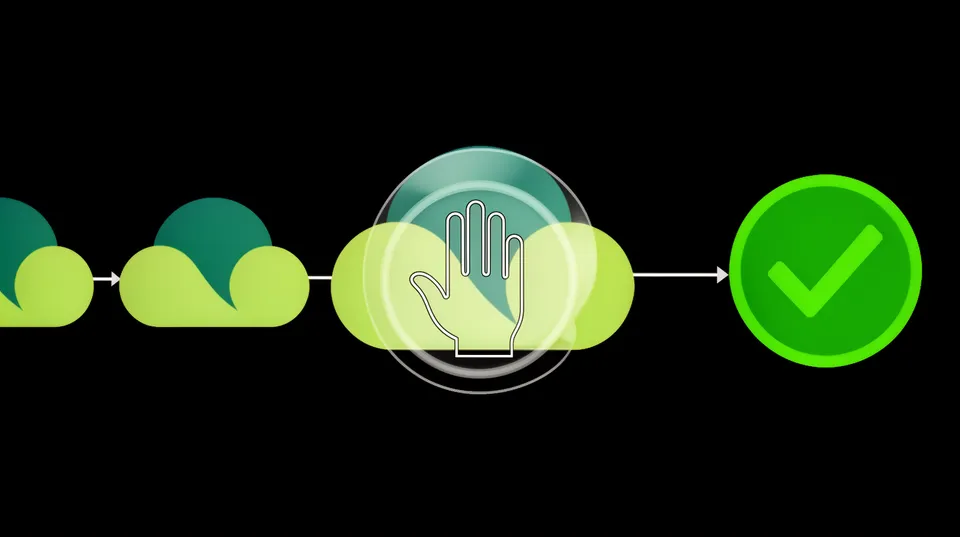
Streamlining communication channels and operational workflows between security and DevOps teams ensures faster, more effective remediation by sharing context and responsibility. Often, high MTTR stems from friction between security and development teams. Security identifies problems. DevOps owns the code and infrastructure. Without clear processes, shared understanding, and integrated tools, handoffs become bottlenecks. Security might provide an alert without sufficient context for DevOps, leading to back-and-forth communication, delays, and frustration. Bridging this gap requires platforms that allow both teams to collaborate on remediation efficiently.
Rather than sending a raw alert from a CSPM tool, the security team can use a platform that provides a ready-to-implement fix proposal, including the exact code changes or configuration updates, and an explanation of the security impact. DevOps can then integrate this directly into their existing sprint cycles or pull request workflows. Tamnoon's Remediation Playbooks and Human-in-the-Loop workflows are designed to this. They provide executable fixes that developers can easily review and apply, often with minimal context switching. The platform acts as a shared workspace, translating security findings into developer-friendly tasks. This eliminates ambiguity and s DevOps to take ownership of security fixes without becoming security experts themselves. It's about making security a natural part of the development and operations process, not an external gate. Find out more about how DevSecOps collaboration issues can be addressed effectively. Reduce your MTTR by automating remediation with Tamnoon.

Tamnoon helps security teams remediate cloud risks faster with AI-augmented managed services — combining human expertise with automation so nothing falls through the cracks.
Learn more at tamnoon.ioFAQs
What is proactive RemOps and how does it reduce MTTR?
Proactive RemOps (Remediation Operations) is a strategy that focuses on automating and streamlining the process of fixing security vulnerabilities and misconfigurations in cloud environments before they become critical issues. It reduces MTTR by front-loading remediation efforts, using technologies like AI to suggest fixes, integrating remediation into developer workflows, and validating fixes automatically. Instead of reacting to production incidents, RemOps aims to identify and apply fixes earlier in the lifecycle, preventing issues from reaching production or rapidly resolving them if they do by having pre-approved, battle-tested playbooks available.
How do AI-powered remediation platforms differ from traditional CSPMs?
Traditional CSPMs (Cloud Security Posture Management) excel at detecting misconfigurations and vulnerabilities, generating alerts for security teams. AI-powered remediation platforms, on the other hand, go beyond detection. They ingest these alerts, enrich them with context using AI, and then generate specific, executable, production-safe remediation actions. While CSPMs tell you 'what's wrong,' AI remediation platforms provide the 'how to fix it' and can even orchestrate the application of those fixes, often with human-in-the-loop validation, significantly closing the gap between detection and actual resolution.
Can automated remediation cause production outages?
Automated remediation, when poorly implemented, certainly carries the risk of production outages. However, a well-designed RemOps strategy, especially one integrating a Human-in-the-Loop (HITL) model and production-safe playbooks, minimizes this risk significantly. Platforms like Tamnoon prioritize validation and control. Proposed fixes are often reviewed by cloud security experts before execution, and the remediation playbooks themselves are designed specifically to resolve issues without impacting application uptime. Pre-checks, blast radius analysis, and post-remediation validation are critical components to ensure stability.
How does integrating remediation into CI/CD pipelines work in practice?
Integrating remediation into CI/CD pipelines means embedding security checks and automated fix mechanisms directly into the software delivery process. For example, during a pull request, IaC scanning tools can detect misconfigurations. Instead of just failing the build, a RemOps platform can suggest or automatically apply a corrected manifest or configuration change. This provides immediate feedback to developers and enables them to fix security issues before code is merged or deployed. It shifts security left, making remediation an inherent part of the development cycle rather than a post-deployment problem.
What role does collaboration play in reducing MTTR for cloud security?
Collaboration is vital for reducing MTTR because security and development teams often have different priorities and workflows. A lack of clear communication, shared context, and integrated tools creates significant friction, leading to delays in applying fixes. Effective collaboration means security teams provide not just alerts but actionable, pre-vetted remediation proposals that developers can easily understand and implement within their existing tools and processes. Platforms that act as a bridge, translating security findings into developer-friendly tasks and vice versa, can significantly streamline this interaction, fostering shared responsibility and accelerating the overall remediation cycle.