

SecOps teams often struggle with an overwhelming volume of security alerts, a common issue stemming from the proliferation of cloud-native tools. This alert fatigue frequently coincides with significant talent shortages in cloud security, making it harder to address critical vulnerabilities promptly. The combination creates a precarious situation where threats go unaddressed, increasing an organization's risk profile.
Organizations need more than just detection capabilities. They require efficient remediation at scale to truly enhance their security posture. Simply identifying issues isn't enough when there aren't enough hands to fix them, especially in complex cloud environments. This gap necessitates strategic approaches that not only detect but also automate or significantly streamline the remediation process.
Tamnoon partners are actively bridging this gap by integrating advanced remediation platforms into their services, helping clients overcome staff limitations and improve their mean time to remediation (MTTR). This approach extends the capabilities of existing security teams without requiring constant new hires.
Why the SecOps Talent Gap Remains a Persistent Problem
The SecOps talent gap persists because the demand for specialized cloud security skills outstrips the available supply, leading to critical backlogs and increased organizational risk. Many organizations find it challenging to hire and retain cloud security engineers who possess both deep technical expertise in cloud platforms and a nuanced understanding of security best practices. This shortage means existing teams are often stretched thin, focusing primarily on reactive firefighting rather than proactive security enhancements.
Finding qualified candidates is tough. Recruiter workload averages 30 hires per month, but recruiters in Australia and the U.S. manage significantly more, at 78% and 85% above the global average respectively, indicating high demand and pressure on talent acquisition teams according to the Recruitment Benchmarks 2025 Report. This pressure applies acutely to specialized roles like Cloud Security Engineers. The complexity of cloud environments, with their constantly evolving services and configurations, requires continuous learning and adaptation from security personnel. Cloud providers like AWS and Azure frequently release new services and features, each with its own security implications. Staying current demands a significant time investment, which can deter generalist security professionals from specializing. The result is a scarcity of individuals who can competently manage security across multiple cloud platforms while also understanding the nuances of application development and DevOps pipelines.
The tools themselves contribute to the problem. Modern Cloud-Native Application Protection Platforms (CNAPPs) such as Wiz, Orca Security, and Palo Alto Prisma Cloud excel at identifying vulnerabilities and misconfigurations across diverse cloud assets. While these tools are essential for visibility, they generate a high volume of alerts. Without sufficient staff to triage, prioritize, and remediate these alerts, organizations quickly experience alert fatigue. Critical-tagged alerts in 2026 reached approximately 13% of all new alerts, a significant jump from 1.4% in 2025, according to the State of Cloud Remediation 2026 Report. This increase indicates not just more alerts, but a higher proportion of genuinely urgent issues demanding immediate attention. The sheer volume makes it difficult for understaffed teams to distinguish signal from noise and act decisively, leading to increased mean time to remediation (MTTR).
Strategic Staff Augmentation Through Partner Ecosystems
Strategic staff augmentation through partner ecosystems allows organizations to access specialized cloud security expertise without the overhead of full-time hires, effectively extending their internal SecOps capabilities. This approach is particularly effective for highly specialized tasks like cloud security remediation, where the talent pool is limited and internal training can be time-consuming. Instead of trying to hire for every niche skill, organizations can rely on partners who have already invested in developing those capabilities.
Partnerships with platforms like Tamnoon enable this augmentation. Tamnoon’s platform, with its AI-powered remediation and human-in-the-loop expert services, helps organizations address cloud security findings identified by their existing CNAPPs. This means a security team can continue using tools like Wiz, SentinelOne Singularity, or Palo Alto Cortex Cloud for detection, and then rely on Tamnoon's expertise to action those findings. The platform acts as a force multiplier, allowing smaller security teams to manage a larger workload and remediate complex issues without breaking production environments. It's about getting more done with the staff already in place, making those individuals more effective.
This model also addresses the immediate need for skilled labor. AI-assisted recruitment can reduce time-to-hire by 26% as per the 2025 Global Recruitment Report, but even with faster hiring, the core challenge of finding specialized cloud security professionals remains. Partnering provides an instant infusion of expertise. For instance, a security consultancy specializing in cloud architecture can act as a lead security advisor, bridging the gap between DevOps agility and rigorous regulatory compliance, as seen in senior cloud security architect roles. Tamnoon's partners provide this advisory and execution capability, translating identified vulnerabilities into production-safe remediations.
How Partnered Remediation Platforms Enhance Existing Teams
Partnered remediation platforms enhance existing security teams by providing agentic remediation capabilities and expert oversight, turning alerts into actionable fixes without direct resource allocation from the internal team for every single issue.
Tamnoon’s platform, for example, integrates with an organization's existing security tools. When a CNAPP like Wiz or Check Point CloudGuard identifies an IAM misconfiguration or an exposed S3 bucket, that alert feeds into Tamnoon. Instead of a security engineer manually triaging the alert, researching the fix, and then coordinating with DevOps to implement it, Tamnoon's AI generates a proposed fix. For complex or high-risk issues, Tamnoon's human-in-the-loop experts review and validate these proposed remediations, ensuring they align with an organization's specific environment and don't introduce new risks. This greatly reduces the burden on internal teams, letting them focus on strategic initiatives rather than repetitive remediation tasks.
[object Object]"The critical shortage of cybersecurity professionals, especially those with cloud expertise, mandates a shift from traditional hiring models to strategic partnerships that deliver specialized capabilities on demand. This It's amplifying their effectiveness through external, expert-driven solutions."
ISC2, Cybersecurity Workforce Study
Implementing Production-Safe Remediation Strategies
Implementing production-safe remediation strategies involves integrating automated, AI-powered fix actions with expert human oversight and pre-validated playbooks to prevent operational disruptions. The key isn't just speed but also reliability. A quick fix that breaks a critical application is worse than a slow fix. This focus on production safety drives the design of platforms like Tamnoon.
Tamnoon employs AI-Powered Remediation to analyze security alerts and generate context-aware fix actions. For example, if Wiz identifies an overly permissive IAM role in an AWS account, Tamnoon's AI assesses the role's actual usage patterns and recommends the least-privilege policy needed to maintain functionality while reducing risk. This AI capability is backed by an extensive library of Remediation Playbooks. These aren't generic scripts. They're Production-Safe Playbooks, rigorously tested and designed to resolve common cloud threats like exposed S3 buckets or unencrypted databases without impacting application uptime. These playbooks are often integrated directly with cloud provider APIs, such as those for AWS and Google Cloud, ensuring native, secure adjustments. You can learn more about how Tamnoon builds production-safe automated fixes by exploring its platform for agentic remediation.
The human-in-the-loop component is critical for complex or high-risk scenarios. Before implementing a significant change, especially one that could affect production, Tamnoon’s cloud experts provide an additional layer of validation. This ensures that the automated fix aligns with the organization's specific operational requirements, change management processes, and risk tolerance. It's a hybrid approach that combines the speed and scalability of AI with the nuanced judgment of experienced security professionals. For instance, a complex IAM role modification might require manual verification that critical applications relying on that role won't experience access denials post-remediation. This careful balance is what prevents unforeseen disruptions.
Organizations can significantly reduce their MTTR by adopting these strategies. Instead of security teams spending hours or days researching a fix and then engaging DevOps, the remediation process becomes a streamlined, often automated, workflow. This allows security personnel to shift their focus from tactical firefighting to more strategic activities, such as threat modeling, architecture reviews, and policy enforcement. The benefit extends beyond security. DevOps teams also benefit from fewer unplanned interruptions and a clearer, more predictable security remediation process. Detailed discussions on reducing MTTR are available in resources like blog posts on slashing MTTR.
Integrating Remediation with Existing Cloud Security Tools
Integrating remediation platforms with existing cloud security tools ensures a cohesive security posture by closing the loop between detection and action, maximizing the value of current investments.
Many organizations already use a suite of powerful cloud security tools for detection and visibility. Tools like Wiz provide comprehensive cloud security posture management (CSPM) and cloud workload protection (CWPP) capabilities, identifying issues across multi-cloud environments. Orca Security offers agentless security and compliance for cloud environments. Palo Alto Networks' Prisma Cloud provides broad cloud-native security. These platforms are excellent at what they do: finding problems. The challenge arises when these tools generate thousands of alerts. Integrating a remediation platform like Tamnoon turns those alerts into resolved issues.
Tamnoon explicitly partners with leading security vendors to ensure seamless integration. For example, Tamnoon announced its partnership with Wiz as a launch partner for Wiz Integrations (WIN) on June 13, 2023. This type of partnership means that an alert identified by Wiz, detailing a misconfigured resource or a compliance violation, can be automatically fed into Tamnoon's remediation engine. Tamnoon then processes this alert, determines the appropriate production-safe fix using its AI and playbooks, and either applies it automatically or, with human-in-the-loop validation, coordinates its deployment. Similar integrations exist for platforms like Palo Alto Cortex Cloud and Check Point CloudGuard. This capability helps teams struggling with alert overload, allowing them to gain control over their security posture. For a deeper understanding of how these integrations help manage security alerts, read about taming security alerts for cloud security operations.
This integration extends to other critical security domains. For instance, platforms large language models, like Gemini for Google SecOps, use the SecLM platform for advanced threat detection and response according to Google Cloud documentation. While these are detection and intelligence tools, the output from such advanced systems can also feed into remediation workflows. By ensuring interoperability, organizations avoid siloed security operations, creating a unified flow from threat detection to validated remediation. This reduces friction between security and development teams, leading to better overall operational stability and security outcomes.
Building a Culture of Remediation and Collaboration
Building a culture of remediation and collaboration involves fostering shared responsibility between security and development teams, driven by efficient, transparent processes that prioritize production safety. Historically, security teams identified issues and 'threw them over the wall' to development or operations, leading to delays, frustration, and often, unaddressed vulnerabilities. A remediation-focused culture shifts this, integrating security considerations throughout the development lifecycle.
Effective collaboration begins with shared tools and clear communication channels. When security findings from tools like Orca Security or Cyera are routed through a platform like Tamnoon, the proposed remediations are not just technical fixes but also include context on potential impact. This context helps development teams understand the 'why' behind a fix, rather than just the 'what.' Automated remediation playbooks, especially those with human-in-the-loop review, provide a transparent audit trail of changes, enhancing trust between teams. Development teams can review proposed changes and provide feedback, ensuring that fixes are implemented in a way that aligns with their operational realities and deployment pipelines. This collaborative validation is essential for production-safe changes.
A significant benefit of this approach is its impact on developer velocity. Instead of security remediation being a blocking issue, it becomes a streamlined, integrated part of the CI/CD pipeline. By reducing the manual effort required for remediation, development teams can focus on delivering features, knowing that security issues are being addressed efficiently and safely in the background. This avoids the common conflict between security requirements and development speed. Further insights on balancing developer velocity with efficient security remediation are available in resources such as related blog posts.
Overcoming Organizational Silos with Automated Workflows
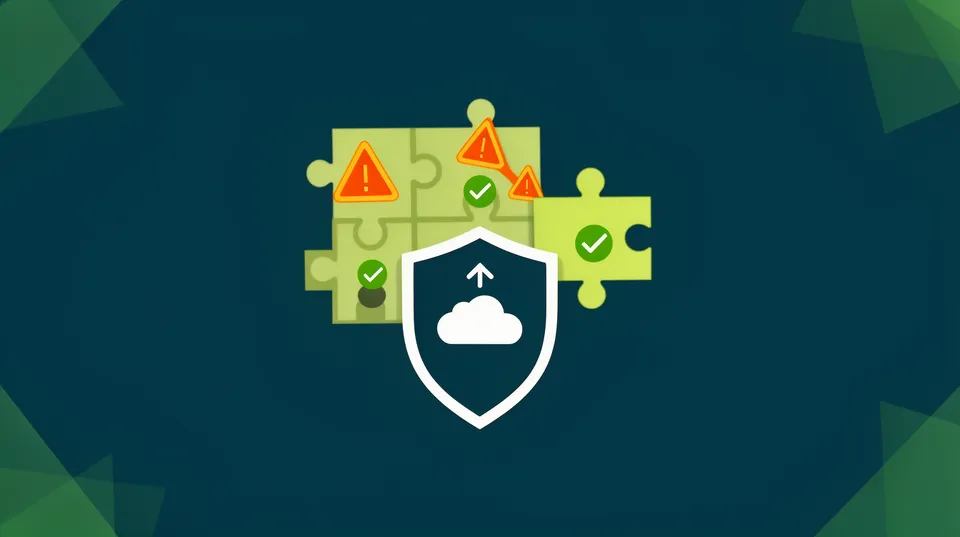
Overcoming organizational silos with automated workflows means establishing clear, tool-driven processes that bridge the gap between security and engineering, ensuring rapid and safe remediation of cloud vulnerabilities.
Many organizations suffer from siloed operations where security, development, and operations teams operate independently, often using different tools and processes. Security teams may use CNAPPs to identify issues, while development teams use CI/CD pipelines to deploy code, and operations teams manage infrastructure. When a security vulnerability is found, the process of communicating the issue, agreeing on a fix, and implementing it often involves manual handoffs, email chains, and ticketing systems, all of which introduce delays and potential errors. This fragmented approach hinders efficient remediation and contributes to alert fatigue for security teams.
Automated workflows, orchestrated by platforms like Tamnoon, break down these silos. When an issue is detected by a CSPM like Wiz or Upwind, it's not just an alert. It initiates a remediation workflow. This workflow can automatically create a ticket in a development team's project management tool (e.g., Jira), suggest a pre-validated fix based on a Tamnoon Playbook, and, with appropriate approvals, even deploy the fix. The system provides transparency, showing all teams the status of the remediation, who is responsible for each step, and when the issue is resolved. This eliminates guesswork and reduces the need for constant inter-team communication about tactical fixes.
For example, an automated workflow might detect an S3 bucket with public write access. Instead of a security engineer emailing the S3 owner, the workflow could automatically trigger a Tamnoon playbook to restrict write access to authenticated users, generate a pull request in GitHub for review, and update the original security alert with the remediation status. This reduces the manual back-and-forth and ensures that the fix is implemented consistently and quickly, without requiring a specialized cloud security engineer to manage the entire process from start to finish. This not only streamlines operations but also embeds security into the daily routines of development and operations teams, creating a more secure and efficient cloud environment. This approach is central to closing the cloud security remediation gap, a topic explored further on Tamnoon's blog.
These strategic approaches, combining external expertise with automated, production-safe remediation, offer a powerful way to manage the ever-growing complexities of cloud security. Organizations no longer need to rely solely on an often unattainable perfect security team. Instead, they can augment their capabilities and accelerate their security posture improvements through intelligent partnerships.
Reduce your MTTR by automating remediation with Tamnoon.

Tamnoon helps security teams remediate cloud risks faster with AI-augmented managed services — combining human expertise with automation so nothing falls through the cracks.
Learn more at tamnoon.ioFAQs
What is the primary challenge SecOps teams face with cloud security?
The primary challenge SecOps teams face is the persistent talent gap combined with alert fatigue. Cloud environments generate a high volume of security alerts from various tools like Wiz, Orca Security, or Prisma Cloud. With a shortage of specialized cloud security engineers, internal teams struggle to triage, prioritize, and remediate these alerts effectively. This leads to a backlog of vulnerabilities, increased MTTR, and a heightened risk profile for the organization, as critical issues may go unaddressed.
How do strategic partnerships help bridge the SecOps talent gap?
Strategic partnerships help by providing access to specialized cloud security expertise and automated remediation capabilities without requiring organizations to hire additional full-time staff. Partners like Tamnoon integrate with existing security tools, taking the burden of manual remediation off internal teams. This allows organizations to leverage AI-powered remediation and human-in-the-loop expert services, effectively extending their SecOps capabilities and accelerating the remediation of complex cloud security issues without adding to their headcount.
What does 'production-safe remediation' mean?
'Production-safe remediation' refers to the process of fixing security vulnerabilities in cloud environments in a way that guarantees no negative impact on live applications or services. This is achieved through a combination of AI-powered analysis to generate context-aware fixes, pre-validated remediation playbooks designed for specific cloud threats, and critical human-in-the-loop oversight for complex or high-risk changes. The goal is to ensure that security improvements don't introduce operational disruptions or downtime.
How does Tamnoon integrate with existing cloud security tools?
Tamnoon integrates seamlessly with leading cloud security tools such as Wiz, Check Point CloudGuard, Palo Alto Cortex Cloud, and others. When these detection tools identify a vulnerability or misconfiguration, the alert is fed into Tamnoon's platform. Tamnoon then processes the alert, generates a production-safe remediation using its AI and playbooks, and can either apply the fix automatically or, for sensitive issues, route it for human validation. This integration closes the loop between detection and action, maximizing the value of an organization's existing security investments and streamlining the remediation workflow.
What is the role of AI and human-in-the-loop in cloud security remediation?
AI plays a crucial role in cloud security remediation by analyzing alerts, understanding their context, and generating specific, production-safe fix actions. This automates the initial steps of remediation, reducing manual effort and speeding up the process. However, for complex or high-risk remediations, human-in-the-loop oversight is vital. Tamnoon's cloud experts review and validate these AI-generated fixes, ensuring they align with an organization's specific operational requirements and won't cause unintended side effects in a production environment. This hybrid approach combines the speed of AI with the nuanced judgment of human expertise.