

Cloud security isn't a static target. It's a constantly moving battleground, and relying on point-in-time assessments leaves organizations vulnerable. A shift to Continuous Threat Exposure Management (CTEM) provides the necessary framework for maintaining a strong defensive posture.
CTEM isn't just another buzzword. It's a structured, iterative approach that systematically identifies, assesses, and mitigates cyber risks across environments. For CISOs and security teams, this framework translates directly into continuous visibility, helping to prevent breaches and reduce operational friction.
Moving from periodic scans to continuous exposure management requires adapting processes and tools. It's about enabling a faster, more effective response pipeline for the threats that matter most.
Understanding Continuous Threat Exposure Management Benefits
Organizations using CTEM to prioritize security investments significantly reduce their breach likelihood. This structured methodology moves security from reactive firefighting to proactive risk reduction. CTEM, defined by CDW as 'a structured, iterative approach to identifying, assessing and mitigating cyber risk across environments,' ensures that security posture aligns with the current threat landscape, not just a historical snapshot. It's not a set-it-and-forget-it process. It's an ongoing cycle.
The core benefit of CTEM lies in its ability to provide a real-time, consolidated view of an organization's exposure. Traditional security assessments often provide a snapshot in time, quickly becoming outdated in cloud environments. CTEM, however, integrates security activities across the entire lifecycle, ensuring that new deployments, configuration changes, and evolving threat intelligence are immediately factored into the risk assessment. This continuous feedback loop helps CISOs answer critical questions about their cloud attack surface and resource vulnerabilities. By 2026, organizations that prioritize security investments using a continuous exposure management program will be three times less likely to suffer a breach.
This proactive stance means less time spent remediating breaches and more time improving security resilience. It also allows for more strategic allocation of security resources. Instead of chasing every alert, teams can focus on the exposures that pose the highest risk to business-critical assets. For instance, understanding the real-time exposure of an S3 bucket with sensitive data takes precedence over a misconfigured non-production IAM role that lacks permissions to external services. This focus on critical risks helps reduce alert fatigue, a common challenge in cloud security operations, as discussed in Cloud Security Alert Fatigue Requires Smarter Remediation.
Implementing the Five Stages of CTEM
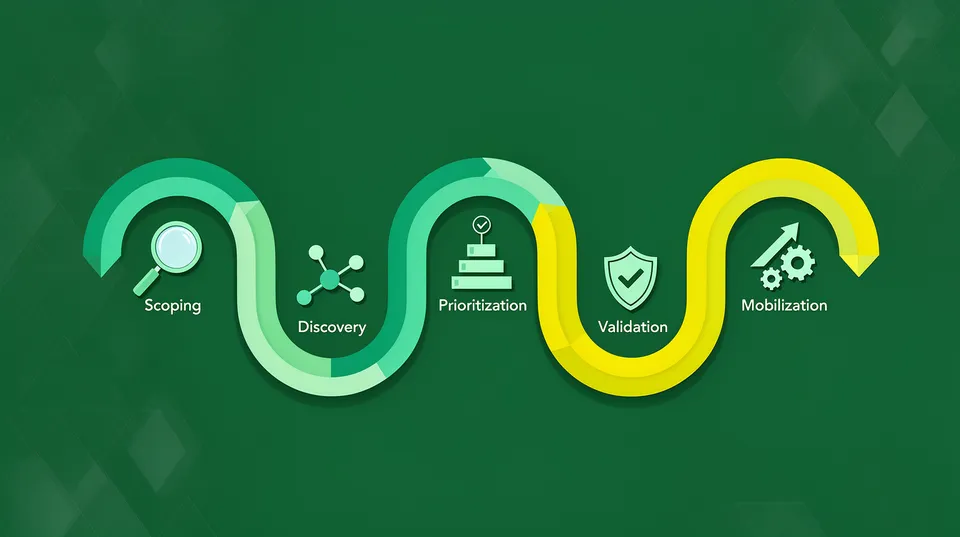
Effective CTEM implementation involves five cyclical stages: Scoping, Discovery, Prioritization, Validation, and Mobilization. Gartner developed this framework in 2022 to help organizations continuously manage their threat exposure. Each stage builds upon the last, creating a continuous loop of improvement and risk reduction.
Scoping: Defining the Attack Surface
The initial stage involves clearly defining the scope of your attack surface. This isn't just about listing assets. It's about understanding the business context, criticality, and potential impact of a compromise. What data lives where? Which applications are public-facing? What are the regulatory requirements? Use tools like Wiz, Orca Security, or Palo Alto Prisma Cloud to get an initial asset inventory. Map out your cloud environments across AWS, Azure, and GCP. Identify your critical business processes and the underlying infrastructure that supports them. For example, determine all internet-facing load balancers, EC2 instances, and S3 buckets that could serve as entry points or hold sensitive data. This lays the groundwork for focused security efforts.
Discovery: Identifying Exposures
Once scoped, the discovery phase involves actively identifying vulnerabilities and misconfigurations across the defined attack surface. This includes everything from misconfigured IAM policies and publicly exposed storage buckets to unpatched software and weak authentication mechanisms. CNAPPs like Wiz, Orca Security, and Palo Alto Prisma Cloud are critical here, continually scanning cloud environments for these issues. They provide visibility into identity misconfigurations, network exposure, and data vulnerabilities. For example, a CSPM might flag an S3 bucket with 'Everyone' read access. Tools like Sentinel One Singularity and Upwind can identify active threats and suspicious activity, providing another layer of discovery. Integrate these findings into a central platform to get a consolidated view. This phase is where security teams identify the raw inputs for risk assessment.
Prioritization: Ranking Real Risks
Not all exposures are created equal. The prioritization stage focuses on determining which identified exposures pose the greatest risk to the organization based on their likelihood of exploitation and potential impact. This means moving beyond generic vulnerability scores. Consider the asset's criticality, exploitability, and existing compensating controls. A publicly exposed database with sensitive customer data is a higher priority than a misconfigured development environment lacking sensitive information. threat intelligence feeds and attack path analysis to understand potential adversary movement. Many CNAPPs offer some level of prioritization, but further analysis is often needed. Focus on vulnerabilities that could lead to data exfiltration or service disruption. Taming Your NVD CVE Backlog with Strategic Risk Prioritization offers more detail on this.
"Effective risk prioritization moves beyond just 'critical' alerts. It's about understanding the blast radius and the business context for each exposure. What's 'critical' in one environment might be a low priority in another."NIST Special Publication 800-53 Revision 5
Validation: Verifying Exposure and Impact
Before mobilizing remediation, it's crucial to validate the identified exposures. This involves confirming the vulnerability's existence and assessing its true exploitability and potential impact. Automated penetration testing tools, red teaming exercises, and manual validation can be used here. For instance, if a CSPM flags an open port, validation would confirm if the port is indeed accessible from the internet and what services are listening on it. This step prevents false positives and ensures that remediation efforts are focused on real, actionable threats. Without validation, teams risk expending resources on issues that don't pose actual risk, leading to wasted effort and frustration. It's about confirming the security posture rather than just assuming a scan result is definitive.
Mobilization: Actioning Remediation
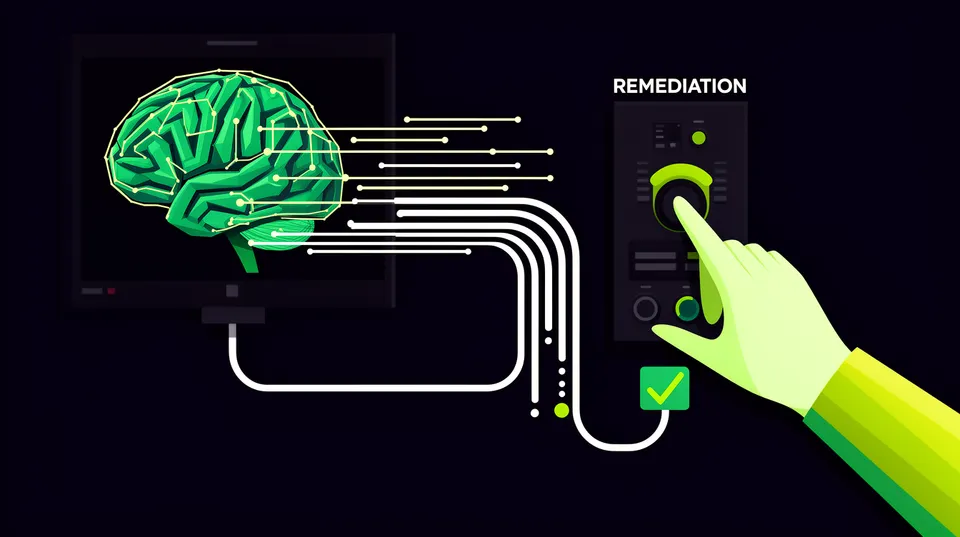
The final and most critical stage is mobilization: actively remediating the validated exposures. This is where Tamnoon shines. Traditional CNAPPs excel at discovery and prioritization, but they often leave remediation as a manual, friction-filled process. Tamnoon bridges this gap by providing AI-Powered Remediation and Human-in-the-Loop (Expert-led) capabilities to generate and execute production-safe fixes. This can involve anything from updating security group rules, modifying IAM policies, or patching vulnerable software. Remediation Playbooks automate common fixes, ensuring consistency and speed. For complex issues, Tamnoon's experts provide oversight, validating that remediation won't break production. For example, an S3 bucket policy fix for public access would use a Production-Safe Playbook, potentially involving a dry run or rollback strategy to prevent service disruption. This directly addresses the pain point of alert fatigue by converting detected problems into actual solutions. Learn more about Closing the Cloud Security Remediation Gap.
Integrating CTEM with Existing Cloud Security Tools
CTEM thrives on seamless integration with an organization's existing security ecosystem. It doesn't replace current tools. It orchestrates their outputs into an actionable remediation workflow. CNAPPs, CSPMs, DSPMs, and CDRs are all critical data sources for a CTEM program. Tools like Wiz, Orca Security, Cyera, Palo Alto Cortex Cloud, and AWS Security Hub detect exposures. Tamnoon takes these alerts and turns them into production-safe fixes.
Cloud Native Application Protection Platforms CNAPPs
CNAPPs like Wiz, Orca Security, and Palo Alto Prisma Cloud provide deep visibility into cloud environments, identifying misconfigurations, vulnerabilities, and compliance gaps. they're the primary engines for the Discovery and part of the Prioritization stages of CTEM. Tamnoon integrates with these platforms to ingest their alerts, providing the necessary context for AI-Powered Remediation. Instead of a CISO facing a dashboard with thousands of alerts, Tamnoon converts prioritized alerts into specific, executable remediation tasks. This partnership allows organizations to scale their security posture without increasing manual effort. For instance, a misconfiguration detected by Wiz regarding an overly permissive IAM role triggers a remediation playbook in Tamnoon to apply least privilege principles without downtime. This reduces the Mean Time to Remediation (MTTR) significantly, a key focus for SecOps teams.
Data Security Posture Management DSPMs
DSPMs such as Cyera focus specifically on data security, identifying where sensitive data resides, who has access to it, and how it's protected. they're crucial for enriching the Scoping and Prioritization stages of CTEM by adding a data criticality layer to asset exposure. If a CNAPP flags an exposed database, a DSPM can confirm if that database contains PII or other sensitive information, elevating its remediation priority. Tamnoon integrates with DSPMs to ensure that remediation efforts are informed by data sensitivity, allowing for more targeted and impactful fixes. For example, a publicly accessible S3 bucket (discovered by a CNAPP) containing PII (identified by a DSPM) would trigger a high-priority Tamnoon Production-Safe Playbook for immediate access restriction and encryption enforcement, as detailed in Safely Fix S3 Bucket Policies Without Breaking Production.
Cloud Detection and Response CDRs
CDRs like Palo Alto Cortex Cloud and Sentinel One Singularity focus on detecting active threats and suspicious activity within cloud environments. they're for the Validation stage, confirming if an exposure is being actively exploited or indicates an ongoing attack. Tamnoon leverages CDR alerts to prioritize and accelerate remediation of active threats, ensuring that an identified exposure doesn't turn into a full-blown incident. If a CDR detects unusual network traffic originating from a server with a known vulnerability, Tamnoon can initiate an automated remediation to isolate the server or apply a patch, drastically reducing incident response time. This closes the loop from detection to response in real-time, moving beyond just alerting to actual defense.
The Role of AI and Human-in-the-Loop in CTEM Remediation
Achieving production-safe remediation at scale in a CTEM program requires a blend of AI automation and expert human oversight. AI-powered systems can analyze vast amounts of security data and recommend fixes, while human experts provide validation and ensure fixes don't disrupt operations. In 2025, 76% of CISOs expected a significant cyberattack, but 58% felt unprepared, as reported in the Proofpoint 2025 Voice of the CISO report. This gap in preparedness highlights the need for more efficient and reliable remediation strategies.
AI-Powered Remediation
AI plays a transformative role in the Mobilization stage of CTEM. It can analyze the context of an alert from a CNAPP, DSPM, or CDR, understand the cloud environment, and generate specific, production-safe remediation actions. This moves beyond simple scripts. AI can adapt remediation based on the specific resource, its dependencies, and its impact on running applications. For example, AI can suggest the most granular IAM policy change to remove over-privilege without breaking an application's required permissions. Tamnoon's AI-Powered Remediation engines identify the optimal fix, generating Infrastructure-as-Code (IaC) snippets or API calls that can be applied directly. This significantly reduces the MTTR by automating the manual investigation and fix generation stages that often bog down security teams.
# Example: AWS IAM policy remediation snippet suggested by AI
# Before: Overly permissive policy
# {
# "Version": "2012-10-17",
# "Statement": [
# {
# "Effect": "Allow",
# "Action": "s3:*",
# "Resource": "*"
# }
# ]
# }
# After: AI-generated least privilege policy for a specific S3 bucket and actions { "Version": "2012-10-17", "Statement": [ { "Effect": "Allow", "Action": [ "s3:GetObject", "s3:PutObject" ], "Resource": "arn:aws:s3:::my-secure-bucket/*" }, { "Effect": "Allow", "Action": "s3:ListBucket", "Resource": "arn:aws:s3:::my-secure-bucket" } ] }
This automated approach allows security teams to handle a much larger volume of alerts and vulnerabilities without getting overwhelmed, directly countering alert fatigue and human error.
Human-in-the-Loop Expert-led Oversight
While AI can automate much of the remediation process, critical or complex fixes still benefit from human oversight. Tamnoon's Human-in-the-Loop (Expert-led) approach ensures that complex remediations are validated by cloud security experts before deployment. These experts review the AI-generated fix, assess potential production impacts, and approve or refine the changes. This hybrid model combines the speed and scalability of AI with the nuanced understanding and risk aversion of human intelligence. For example, if an AI suggests a change to a critical network ACL that could disrupt a core application, a human expert would review the change, simulate its impact, and perhaps recommend a staged rollout or a more cautious approach. This ensures zero downtime and maintains business continuity. This expert validation is particularly useful for sensitive environments or high-impact changes, providing confidence that security improvements won't inadvertently break production systems. This addresses a common fear among DevOps teams and helps foster collaboration, as explored in Balancing Developer Velocity with Efficient Security Remediation.
The Operational Impact of CTEM for CISOs
CTEM directly improves key operational metrics for CISOs: reducing MTTR, enhancing audit readiness, and enabling more strategic security investments. It shifts the security team's focus from reactive vulnerability management to proactive risk mitigation, providing clear evidence of improved security posture.
Reduced Mean Time to Remediation MTTR
A primary goal for any CISO is to reduce the MTTR. Every minute an exposure remains open is a potential window for an attacker. By automating the discovery, prioritization, and especially the mobilization phases, CTEM drastically slashes MTTR. Tamnoon's Production-Safe Playbooks, combined with AI-Powered Remediation, ensure that once an exposure is validated, a fix can be applied within minutes or hours, not days or weeks. This speed is critical in cloud environments where configurations change constantly. A quick fix to an exposed database credential, for example, prevents potential data breaches and maintains service integrity. This reduction in MTTR translates directly into lower organizational risk and improved resilience against cyber threats, a concept further elaborated in Slash MTTR in Cloud Security Operations with Proactive RemOps Strategies.
Enhanced Audit and Compliance Readiness
CTEM provides continuous visibility and documented remediation processes, making audit and compliance significantly easier. When auditors request proof of security controls, CISOs can present a clear, continuously updated record of exposures identified, prioritized, and remediated. This contrasts sharply with traditional methods where gathering such evidence is often a scramble. With CTEM, compliance checks become an ongoing part of operations rather than a periodic burden. For example, demonstrating adherence to regulations like NIST Special Publication 800-53 Revision 5, or HIPAA requires continuous monitoring and a robust remediation process, which CTEM inherently supports. This constant state of readiness reduces the stress and cost associated with compliance audits.
Strategic Security Investment
By providing a clear, data-driven understanding of the most pressing risks, CTEM enables CISOs to make more strategic security investments. Instead of guessing where to allocate resources, they can direct budget towards addressing validated, high-impact exposures. This might mean investing in advanced threat intelligence, specific security tools for niche risks, or additional staffing for complex remediation challenges. CTEM provides the evidence needed to justify these investments to boards and executive leadership, demonstrating a clear return on security expenditure. It moves the conversation from fear-uncertainty-doubt to concrete risk management, improving the overall security posture and operational efficiency.
Reduce your MTTR by automating remediation with Tamnoon.

Tamnoon helps security teams remediate cloud risks faster with AI-augmented managed services — combining human expertise with automation so nothing falls through the cracks.
Learn more at tamnoon.ioFAQs
What is Continuous Threat Exposure Management CTEM?
CTEM is a structured, iterative framework for continuously identifying, assessing, and mitigating cyber risks across an organization's entire digital environment. It moves beyond static security assessments to a dynamic, ongoing process that adapts to the evolving threat landscape and changes in infrastructure. CDW defines CTEM as 'a structured, iterative approach to identifying, assessing and mitigating cyber risk across environments.' This ensures that security postures remain relevant and effective against current and emerging threats, integrating security deeply into operational workflows.
How does Tamnoon support a CTEM program?
Tamnoon specifically addresses the 'Mobilization' stage of the CTEM framework. While CNAPPs, DSPMs, and CDRs are excellent at identifying and prioritizing exposures, Tamnoon takes these insights and orchestrates production-safe remediation. It uses AI-Powered Remediation to generate precise fix-actions and employs a Human-in-the-Loop (Expert-led) model for complex issues, ensuring fixes don't disrupt production. This closes the loop from detection to actual resolution, drastically reducing MTTR and alert fatigue.
What are the five stages of CTEM?
Gartner introduced a five-stage CTEM framework: Scoping, Discovery, Prioritization, Validation, and Mobilization. Scoping defines the attack surface and critical assets. Discovery identifies vulnerabilities and misconfigurations. Prioritization ranks these based on risk and impact. Validation verifies the true exploitability of exposures. Mobilization involves actively remediating the validated threats, often with automated or expert-supervised processes. This cycle ensures continuous improvement of security posture.
How does CTEM reduce Mean Time to Remediation MTTR?
CTEM reduces MTTR by streamlining the entire security lifecycle from detection to fix. Its continuous nature means exposures are identified faster. More importantly, the 'Mobilization' stage, especially when augmented by platforms like Tamnoon, automates the generation and application of production-safe fixes. This removes manual bottlenecks, allowing security teams to act on validated threats in minutes or hours, rather than days or weeks, directly minimizing the window of opportunity for attackers.
Can CTEM integrate with my existing security tools?
Yes, CTEM is designed to integrate and orchestrate existing security tools, not replace them. It acts as an overarching framework that leverages outputs from CNAPPs (like Wiz, Orca Security), DSPMs (like Cyera), and CDRs (like Palo Alto Cortex Cloud). These tools feed into the CTEM process, providing the data for discovery and prioritization. Solutions like Tamnoon then integrate with these detection tools to ingest alerts and facilitate the final, critical step of automated, production-safe remediation.