

Unmanaged configuration drift in Infrastructure as Code (IaC) environments creates immediate security vulnerabilities and operational instability. When deployed cloud infrastructure diverges from its defined IaC state, it introduces unmanaged changes that can expose services or lead to misconfigurations.
These discrepancies, often termed 'drift,' undermine security baselines and complicate audits. Preventing or quickly remediating drift is critical for maintaining robust cloud security posture and operational integrity.
This article examines how leading platforms address Terraform drift detection and proactive defense, focusing on actionable strategies for remediation.
Understanding Terraform Drift and Its Consequences
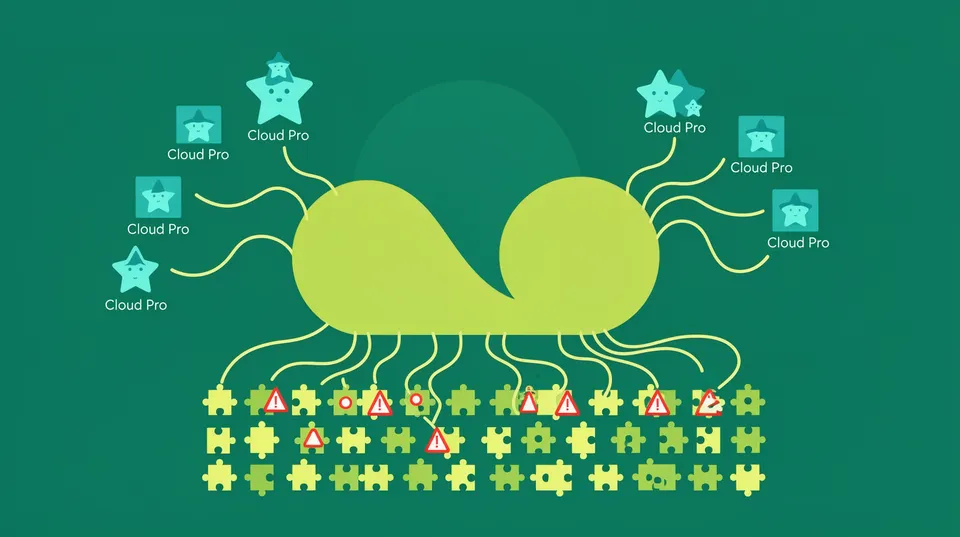
Terraform drift occurs when the actual state of your infrastructure in the cloud differs from the state defined in your Terraform configuration files. This divergence can happen due to manual changes, out-of-band updates, or even actions by automated tools not managed by IaC. Drift isn't just an operational headache. It's a significant security risk.
For example, if a security group rule is manually opened for troubleshooting and not reverted, an otherwise secure application could be exposed to the internet. Similarly, changes to IAM policies outside of Terraform can grant excessive permissions, increasing the blast radius of a potential compromise. These unmanaged changes bypass security and compliance checks embedded in IaC pipelines, leaving blind spots that detection tools like CSPMs often flag, leading to alert fatigue if not addressed effectively. The impact can range from service disruptions to data breaches. An unmanaged public S3 bucket, a common drift scenario, can lead to data exfiltration, costing millions in regulatory fines and reputational damage. The problem isn't theoretical. It's a daily operational challenge for many teams. Organizations need to track and reconcile these differences to ensure their cloud environments remain secure and compliant.
How Drift Introduces Security Gaps
Drift can introduce security gaps in several ways, often unnoticed until a security incident occurs. When infrastructure is provisioned through IaC, it typically follows a secure baseline, incorporating best practices and compliance requirements. Manual modifications bypass this controlled process. For instance, a developer might temporarily disable a firewall rule to debug an issue, forgetting to re-enable it. This creates a persistent vulnerability that Terraform doesn't recognize because it only knows the state declared in its files. Attackers actively scan for these types of misconfigurations. Configuration hardening helps prevent these kinds of mistakes by ensuring security issues are caught before they're deployed to production, but drift can undermine those efforts. Cloud ransomware incidents, for example, often exploit misconfigurations that could stem from drift, as detailed in reports on IaC security best practices.
Another common scenario involves IAM policies. An emergency change might grant an application or user broader permissions than intended, such as an S3 bucket being made publicly readable. If this change isn't reflected in the IaC and subsequently reconciled, the bucket remains exposed. While tools like Tamnoon can help safely fix S3 bucket policies without breaking production, the ideal is to prevent such drift from occurring or detect it immediately. Terraform itself, described as a declarative multi-cloud provisioning tool with modular templates, relies on state management and drift detection to maintain consistency, according to ETCIO.
Operational Instability Caused by Drift
Beyond security, drift causes significant operational instability. Infrastructure components become inconsistent, making troubleshooting difficult and deployments unpredictable. An engineer might attempt to apply a Terraform plan expecting a certain outcome, only to find unexpected changes or failures because the actual state differs. This can lead to lengthy debugging sessions and increased Mean Time To Resolution (MTTR). For instance, an application might start behaving erratically because an underlying resource's configuration changed outside of the IaC, but the application expects the IaC-defined state. This makes it harder to diagnose issues and introduces risks during scaling or updates. The unpredictable nature of drifted environments means that deploying new features or patches can inadvertently break existing services, leading to costly downtime. Teams waste precious time identifying why their IaC plans aren't behaving as expected, eroding confidence in their automated deployment processes. This friction directly impacts developer velocity and operational efficiency, making balancing developer velocity with efficient security remediation even more challenging.
Proactive Drift Detection Capabilities in Leading Platforms
Leading cloud security and IaC platforms offer sophisticated capabilities to detect and, in some cases, prevent Terraform drift. These tools range from native IaC provider features to dedicated cloud security posture management (CSPM) and code security platforms. The goal is to provide visibility into infrastructure changes and alert teams when actual configurations deviate from declared states.
Terraform Cloud and Terraform Enterprise
HashiCorp's own offerings, Terraform Cloud and Terraform Enterprise, are foundational for drift detection. Terraform Cloud uses built-in continuous checks against infrastructure state to identify changes and issue alerts. This continuous monitoring is essential because it captures drift as it happens, rather than only during planned Terraform runs. Terraform Enterprise extends this by supporting drift and policy enforcement, using preconditions and policies to validate configurations and ensure compliance. This means not only detecting drift but also preventing non-compliant changes from being applied. For instance, organizations can define policies that block any manual changes to critical security groups. This combination of detection and preventative policy enforcement creates a more resilient infrastructure. Terraform Cloud pricing, for example, uses a resource-hour model where the first 500 resources are free, then it's $0.00014 per resource-hour, as noted by ETCIO. This pricing structure reflects the continuous monitoring and management capabilities provided.
Specialized Cloud Security Platforms
Beyond native IaC tools, platforms like Wiz, Orca Security, and Palo Alto Networks Prisma Cloud provide broader cloud security posture management (CSPM) that complements IaC drift detection. While they don't directly manage Terraform state files, they continuously scan cloud environments for misconfigurations and deviations from security baselines. When manual changes cause infrastructure to drift into an insecure state, these CSPMs detect it. For instance, if a security group that should be managed by Terraform is manually modified to allow unrestricted ingress, a CSPM will flag this as a high-severity alert. Cycode also integrates with Terraform Cloud for configuration drift detection between deployment environments. This is particularly useful for identifying drift across different stages of the development lifecycle, ensuring consistency from dev to production.
"IaC security embeds security directly into infrastructure templates, providing consistent protection across all cloud environments. Addressing vulnerabilities early is critical."
Wiz, IaC Security Best Practices
Proactive Drift Prevention and Remediation Tools
Some tools focus on preventing drift before deployment or offering mechanisms for automated remediation. Brainboard, for example, enables proactive drift detection before deploy, guards during rollout, and offers post-deploy drift remediation. This type of functionality shifts drift management left in the development cycle, catching issues before they impact live environments. Other platforms, like Firefly AI, analyze large datasets of Terraform files to understand common drift patterns, helping organizations anticipate and mitigate future occurrences. Firefly AI, for instance, analyzed over 3000 Terraform files to understand cloud drift, providing valuable insights into common patterns and causes of divergence, according to their academy. The between detection and automated remediation is where true value lies, reducing the operational burden on security teams who are often drowning in alerts. Automated remediation playbooks are essential here.
Operationalizing Remediation for Terraform Drift
Detecting drift is only the first step. Effective remediation is what truly secures cloud environments and maintains operational consistency. The challenge isn't merely identifying discrepancies but correcting them safely and efficiently, often in production environments, without causing new outages.
Automated Reconciliation and State Management
Once drift is detected, the immediate goal is to reconcile the actual infrastructure state with the desired state defined in Terraform. The standard approach involves running terraform plan to see the proposed changes and then terraform apply to bring the infrastructure back in line. However, simply applying changes might overwrite legitimate manual adjustments or cause service disruptions if not carefully reviewed. Platforms like Terraform Cloud offer advanced workflows for this, allowing teams to review plans, approve them, and then apply changes in a controlled manner. This human-in-the-loop review ensures that unintended consequences are minimized. For critical infrastructure, organizations often implement human-in-the-loop cybersecurity processes to validate complex remediations, ensuring zero downtime. This is particularly important when dealing with sensitive services where an automatic rollback could have significant business impact. The ability to pause, review, and then proceed with confidence is a hallmark of mature IaC operations.
Integrating Drift Remediation with Security Workflows
The real power comes from integrating drift detection and remediation into broader security and DevOps workflows. When a CSPM like Wiz or Orca Security flags a misconfiguration that's a result of drift, that alert needs to trigger an immediate, actionable response. This is where a platform like Tamnoon excels. Tamnoon doesn't just detect vulnerabilities. It orchestrates their remediation. When a security alert related to drift comes from a detection tool, Tamnoon uses its AI-powered remediation engine to analyze the alert and generate specific fix-actions. These actions are often in the form of production-safe remediation playbooks, which are pre-configured, battle-tested workflows designed to resolve issues without impacting application uptime. For example, if drift caused an IAM role to become over-privileged, Tamnoon could generate a Terraform snippet to revert those permissions to the desired state, then propose it for review and application, ensuring overprivileged IAM roles are fixed safely.
The Role of Production-Safe Remediation
For organizations suffering from alert fatigue, simply identifying drift isn't enough. The critical missing piece is the ability to fix problems without breaking production. Traditional security tools excel at detection, creating extensive lists of vulnerabilities. However, they rarely provide production-safe solutions. Tamnoon bridges this gap by offering agentic remediation skills with human oversight. This hybrid approach ensures that even complex remediations, like those involving network changes or IAM policy updates, are validated by cloud experts. The goal is to move beyond simple detection to actual, production-safe remediation, significantly reducing the Mean Time to Remediation (MTTR). This reduces friction between security teams, who find issues, and DevOps teams, who have to fix them while maintaining business continuity. The Tamnoon Platform integrates with existing security stacks like Wiz, Orca Security, and Palo Alto Prisma Cloud, turning their alerts into concrete, verifiable fixes. This approach helps slash MTTR in cloud security operations by automating safe remediation.
Establishing a Culture of IaC Discipline
Beyond tooling, a strong organizational culture around IaC discipline is necessary. This includes strict change control policies, regular audits, and continuous education for engineers on the importance of IaC. Preventing manual changes or out-of-band updates should be a core tenet. Code reviews, pull requests for all infrastructure changes, and automated pipeline gates that check for compliance and drift are crucial. These practices reduce the likelihood of drift occurring in the first place, making the job of detection and remediation tools easier. Regular training helps developers understand the implications of manual changes and reinforces the IaC-first principle. Ultimately, maintaining a healthy, secure cloud environment requires a combination of robust tools and disciplined processes, ensuring that the defined IaC state remains the single source of truth for infrastructure. This proactive stance helps maintain the integrity of cloud environments against both accidental and malicious changes.
The Path to Resilient Cloud Environments
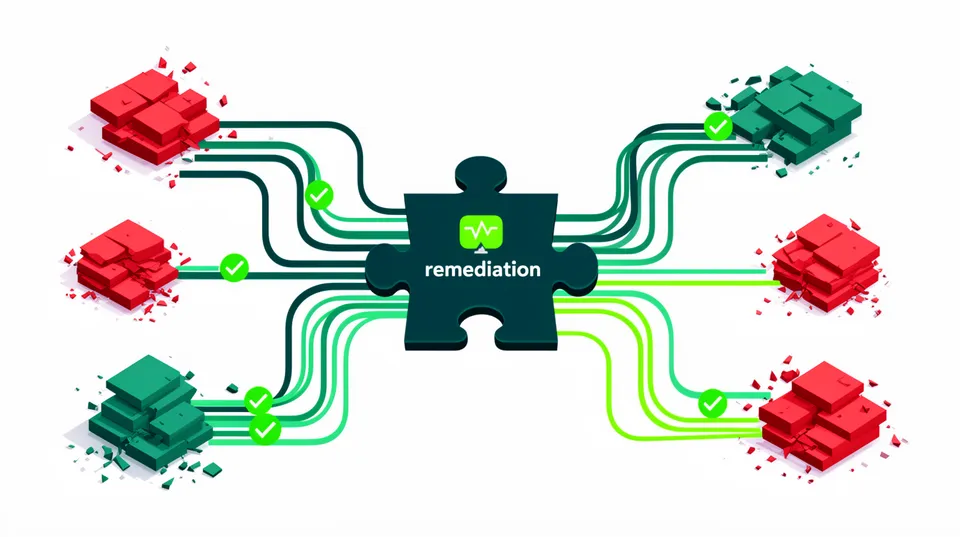
Proactive defense against Terraform drift involves more than just detection. It requires a comprehensive strategy encompassing continuous monitoring, intelligent remediation, and disciplined IaC practices. Tools like Terraform Cloud and Enterprise provide the native capabilities to identify state discrepancies, while broader CSPMs provide additional layers of visibility for misconfigurations caused by drift. However, the most significant challenge remains turning these alerts into safe, effective fixes that don't disrupt production.
This is where platforms like Tamnoon become indispensable. By orchestrating AI-powered, human-in-the-loop remediation, Tamnoon moves organizations beyond alert fatigue to actual resolution. It ensures that identified drift is not only detected but also safely corrected, integrating with existing security tools to complete the security lifecycle. The result is a more secure, stable, and compliant cloud environment with a significantly reduced Mean Time to Remediation, ensuring that security and operational teams work together effectively. Reducing your MTTR by automating remediation with Tamnoon is a strategic move for any cloud-first organization.

Tamnoon helps security teams remediate cloud risks faster with AI-augmented managed services — combining human expertise with automation so nothing falls through the cracks.
Learn more at tamnoon.ioFAQs
What exactly is Terraform drift?
Terraform drift describes the situation where the actual configuration of cloud resources differs from what's defined in the Terraform configuration files. This discrepancy typically arises from manual changes made directly in the cloud console or via other tools that bypass the IaC pipeline. For example, if a security group rule is manually opened for a specific IP address and then forgotten, that's drift. This divergence introduces potential security vulnerabilities, complicates infrastructure management, and can lead to unexpected operational issues during subsequent Terraform apply operations. Identifying and resolving drift is crucial for maintaining a consistent and secure cloud infrastructure.
Why is Terraform drift a security risk?
Terraform drift is a significant security risk because it bypasses established security and compliance controls embedded in IaC. When manual changes are made, they often aren't subjected to the same rigorous review, testing, and policy enforcement as IaC deployments. This can lead to misconfigurations like accidentally exposed storage buckets, overly permissive IAM roles, or open network ports. These 'out-of-band' changes create blind spots for security teams, making it easier for attackers to find and exploit vulnerabilities that would otherwise have been caught by IaC security scanning tools or policy checks. Unmanaged drift fundamentally undermines an organization's security posture.
How do leading platforms detect Terraform drift?
Leading platforms detect Terraform drift through various mechanisms. HashiCorp's Terraform Cloud and Terraform Enterprise use continuous checks against the infrastructure's actual state compared to the last known Terraform state file, alerting users to discrepancies. Cloud Security Posture Management (CSPM) tools like Wiz, Orca Security, and Palo Alto Networks Prisma Cloud continuously scan cloud environments for misconfigurations. While they don't directly manage Terraform state, they detect insecure configurations that could be a result of drift. Some specialized tools like Cycode and Brainboard also offer integrations or pre-deployment analysis to identify potential drift before it even hits production, ensuring consistency across environments.
What's the difference between drift detection and drift remediation?
Drift detection is the process of identifying when the actual state of cloud infrastructure deviates from its defined IaC state. It's about knowing <em>what</em> has changed and <em>where</em>. Drift remediation, conversely, is the process of correcting those detected discrepancies. This typically involves using Terraform to bring the actual infrastructure back into alignment with the desired state specified in the configuration files. The remediation step is crucial because detection alone doesn't secure the environment; it merely highlights the problem. Effective remediation ensures that security vulnerabilities are fixed and operational consistency is restored, often requiring careful planning to avoid production impact.
How does Tamnoon assist with Terraform drift remediation?
Tamnoon addresses Terraform drift by moving beyond just detection to safe, production-ready remediation. When leading security tools like CSPMs detect a misconfiguration potentially caused by drift, Tamnoon's AI-powered remediation engine analyzes the alert. It then generates specific fix-actions, often in the form of production-safe remediation playbooks. These playbooks are designed to correct the drift without impacting application uptime, providing verified code or scripts to revert changes, such as tightening an over-privileged IAM role or securing an exposed S3 bucket. Tamnoon integrates with existing security ecosystems, effectively acting as the 'last mile' for cloud security by orchestrating and validating fixes, often with a human-in-the-loop expert review, to ensure zero downtime.