

Managed CDR is a service in which a provider validates, contextualizes, and responds to a team's cloud security alerts, using AI triage plus human experts to confirm threats, close false positives, and remediate in real time without disrupting production. It addresses the critical gap between detection and effective response in cloud environments.
Cloud security teams often find themselves buried under an avalanche of alerts. While cloud-native detection tools excel at identifying potential issues, the sheer volume and complexity of these alerts create a significant operational burden. Responding to every alert manually isn't sustainable, leading to backlogs and increased mean time to remediation (MTTR). This impacts an organization's security posture directly, leaving vulnerabilities exposed for longer and increasing the risk of a breach. Managed Cloud Detection and Response (CDR) offers a pathway to address this challenge by externalizing and orchestrating the response process, turning raw alerts into confirmed threats and resolved issues.
Moving beyond basic alert generation, managed CDR focuses on the operational aspect of cloud security, ensuring that identified threats are not just logged but also acted upon. This approach aims to reduce the noise and provide clear, actionable steps for security teams. Organizations can then shift their focus from sifting through alerts to strategic initiatives and strengthening their overall cloud security framework.
What Is Managed CDR
CDR monitors cloud-native signals, including runtime activity, identity behavior, and control-plane events. While detection capabilities have advanced significantly across various cloud security platforms, the actual response to these detections remains a common pain point for many teams. Every alert, regardless of its severity or validity, persists until a human analyst intervenes and makes a decision regarding its disposition. This human dependency creates bottlenecks, especially in cloud environments where alerts can multiply rapidly.
Managed CDR shifts this response workload from the internal security team to a specialized provider, augmented by advanced tooling. This service is designed to take the detected alerts and put them through a validation and contextualization process, ensuring that only genuine threats are prioritized. The goal is to move beyond mere detection. It's about ensuring prompt and effective resolution of the alerts that truly matter. For example, CrowdStrike describes CDR as combining elite threat intelligence with 24/7 services on a unified cloud security platform. Similarly, Orca Security highlights CDR's purpose-built tools and processes for securing cloud infrastructure, enabling real-time detection of malicious activity. This managed approach essentially extends your security operations capability without requiring an expansion of your internal staff, which helps address the skills gap often seen in cloud DevOps teams.
The core benefit lies in alleviating the alert fatigue that plagues many SecOps teams. By offloading the initial triage and validation, internal teams gain capacity to focus on higher-level strategic security projects rather than getting bogged down in repetitive alert analysis. It's about optimizing resource allocation and ensuring that valuable human expertise is directed where it can have the most impact.
Managed CDR vs. Standard CDR
Standard CDR, as implemented within Cloud-Native Application Protection Platforms (CNAPPs) and other cloud-native security tools, excels at surfacing potential threats by continuously monitoring cloud environments. Wiz defines CDR as a cloud-native approach to identifying, analyzing, and responding to security threats. These tools effectively generate alerts based on suspicious activity but generally leave the validation, prioritization, and subsequent response entirely to your internal team. This means that after a threat is detected, your analysts are responsible for sifting through the noise, determining if an alert is a true positive, assessing its impact, and then orchestrating the necessary remediation steps.
Managed CDR, conversely, adds a critical operational layer on top of this detection capability. It takes the output from your existing security stack, then:
1. Duplicates and correlates alerts from various sources, providing a unified view.
2. Validates what is a real threat, reducing false positives.
3. Closes out false positives, preventing unnecessary investigation.
4. Initiates or guides the remediation process for confirmed threats.
The fundamental distinction is ownership of the response. With standard CDR, your team owns the complete lifecycle from detection to response. With managed CDR, the service provider assumes responsibility for the initial stages of response, acting as an extension of your security operations center. This difference can significantly impact your team's workload and incident resolution times. It's also distinct from Managed Detection and Response (MDR), which is primarily endpoint-centric. While MDR focuses on endpoints, managed CDR is purpose-built for the cloud, addressing threats specific to identities, storage, and control-plane activity. This cloud-native focus is crucial because the attack surfaces and threat vectors in cloud environments are fundamentally different from traditional on-premises infrastructures, requiring specialized expertise and tooling.
How Tamnoon Delivers Managed CDR
Tamnoon launched Managed CDR in 2025, providing a focused solution for the operational challenges of cloud security response. This managed service is built on AWS and is designed to be cloud-security-agnostic, integrating with a wide array of existing runtime detection tools. It supports platforms such as Wiz Defend, Amazon GuardDuty, CrowdStrike Falcon, and Orca Security, enabling it to work within diverse cloud security ecosystems. Tamnoon’s approach combines artificial intelligence with human expertise to address the full lifecycle of cloud security alerts from detection to safe, production-aware remediation.
At the core of Tamnoon's Managed CDR is TAMI, Tamnoon's AI cloud SecOps agent. TAMI's role is to correlate disparate alerts into structured initiatives, providing a clearer context of potential threats. It assesses the production impact of identified issues, which is critical for prioritizing responses and avoiding disruptions. TAMI then identifies the optimal remediation path at machine speed. This AI-driven triage is a foundational component for reducing alert fatigue and accelerating the time to action. However, Tamnoon recognizes that AI alone isn't sufficient for complex cloud environments. TAMI works in conjunction with the CloudPros, Tamnoon's human expert team. These experts validate and triage runtime alerts, confirming the veracity of threats and closing false positives. When a verified threat requires remediation, the CloudPros escalate it for safe root-cause remediation, ensuring that fixes are applied without negatively impacting production. Tamnoon doesn't rely solely on deterministic rules or AI. This hybrid approach ensures accuracy and minimizes risk, avoiding the pitfalls of fully automated remediation where misconfigurations could lead to service outages. The outcome of this integrated approach is less noise for security teams, a lower mean time to remediation (MTTR), and a clear path to significantly reducing open exposures. Tamnoon's Managed CDR was designed to free up valuable analyst time, allowing them to focus on strategic cloud security initiatives rather than manual alert handling. Learn more about Tamnoon’s launch of TAMI and Managed CDR.
Why Managed CDR Matters
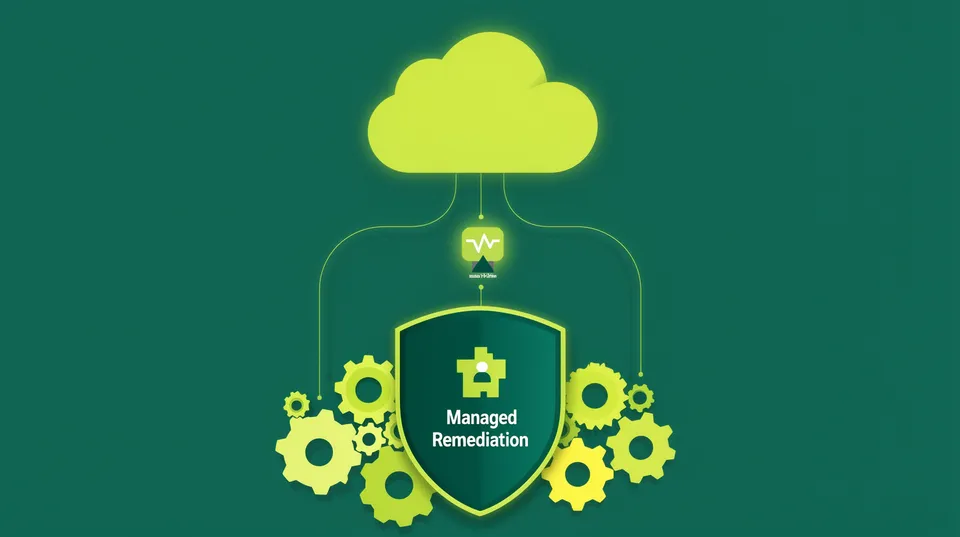
Cloud runtime alerts have a critical characteristic: they persist until a human acts on them. This means that as detection tools become more sophisticated and cloud environments grow more complex, the volume of unaddressed alerts tends to compound. This accumulation creates a significant backlog, consuming security team resources and prolonging exposure to potential threats. A recent report highlighted that many alerts are critical or high severity, with some of the most challenging issues taking an extended period to resolve. This scenario illustrates a clear operational bottleneck. The time spent on critical remediation directly correlates to risk exposure and potential for business impact. Managed CDR directly addresses this challenge by transforming that alert backlog into a measurable, manageable workflow.
By shifting the burden of initial validation, prioritization, and remediation orchestration to a specialized service, internal teams are freed from the constant reactive cycle of alert management. This allows them to allocate their expertise to strategic work, such as architecture reviews, proactive threat hunting, security control refinement, and implementing more robust security policies. It's about optimizing the security posture not just by detecting problems, but by ensuring they're resolved efficiently and safely. Managed CDR offers a tangible path to not only reduce the MTTR for cloud incidents but also to re- security teams for truly impactful work. Explore how this approach integrates with other security solutions by understanding the differences between EDR vs. CDR or considering if MDR covers your cloud needs.
Reduce your cloud security workload and improve your response times with CDR Copilot, our next-generation cloud remediation service.

Tamnoon helps security teams remediate cloud risks faster with AI-augmented managed services — combining human expertise with automation so nothing falls through the cracks.
Learn more at tamnoon.io