

Compromised Kubernetes tokens in CI/CD pipelines represent direct pathways to critical production infrastructure. Teams can't afford to overlook the specific threats and remediation strategies around these highly sensitive credentials.
CI/CD pipelines are prime targets for attackers, acting as a crucial bridge between code development and production deployment. By mid-2026, the average cost of a single CI/CD pipeline breach has skyrocketed to $5.1 million, underscoring the severe financial ramifications.
Focusing on Kubernetes token security is critical. These tokens grant programmatic access to your clusters, making their protection paramount to maintaining the integrity of your cloud workloads and preventing unauthorized access or data exfiltration.
Understand Kubernetes Token Vulnerabilities in CI/CD
Kubernetes tokens in CI/CD are vulnerable because they often possess elevated privileges, have extended lifespans, and are exposed during automated processes, making them attractive targets for supply chain attacks. These tokens, particularly Service Account Tokens (SATs), enable CI/CD systems to interact with Kubernetes APIs, deploying applications, managing configurations, or performing administrative tasks. Their compromise can have a blast radius extending across your entire cluster.
Consider the May 2026 TanStack npm Supply Chain Attack. This incident involved a GitHub Actions breach, directly impacting multiple ecosystems. Attackers gained access to developer machines and CI/CD runners, requiring the rotation of credentials including npm tokens, GitHub personal access tokens, AWS/GCP/Azure credentials, and critically, Kubernetes service account tokens. The compromise of one token can lead to a cascading failure across different systems, highlighting the interconnectedness of modern cloud infrastructure.
Exposure vectors include insecure storage in version control systems, leaky logs, vulnerable build agents, or misconfigured CI/CD platforms. If an attacker gains access to a CI/CD environment, these tokens can be exfiltrated and used to perform malicious operations within your Kubernetes clusters. This scenario often moves beyond mere detection. It demands rapid, production-safe remediation, the very challenge Tamnoon's platform addresses daily. For further insights on how these types of breaches occur, explore the article on unmasking self-spreading npm malware's elusive attack vectors.
Implement Least Privilege for Service Accounts
Implementing least privilege for Kubernetes service accounts involves granting only the minimum necessary permissions for CI/CD tasks, thereby significantly reducing the potential impact of a token compromise. By restricting what a service account can do, you limit the damage an attacker can inflict if they gain access to its token. This principle is fundamental to cloud security and applies universally, whether it's an AWS IAM role or a Kubernetes ServiceAccount.
Best practice dictates creating distinct service accounts for each CI/CD pipeline or even for individual steps within a pipeline. For example, a deployment pipeline might only need permissions to create and update Deployments and Pods in a specific namespace, not to list secrets cluster-wide or manage RBAC policies. Here's how you'd define a role and role binding for a service account that can only manage pods in the dev-namespace:
apiVersion: v1
kind: ServiceAccount
metadata: name: ci-cd-deployer namespace: dev-namespace
---
apiVersion: rbac.authorization.k8s.io/v1
kind: Role
metadata: name: pod-manager namespace: dev-namespace
rules:
- apiGroups: ["", "apps"]
resources: ["pods", "deployments"] verbs: ["get", "list", "watch", "create", "update", "patch", "delete"]
---
apiVersion: rbac.authorization.k8s.io/v1
kind: RoleBinding
metadata: name: ci-cd-deployer-binding namespace: dev-namespace
subjects:
- kind: ServiceAccount
name: ci-cd-deployer namespace: dev-namespace
roleRef: kind: Role name: pod-manager apiGroup: rbac.authorization.k8s.io
This YAML manifest creates a ServiceAccount named ci-cd-deployer, a Role named pod-manager with restricted permissions, and a RoleBinding that associates the two. Your CI/CD pipeline would then be configured to use the ci-cd-deployer service account. This granular control makes compromising a single token less catastrophic. Regularly audit these permissions using tools like CIS Benchmarks for Kubernetes, which provide consensus-based secure configuration guidance.
Monitoring and remediating overprivileged identities is a recurring theme in cloud security. Automated solutions, like those provided by Tamnoon, can scan for and suggest fixes for over-permissioned roles and service accounts, ensuring that the principle of least privilege is not just theoretical but enforced continuously. This directly helps in fixing overprivileged IAM roles in your cloud environment and preventing expansive blast radii from token compromises.
Automate Token Rotation and Lifecycle Management
Automating Kubernetes token rotation and lifecycle management dramatically reduces the window of opportunity for attackers to exploit compromised credentials, making stolen tokens less valuable over time. Manually rotating tokens is a human-intensive and error-prone process that often gets deprioritized, leaving long-lived tokens susceptible to misuse. Automation ensures that tokens are regularly invalidated and replaced, even if they're not explicitly detected as compromised.
While Kubernetes service account tokens don't expire by default (prior to projected service account tokens), practices like regularly rotating the signing key for service account tokens (used by the API server) can effectively invalidate all tokens issued before the rotation. For projected service account tokens, which are designed to be short-lived and audience-bound, their inherent expiring nature offers a significant security advantage. Your CI/CD system should be capable of ally fetching fresh, short-lived tokens or renewing them as needed without hardcoding. Tools like HashiCorp Vault can manage and distribute short-lived Kubernetes credentials.
# Example: Using Vault to provision K8s SA tokens
# 1. Configure Vault's Kubernetes auth method.
# 2. Define a Vault role to issue K8s tokens.
# vault write auth/kubernetes/roles/ci-cd-role \
# bound_service_account_names=ci-cd-deployer \
# bound_service_account_namespaces=dev-namespace \
# ttl=1h
# 3. In CI/CD, fetch a token:
VAULT_TOKEN=$(curl --header "X-Vault-Token: s.xxxxxxxx" \ --request POST \ --data '{"jwt": "$KUBERNETES_SA_JWT"}' \ https://vault.example.com/v1/auth/kubernetes/login | jq -r .auth.client_token)
# Use VAULT_TOKEN to access Vault secrets, then use those to interact with K8s
Additionally, integrate token rotation into your CI/CD pipeline definition as a standard step. For instance, if you're using GitHub Actions to deploy to Kubernetes, ensure that the action context doesn't expose tokens unnecessarily and that secrets are handled via OIDC or GitHub's built-in secrets management, which can rotate credentials or fetch them on demand. Solutions like Tamnoon help enforce these security practices by offering automated fix playbooks for cloud vulnerabilities, including those related to identity management and secret rotation.
Secure CI/CD Pipelines End-to-End
Securing CI/CD pipelines end-to-end means hardening every stage, from code commit to deployment, to prevent token exfiltration and unauthorized access, creating a robust defense for Kubernetes assets. This includes source code analysis, build environment hardening, and network segmentation within your CI/CD infrastructure. Attackers often target the weakest link, which could be anywhere in this chain.
Static and Application Security Testing (SAST/DAST)
Integrate SAST and DAST tools directly into your CI/CD workflow. Tools like OpenText Fortify SAST can detect code vulnerabilities early in the development cycle, identifying issues like hardcoded credentials or insecure handling of secrets before deployment. Fortify WebInspect by OpenText (a DAST tool) can then test the running application for runtime vulnerabilities that SAST might miss. Automating these scans prevents vulnerable code from reaching production, where it could inadvertently expose Kubernetes tokens or other sensitive data.
"Security in CI/CD isn't a bolt-on. It's an inherent quality of well-engineered pipelines. Focusing solely on runtime security is too late. A must embed security from design to deployment, with automated controls at every stage."
Google Cloud Architecture Center
Harden Build Environments and Agents
Ensure that your CI/CD build agents and environments are ephemeral, immutable, and minimal. Use containerized build agents that are destroyed after each job. This reduces the persistence of any malware or leftover artifacts that could capture token information. Employ strict network policies for build agents, allowing them to communicate only with necessary services. Limit internet access for build agents unless explicitly required for specific tasks like fetching external dependencies.
Network Segmentation
Apply network segmentation within your Kubernetes clusters and CI/CD infrastructure. Kubernetes' default behavior allows every pod to talk to every other pod, which is a significant security risk. Implement strict CNI policies to isolate CI/CD workloads from production workloads and restrict egress traffic. Starting with a 'deny-all' policy and explicitly opening only necessary connections drastically limits lateral movement in case of a breach, preventing an attacker from easily moving from a compromised CI/CD agent to critical Kubernetes components.
apiVersion: networking.k8s.io/v1
kind: NetworkPolicy
metadata: name: default-deny-all namespace: ci-cd-namespace
spec: podSelector: {} policyTypes: - Ingress - Egress
This policy, for instance, denies all ingress and egress traffic for pods within the ci-cd-namespace by default, forcing explicit allowance for any communication. These measures, while primarily preventive, also aid in containing the blast radius of any incidents, which is a key principle Tamnoon applies to understanding blast radius in cloud security remediation.
Monitor and Respond to Token Misuse
Effective monitoring and rapid response to Kubernetes token misuse are critical for minimizing the impact of a breach, requiring continuous auditing and automated incident response workflows. Detecting anomalous activity associated with service account tokens early is as important as preventing their compromise in the first place.
Audit Logging and Alerting
Enable comprehensive audit logging for your Kubernetes clusters. This includes API server audit logs, kubelet logs, and container runtime logs. Monitor for unusual patterns, such as: service accounts accessing resources outside their typical scope or namespace, unusual API call volumes, access from unexpected IP addresses, or attempts to modify RBAC roles. Integrate these logs with your SIEM or a dedicated cloud security platform like Wiz, Orca Security, Palo Alto Cortex Cloud, or Sentinel One Singularity.
Configure alerts for high-fidelity indicators of compromise. For example, an alert could trigger if a CI/CD service account token attempts to create new cluster roles or bind to privileged roles. Many CNAPP tools can help visualize and alert on these misconfigurations, but the real challenge lies in bridging the gap from alert to fix. Tamnoon excels here by turning these alerts into actionable, production-safe remediation plans, which is crucial for lowering MTTR.
Automated Remediation Playbooks
Develop and test automated remediation playbooks for common token-related incidents. For instance, if a service account token is detected attempting unauthorized actions, a playbook could automatically revoke its permissions, disable the service account, or even trigger a full rotation of affected credentials. These playbooks need to be carefully crafted and validated to ensure they don't break production. This often involves a human-in-the-loop verification step for sensitive actions, preventing unintended outages.
# Example: kubectl command to revoke a RoleBinding for a compromised service account
# This assumes you have RBAC permissions to modify RoleBindings
kubectl delete rolebinding ci-cd-deployer-binding -n dev-namespace # Example: Triggering an automated rotation workflow
# This would typically be an API call to a secrets management system or a CI/CD provider
# curl -X POST -H "Authorization: Bearer $ADMIN_TOKEN" https://secrets-manager.example.com/api/v1/rotate/kubernetes-ci-cd-token
Tamnoon's platform specializes in this exact problem: taking security alerts from various detection tools (like those mentioned) and applying AI-powered remediation to generate production-safe remediation playbooks. These playbooks are then validated, often with expert-led human oversight, to ensure fixes are precise and don't introduce new operational risks. This approach moves beyond theoretical security to delivered security, directly addressing the alert fatigue that often paralyzes security teams.
Integrate Security into the Cloud Native Toolchain
Integrating security directly into the cloud-native toolchain establishes a 'security-as-code' paradigm, embedding safeguards and best practices throughout the entire development and deployment lifecycle for Kubernetes tokens. This means shifting security left, making it an intrinsic part of how applications are built and deployed, rather than an afterthought.
Infrastructure as Code (IaC) Security
Scan your Infrastructure as Code (IaC) templates for Kubernetes manifests and CI/CD pipeline definitions that might lead to token vulnerabilities. Tools like Kube-score, Polaris, or tfsec can identify misconfigurations related to service accounts, insecure secrets management, or overly permissive RBAC roles before deployment. By detecting these issues in your
kustomizeSecrets Management Solutions
don't hardcode Kubernetes tokens or any other sensitive credentials in code or configuration files. Use dedicated secrets management solutions like HashiCorp Vault, AWS Secrets Manager, Azure Key Vault, or GCP Secret Manager. These services provide secure storage, controlled access, and robust audit trails for secrets. Configure your CI/CD pipelines to retrieve tokens from these systems at runtime, minimizing their exposure. This practice is for preventing secrets exposure in GitHub repositories, a common vector for token compromise.
Admission Controllers
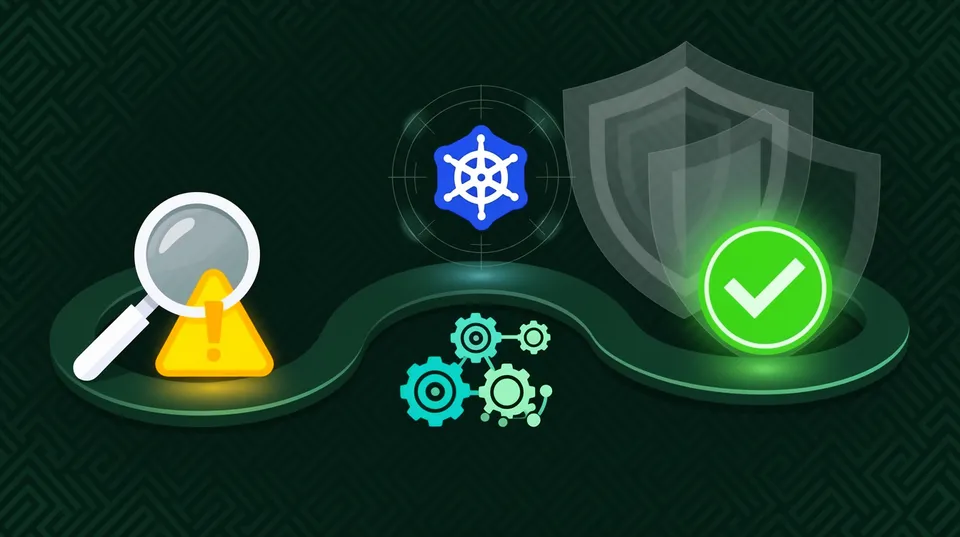
Leverage Kubernetes admission controllers to enforce security policies at the cluster level. These controllers can intercept API requests to the Kubernetes API server and validate or mutate them before persistence. For example, an admission controller can deny workloads that attempt to mount service account tokens into containers where they aren't needed, or enforce specific RBAC policies ally. Tools like Kyverno or OPA Gatekeeper can be instrumental here, allowing you to define policy-as-code to prevent insecure configurations from being applied.
apiVersion: kyverno.io/v1
kind: ClusterPolicy
metadata: name: disallow-root-uid-pod
spec: validationFailureAction: Enforce rules: - name: disallow-root-uid match: resources: kinds: - Pod validate: pattern: spec: securityContext: runAsNonRoot: true containers: - =(securityContext): runAsNonRoot: true
While this example focuses on root UIDs, similar policies can be crafted for service account usage. By integrating these controls, you create a layered defense that safeguards Kubernetes tokens throughout their lifecycle and use in CI/CD. Tamnoon's Ecosystem Integration is built to work with outcomes from tools like Wiz, Orca, Prisma Cloud, and others, taking their findings and driving actionable remediation. This is crucial for DevSecOps teams that often find themselves overwhelmed by alerts and struggling to implement fixes quickly and safely, a challenge Tamnoon specifically addresses as a bridge between detection and operational action.

Tamnoon helps security teams remediate cloud risks faster with AI-augmented managed services — combining human expertise with automation so nothing falls through the cracks.
Learn more at tamnoon.ioFAQs
What is the primary risk associated with Kubernetes tokens in CI/CD?
The primary risk stems from the potential for compromise, which can grant attackers programmatic access to Kubernetes clusters. If a token falls into the wrong hands, it can be used to deploy malicious applications, exfiltrate data, alter configurations, or escalate privileges within the cluster. This risk is amplified because CI/CD pipelines often operate with elevated permissions to facilitate automated deployments, making any compromised token a direct pathway to critical production environments and potentially leading to significant financial and reputational damage for an organization.
How does implementing least privilege help secure Kubernetes tokens?
Implementing least privilege ensures that Kubernetes service accounts (and their associated tokens) are granted only the minimum necessary permissions to perform their designated tasks within the CI/CD pipeline. By restricting privileges, you limit the potential blast radius should a token be compromised. For example, a service account used for deploying a specific application might only have permissions to modify resources in its dedicated namespace, preventing it from accessing or altering other critical cluster components. This makes any stolen token far less potent to an attacker.
Why is automated token rotation important for Kubernetes CI/CD security?
Automated token rotation is crucial because it significantly reduces the lifespan of tokens, making them less valuable to attackers if stolen. Manual rotation is often inconsistent and prone to human error, leaving tokens exposed for extended periods. By automating the rotation process, such as configuring short-lived or projected service account tokens and regularly refreshing credentials, organizations can ensure that even if a token is compromised, its validity window is minimal, limiting the time an attacker has to exploit it and mitigating continuous unauthorized access to Kubernetes resources.
What role do SAST and DAST tools play in securing CI/CD pipelines for Kubernetes tokens?
SAST (Static Application Security Testing) and DAST (Dynamic Application Security Testing) tools play a complementary role in securing CI/CD pipelines. SAST tools, like OpenText Fortify SAST, analyze source code to find vulnerabilities like hardcoded credentials or insecure secret handling before deployment. DAST tools, such as Fortify WebInspect by OpenText, test the running application to identify runtime vulnerabilities that SAST might miss and could expose tokens. Integrating both into the CI/CD workflow helps prevent vulnerable code from reaching production and exposing Kubernetes tokens, providing a strong layered defense.
How does Tamnoon help remediate Kubernetes token security issues in CI/CD?
Tamnoon addresses Kubernetes token security issues by transforming detection alerts from various cloud security tools (like CNAPPs/CSPMs) into actionable, production-safe remediation. When a misconfiguration or vulnerability related to Kubernetes tokens is identified (e.g., overprivileged service accounts, insecure token storage), Tamnoon's AI-powered remediation engine generates specific fix-actions. These remediation playbooks are validated, often with human-in-the-loop expert oversight, to ensure they resolve the issue without impacting application uptime. This process significantly reduces the Mean Time To Remediation (MTTR), bridging the gap between identifying a security problem and safely fixing it in production environments.