


Security tools generate alerts. Remediating them often breaks production.
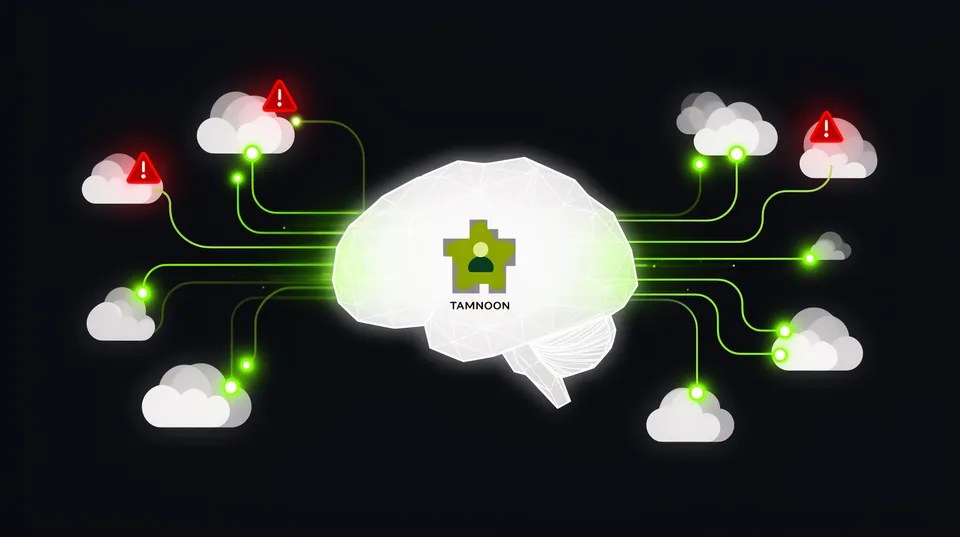
Modern cloud environments create a constant stream of security findings. Tools like Wiz, Orca Security, Palo Alto Cortex Cloud, and Sentinel One Singularity are excellent at detection. They map your cloud assets, identify misconfigurations, and pinpoint vulnerabilities. The problem isn't detection. It's the remediation of those findings without causing production outages. Organizations end up with a backlog. Alarmingly, 53% of cloud detections remain open, a stark indicator of the remediation gap. This directly impacts operational stability and security posture.
The core issue lies in the operational friction between security teams and engineering teams. Security identifies a problem, but engineering owns the infrastructure and typically bears the risk of implementing a fix. This often leads to cloud security findings remaining unaddressed for extended periods. some stay open for 150 days. Bridging this gap requires not just better tools, but a strategic approach to remediation that prioritizes production safety.
Understanding the Production Impact of Remediation Delays

Unaddressed security findings don't just sit idly. They accrue risk. Each open misconfiguration or vulnerability represents a potential entry point for attackers. When an incident occurs due to an unaddressed finding, the production impact is immediate and severe. This can manifest as service degradation, data exfiltration, or complete system compromise. Engineers on call at 2 AM aren't just dealing with service outages. They're often scrambling to fix a security flaw that should have been remediated months prior. The longer a finding remains open, the higher the likelihood that it will become a critical incident. These incidents necessitate immediate, often reactive, fixes that carry a much higher risk of introducing new errors or downtime compared to planned, proactive remediation. The mean time to remediation (MTTR) for these critical incidents skyrockets due to the reactive nature of the response, adding to operational overhead and stress.
Consider an AWS S3 bucket misconfiguration, where a policy inadvertently grants public read/write access. A CNAPP like Wiz or Orca Security will detect this immediately. If left unaddressed, sensitive data could be exfiltrated. The remediation, which involves correcting the bucket policy, is straightforward. However, if that bucket is part of a critical data pipeline or serves static content for a live application, a sudden policy change without proper validation could disrupt services. This creates the remediation paralysis many organizations face. Security wants to fix it now, but engineering needs to understand all dependencies before touching a production resource. This is where the gap widens, and risk exposure grows.
The Blast Radius and Rollback Dilemma
Every remediation action has a potential blast radius. Changing an IAM role policy, revoking an access key, or reconfiguring a network security group can have cascading effects. For instance, rotating an IAM access key without proper application reconfiguration will inevitably lead to service interruptions. The services using that key will fail to authenticate, causing application downtime. Understanding this blast radius is critical for planning production-safe remediations. It means identifying all dependent services, applications, and pipelines that might be affected by a change.
Rollback strategies are equally important. If a remediation action causes an unforeseen issue, you need a quick, reliable way to revert the change. For infrastructure-as-code (IaC) managed resources, this often means reverting to a previous healthy state in your version control system and reapplying. For direct console or API changes, it means having the exact previous configuration readily available. Without a clear rollback plan, a failed remediation attempt can compound the initial problem, leading to longer recovery times and greater impact. Tamnoon's approach incorporates validation and rollback mechanisms directly into its playbooks, ensuring that if a fix introduces an issue, there's an immediate way to revert without further disruption. This human-in-the-loop validation process, where Tamnoon's cloud experts validate complex remediations, is crucial for maintaining production stability.
Actionable Strategies for Faster, Safer Remediation
Moving beyond detection to effective, production-safe remediation requires a shift in operational processes and tooling. It's not enough to simply identify problems. You need to execute fixes predictably and safely. This involves orchestrating the remediation lifecycle, integrating security into engineering workflows, and automating where appropriate. Remediation playbooks are central to this. They codify the steps required to fix common findings, including pre-checks, remediation steps, post-checks, and rollback procedures. Automated remediation playbooks help reduce manual toil and ensure consistency.
The Tamnoon platform helps close this gap by combining AI-powered remediation with human oversight. Tamnoon's AI analyzes alerts from your existing security tools, whether they're from AWS Security Hub, Azure Defender for Cloud, Wiz, Upwind, or Cyera. It then generates specific fix-actions. This isn't just about suggesting a fix. It's about providing production-safe remediation playbooks that can be executed with confidence. Tamnoon's new skills orchestrator delivers precise, automated fixes, powered by millions of real cloud remediations. This intelligence ensures that the proposed fixes are battle-tested and unlikely to cause adverse effects.
Example: Fixing an Over-privileged IAM Role
Let's take a common cloud security finding: an over-privileged IAM role. Your CNAPP detects a role with broad permissions, like AdministratorAccess, attached to a non-critical application or service account. Here's how you'd approach remediation with a production-safe strategy:
- Detection & Prioritization: Your CNAPP flags the overly permissive IAM role. Tamnoon ingests this alert, correlates it with asset criticality, and prioritizes it. An application with production data and an over-privileged role is higher priority than a dev environment.
- Impact Analysis (Pre-Remediation): Before making any changes, you need to understand what services and applications use this role. Tamnoon's platform can analyze cloud logs (CloudTrail, GuardDuty, Flow Logs) to identify which services have actually d these broad permissions within a defined timeframe. This helps narrow down the minimal required permissions.
- Policy Generation & Review: Based on the usage analysis, Tamnoon's AI-powered remediation engine proposes a refined, least-privilege IAM policy. This policy includes only the actions and resources the role actually needs. The proposed policy is then presented for human review. This is the human-in-the-loop step, where a cloud security engineer or application owner validates the proposed changes against their understanding of the application's requirements.
- Staging & Validation (Optional but Recommended): For critical roles, testing the new policy in a staging environment is advised. Apply the refined policy to the role in a non-production account and run integration tests to ensure all application functionality remains intact. This pre-deployment validation minimizes production risk.
- Production Deployment: Once validated, the new, least-privilege IAM policy is applied to the production role. This can be done via IaC (e.g., Terraform, CloudFormation), direct API calls, or through the cloud console. Tamnoon's playbooks can orchestrate this deployment, tracking the change and verifying its successful application.
- Post-Remediation Monitoring & Rollback: After deployment, continuous monitoring is essential. Observe application logs, cloud security posture management (CSPM) results, and specific metrics related to the role's usage. If an issue arises, the system can automatically trigger a rollback to the previous policy. This ensures minimal disruption. Tamnoon's platform helps shrink your cloud blast radius through precise policy application.
This systematic approach, combining AI analysis with human validation and controlled deployment, helps reduce critical alerts and shortens MTTR. Tamnoon reduces critical alerts and shortens MTTR by 72%, a significant improvement over manual processes. It means engineers aren't just reacting to fires. They're proactively mitigating risks with tested, production-safe solutions.
Integrating Remediation into Existing DevOps Workflows
For remediation to be effective, it can't be an isolated security function. It needs to be deeply integrated into the DevOps and engineering CI/CD pipeline. This means providing actionable remediation steps directly within the tools and dashboards that engineering teams already use. Tamnoon integrates with existing ITSM tools like Jira, Slack, and ServiceNow, pushing remediation tasks and updates directly to engineering teams. This eliminates swivel-chair operations and ensures that security issues are treated as engineering tasks, complete with tracking, assignment, and SLAs.
Consider a misconfiguration detected in an Infrastructure as Code (IaC) template like a Terraform file. A robust remediation strategy wouldn't only flag the issue but also suggest the exact code change needed to fix it. Tamnoon's playbooks can often provide these IaC snippets, allowing developers to copy-paste the fix directly into their code repository. This dramatically reduces the friction of remediation by providing the fix in a developer-friendly format, speeding up resolution without requiring specialized security knowledge from every developer.
# Original IAM policy (over-privileged)
resource "aws_iam_policy" "bad_policy" { name = "AdministratorAccessPolicy" description = "Policy granting full admin access" policy = jsonencode({ Version = "2012-10-17" Statement = [ { Action = "*" Effect = "Allow" Resource = "*" }, ] })
} # Tamnoon-suggested remediation (least privilege)
resource "aws_iam_policy" "good_policy" { name = "S3ReadAccessPolicy" description = "Policy granting read access to specific S3 bucket" policy = jsonencode({ Version = "2012-10-17" Statement = [ { Action = [ "s3:GetObject", "s3:ListBucket" ] Effect = "Allow" Resource = [ "arn:aws:s3:::my-secure-bucket", "arn:aws:s3:::my-secure-bucket/*" ] }, ] })
}
This direct integration streamlines the workflow. Instead of security filing a ticket, waiting for engineering to investigate, and then proposing a fix, the fix is nearly instant. The security team maintains oversight and approval, particularly through remediation validation steps, but the operational burden on both sides decreases significantly. This collaborative approach fosters a DevSecOps culture where security doesn't hinder development velocity.
The Role of AI in Bridging the Gap
AI is transforming the ability to analyze complex cloud environments and propose intelligent remediation actions. AI tools, such as Claude Mythos, are accelerating vulnerability discovery, which further exposes the remediation gap. This makes AI-driven remediation even more critical. Tamnoon's platform uses AI to understand the context of security findings, predict the impact of changes, and generate precise remediation steps. It moves beyond simple rule-based automation to more intelligent, adaptive remediation.
The AI in Tamnoon doesn't just apply static playbooks. It learns from millions of past remediations and vast cloud data. This allows it to adapt to unique cloud configurations and propose tailored fixes that account for specific dependencies and operational constraints. This is essential for tackling the long tail of complex, nuanced security findings that don't fit into generic templates. For high-stakes remediations, Tamnoon's AI-Powered Remediation can even simulate the impact of a fix before it's applied, helping identify potential issues preemptively.
Human-in-the-Loop: The Essential Oversight
While AI can automate much of the remediation process, human oversight remains indispensable, particularly for critical production environments. This is the essence of Tamnoon's human-in-the-loop (expert-led) approach. AI proposes, but humans validate and approve. This ensures that expert knowledge and business context are applied to prevent any unintended consequences. For example, a proposed remediation for an overly permissive S3 bucket might be technically correct but could disrupt a critical business process if certain read access is temporarily needed by a legacy system not fully cataloged. The human expert can catch these nuances.
This hybrid approach ensures high confidence in automated remediations, fostering trust between security and engineering. Security teams gain assurance that fixes won't break production, and engineering teams can trust that the proposed changes are well-researched and safe. This iterative feedback loop between AI and human experts continually refines the remediation intelligence, leading to increasingly robust and reliable automated fixes. The entire process gets faster and more predictable, enabling organizations to move closer to closing the remediation gap and reducing operational risk.
Metrics and Continuous Improvement
You can't improve what you don't measure. Effective remediation strategies include robust reporting and analytics. This means tracking key metrics like MTTR, the number of open findings, the backlog of critical vulnerabilities, and the success rate of automated remediations. Tamnoon Reporting provides a set of capabilities that allows customers to continuously visualize and measure their cloud security remediation efforts. These metrics provide clear visibility into the effectiveness of your security program and highlight areas for improvement. Regular review of these metrics helps justify investments in remediation tooling and processes.
Tracking remediation outcomes provides valuable feedback to the detection phase. If certain types of findings consistently fail remediation or cause recurring incidents, it indicates a need to refine detection rules or shift left by implementing preventative controls earlier in the development lifecycle. This continuous improvement cycle is for maturing any security program. It ensures that lessons learned from remediation are fed back into policy refinement and preventative measures, creating a more resilient cloud environment. For more information on continuous improvement, check out CISA's guidelines on continuous monitoring and evaluation.
The current cybersecurity landscape demands more than just detection. As more organizations adopt cloud-native architectures, the volume and complexity of security findings will only increase. Relying solely on manual remediation processes is unsustainable. Organizations need to embrace automated, production-safe remediation strategies to keep pace and maintain a strong security posture. This involves a combination of intelligent automation, expert validation, and deep integration with operational workflows, ensuring that security findings are not just found, but fixed.

Tamnoon helps security teams remediate cloud risks faster with AI-augmented managed services — combining human expertise with automation so nothing falls through the cracks.
Learn more at tamnoon.ioFAQs
What is the primary challenge in bridging the gap between detection and remediation in cloud security?
The main challenge stems from the operational friction between security teams and engineering teams. Security tools are effective at detecting misconfigurations and vulnerabilities, but the subsequent remediation often falls on engineering, who must ensure fixes don't disrupt production environments. This hesitancy and the need for thorough validation lead to security findings remaining open for extended periods, increasing risk. The lack of clear, automated, and production-safe pathways for remediation contributes significantly to this gap.
How does Tamnoon ensure that remediations are production-safe?
Tamnoon ensures production-safe remediations through a combination of AI-powered analysis, expert-led human-in-the-loop validation, and detailed remediation playbooks. The AI engine analyzes the context of each finding and proposes precise, least-privilege fixes. These proposed fixes are then reviewed and validated by human cloud experts to account for business-specific nuances and potential dependencies. Additionally, Tamnoon's playbooks embed pre-checks, post-checks, and robust rollback mechanisms, minimizing the risk of unintended production impact during execution.
Can Tamnoon integrate with existing cloud security tools like Wiz or Orca Security?
Yes, Tamnoon is designed for ecosystem integration. It works seamlessly with a wide array of existing cloud security tools, including popular CNAPPs and CSPMs like Wiz, Orca Security, Palo Alto Cortex Cloud, and others such as Upwind and Cyera. Tamnoon ingests alerts and findings from these detection platforms, then transforms them into actionable, production-safe remediation tasks. This allows organizations to maximize their existing security investments by converting detection into tangible fixes without disrupting their current tooling.
What role does AI play in Tamnoon's remediation process?
AI plays a central role in Tamnoon's remediation process by intelligently analyzing security findings and generating highly contextualized fix-actions. The AI engine, informed by millions of real-world remediations, can understand the specific implications of vulnerabilities and misconfigurations within a cloud environment. It identifies affected resources, proposes precise, least-privilege policies, and even simulates the impact of potential fixes. This significantly reduces manual effort, accelerates the remediation process, and improves the accuracy of proposed solutions.
How does Tamnoon address the 'blast radius' concern with remediation actions?
Tamnoon addresses the 'blast radius' concern through comprehensive impact analysis and controlled execution. Before any remediation, the platform analyzes cloud logs and dependencies to map out affected services and applications. This helps identify the true scope of a change. Tamnoon's remediation playbooks include specific pre-checks and verification steps to confirm the proposed fix will have the intended, minimal impact. If an unforeseen issue does occur, built-in rollback capabilities allow for rapid reversion to a stable state, thereby containing any potential blast radius and ensuring business continuity.