

Security alerts, particularly those from cloud vulnerability scans, don't just identify risks. They demand action. The true production impact of cloud vulnerabilities often manifests not solely from the vulnerability itself, but from the disruption caused by poorly managed remediation efforts. This isn't just about the fix. It's about how that fix affects live services.
Enterprise security leaders grapple with a constant influx of findings from CSPMs, CNAPPs, and other detection tools. The challenge shifts from identifying vulnerabilities to fixing them without causing an outage or degrading performance. Understanding what breaks, how widely it breaks, and how to roll back safely is critical for maintaining operational stability while improving security posture.
This discussion will focus on the operational realities of cloud vulnerability remediation, exploring common pitfalls that lead to production impact, and detailing strategies to execute fixes safely and efficiently. It emphasizes the need for a systematic, production-aware approach to remediation, moving beyond mere detection to actual, reliable resolution.
The Production Ripple Effect of Unmanaged Vulnerabilities
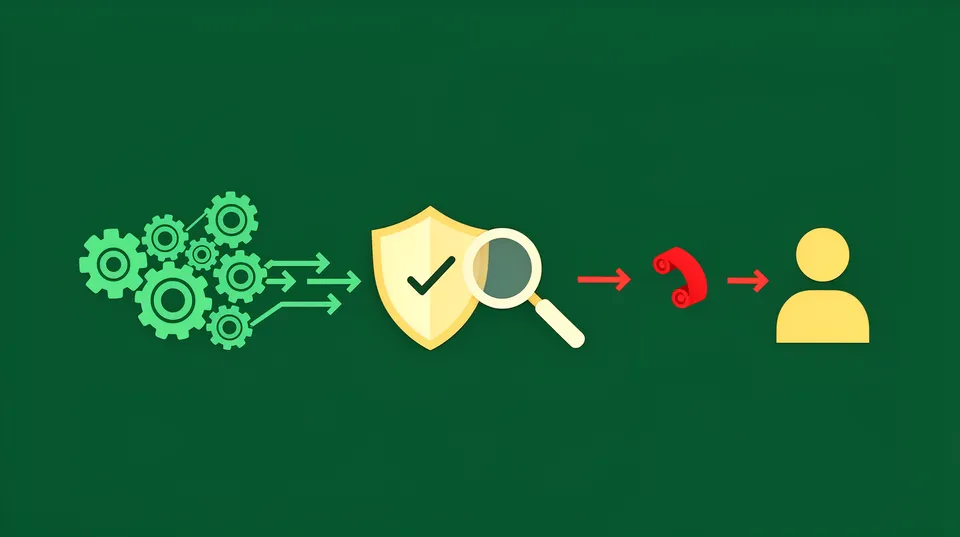
Unmanaged cloud vulnerabilities don't just pose theoretical security risks. They create a constant, underlying potential for production outages, data breaches, and service degradation through mismanaged remediation attempts. When an engineer rushes a fix to production without proper testing or understanding the blast radius, even a simple configuration change can cascade into widespread system failures. This is the real-world operational consequence security teams face daily, exacerbated by alert fatigue from tools that surface thousands of issues without clear paths to resolution.
Consider a misconfigured AWS S3 bucket. A typical CSPM like Wiz or Orca Security flags it as publicly accessible. The security team creates a ticket, which lands with a DevOps engineer. Their immediate task is to secure the bucket. If they apply a restrictive bucket policy without understanding which applications rely on public access, dependent services break. Suddenly, a customer-facing portal can't load static assets, or a critical data pipeline fails. Rollback procedures might be unclear or untested, prolonging downtime. This scenario highlights how detection is only half the battle. The other half is safe, production-aware remediation. Gartner research in 2026 states that companies who adopt continuous threat exposure management will be 3x less likely to suffer from breaches, underscoring the importance of not just finding issues, but managing their exposure through effective remediation [LINK].
Identifying Common Vulnerability Remediation Pitfalls
Several common pitfalls transform well-intentioned remediation efforts into production incidents. One is the lack of context. Security teams often lack deep operational knowledge of how each cloud resource supports specific applications. They see a vulnerability in an EC2 instance, but don't know it's a critical component of a legacy system that can't handle a reboot during business hours. Another pitfall is the absence of standardized, pre-vetted remediation playbooks. Every fix becomes an ad-hoc effort, increasing variability and the chance of human error. Automation without guardrails also contributes. Scripts designed to fix one instance might have unintended global effects if not properly scoped and tested. This often leads to a cycle where security teams find issues, but engineering teams are hesitant to fix them for fear of breaking something, resulting in a growing backlog and continued exposure. The problem isn't just fixing things. It's fixing things safely.
Establishing Production-Safe Remediation Workflows
Building production-safe remediation workflows means integrating security fixes directly into existing CI/CD pipelines and operational practices with automated testing, rollback strategies, and human-in-the-loop validation to prevent unplanned downtime. It shifts the focus from reactive firefighting to proactive, controlled resolution. This requires a cultural and technical alignment between security and operations teams, often d by a dedicated remediation platform.
One core component of this strategy involves Infrastructure as Code (IaC). Terraform, for instance, is recommended for creating workflows to store an environment's configuration as code in a repository [LINK]. This means a vulnerability, say an overly permissive IAM policy, isn't fixed manually via the console. Instead, the IaC definition is updated, tested, and deployed through the same pipeline used for application code. This ensures consistency, version control, and an inherent rollback mechanism by reverting to a previous IaC state. Similarly, tools like Secret Manager are recommended by Google Cloud to secure sensitive data such as API keys and passwords, integrating these security best practices into automated workflows [LINK].
Integrating Remediation into CI/CD Pipelines
Integrating remediation into CI/CD pipelines ensures that security fixes undergo the same rigorous testing and deployment processes as application features. When a security finding comes from a CNAPP or CSPM like Palo Alto Cortex Cloud, Orca, or Tenable (Cloud Security), instead of creating a manual ticket, an automated process can generate a pull request (PR) that modifies the relevant IaC or configuration file. This PR triggers automated tests, including unit, integration, and security checks, against a staging environment. If the tests pass, the PR is reviewed by an engineer, and then merged, deploying the fix. This approach significantly reduces the risk of production impact. Tamnoon, for example, integrates with these detection tools to generate AI-powered remediation proposals as code, which can then be fed into a standard CI/CD pipeline. This transforms security findings into actionable, production-safe code changes. We've seen similar integration needs for organizations adopting tools like Tenable (Cloud Security), which offers CSPM, CIEM, vulnerability, and IaC scanning.
Automated Testing and Validation for Fixes
Automated testing is non-negotiable for production-safe remediation. This isn't just about functional testing, but also security validation. After a proposed fix is applied in a staging environment, automated tools can re-scan the environment to confirm the vulnerability is indeed closed. This might involve using a vulnerability scanner like Tenable Nessus to verify the absence of the previously detected issue. Beyond simply confirming the fix, these tests must also validate that no new misconfigurations or regressions were introduced. This dual-check prevents a scenario where fixing one problem inadvertently creates another. For complex remediations, Tamnoon's platform can use AI-powered analysis to predict potential side effects and recommend additional test cases, ensuring a higher confidence in the proposed fix. Human-in-the-loop expert validation then reviews these complex remediations to ensure zero downtime.
The Role of Remediation Playbooks and Automation
Remediation playbooks provide standardized, tested procedures for common cloud vulnerabilities, enabling efficient and repeatable fixes, while automation scales these efforts to address a high volume of alerts without manual intervention. This combination is essential for enterprise security leaders drowning in alerts but lacking the resources to fix them all manually. Playbooks reduce cognitive load and ensure consistency, while automation accelerates execution.
Consider the common scenario of an overly permissive IAM role. Manually investigating the role, identifying the least privilege needed, and then modifying the policy can take hours. With a remediation playbook, this process is codified. The playbook outlines steps like: identify affected resources, review access logs for actual usage, generate a least-privilege policy, apply it in a staging environment, validate, and then deploy. Tamnoon provides Production-Safe Playbooks for these exact scenarios. These are pre-configured, battle-tested workflows for common cloud threats like IAM misconfigurations or S3 exposure. These playbooks are designed to resolve issues without impacting application uptime, providing a critical safety net for engineering teams. You can find examples like S3 enable server versioning or delete IAM user that illustrate these codified steps.
Automating Remediation for Scale
Automation isn't just about speed. It's about scale and consistency. Cloud environments generate thousands of security findings daily. Attempting to manually fix each one is unsustainable. This leads to backlogs, alert fatigue, and increased risk exposure. Automated remediation, however, can process these alerts programmatically. When AWS Security Hub aggregates alerts [LINK], a platform like Tamnoon can ingest these findings, apply its AI-powered remediation logic, and automatically generate fix proposals based on pre-approved playbooks. This might involve automatically tightening network ACLs for exposed resources, updating security group rules, or even triggering an update to an IaC template that defines cloud resources. This moves security operations from a reactive, manual effort to a proactive, automated one, significantly reducing the Mean Time To Remediation (MTTR).
"The complexity of cloud environments demands a shift from traditional vulnerability management to continuous, automated remediation that considers the entire exposure lifecycle. Organizations can't afford to just find vulnerabilities. They must fix them at speed and scale without disrupting business operations."
SentinelOne, Cyber Security Trends 2026
Human-in-the-Loop for Critical Issues
While automation handles the bulk of routine remediations, critical or complex issues often require Human-in-the-Loop (HITL) intervention. This isn't a failure of automation. It's a strategic guardrail. For instance, if Tamnoon's AI identifies a highly sensitive database misconfiguration, it might generate a remediation proposal but flag it for expert review. Tamnoon's platform offers expert-led oversight, where cloud security specialists validate complex remediations to ensure zero downtime. These experts bring context that automation might miss, such as business criticality, potential dependencies, or unique environmental constraints. This hybrid approach ensures that fixes are both fast and safe, combining the efficiency of AI with the judgment of experienced engineers. It helps secure critical assets without the risk of an unexpected outage, which is a constant concern for anyone on call at 2 AM.
Measuring Impact and Continuous Improvement
To continuously improve cloud vulnerability management, security leaders must measure the production impact of remediation activities and use those metrics to refine processes, automate more effectively, and reduce future risk. This involves tracking key performance indicators (KPIs) beyond just the number of vulnerabilities found or fixed, focusing instead on efficiency and stability metrics.
Key metrics include Mean Time To Detect (MTTD), Mean Time To Respond (MTTR), and Mean Time To Resolve (MTTR). For remediation, the focus is heavily on the latter two. A lower MTTR for high-severity vulnerabilities indicates a more efficient remediation pipeline. However, this must be balanced with production stability. Tracking incidents directly attributable to remediation efforts provides insight into the safety of the processes. If MTTR goes down but production incidents go up, the remediation process isn't truly effective. Tamnoon's platform offers reporting and compliance features that track these metrics, providing visibility into the entire remediation lifecycle and helping organizations identify bottlenecks or areas needing improvement. This data-driven approach enables a clear understanding of the operational effectiveness of security efforts.
Feedback Loops for Playbook Refinement
No remediation playbook is perfect from day one. Continuous improvement relies on robust feedback loops. After a playbook is executed, especially for a complex or critical issue, a post-mortem or review session is essential. Did the fix work as expected? Were there any unintended side effects? Could the process be more efficient? This feedback directly informs playbook refinement. For example, if a playbook for fixing overprivileged IAM roles consistently leads to application failures because it was too aggressive, the playbook needs adjustment to incorporate more granular permissions or pre-validation steps. Tamnoon's AI-powered remediation engine learns from these outcomes, continuously improving its suggestions and confidence levels over time. This adaptive learning ensures that remediation strategies become progressively safer and more efficient. For more insights on this, you can refer to our article on shrinking your remediation backlog and conquering CNAPP alert fatigue.
Operationalizing Remediation Outcomes
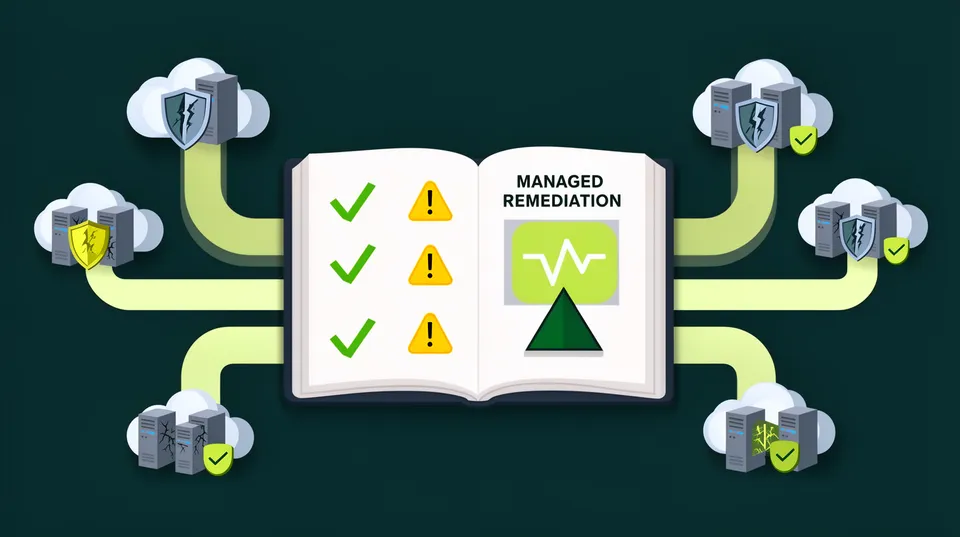
Operationalizing remediation outcomes means ensuring that fixes aren't just one-off events but contribute to a stronger, more resilient cloud environment. This involves updating security baselines, modifying IaC templates to prevent future recurrence of the same vulnerability, and integrating lessons learned into developer training. For instance, if multiple S3 buckets are found to be publicly accessible, the remediation shouldn't just secure those specific buckets. It should also trigger a review of the IaC templates used to deploy S3 buckets, adding default secure configurations, and perhaps implementing preventative guardrails via AWS Organizations Service Control Policies (SCPs). This moves beyond reactive fixing to proactive prevention. This ongoing cycle of detection, automated remediation, validation, and continuous improvement is what truly streamlines cloud vulnerability management for enterprise security leaders, turning alerts into actionable, production-safe outcomes. It helps organizations slash MTTR in cloud security operations with proactive RemOps strategies.
Streamlining cloud vulnerability management requires a proactive, automated approach that prioritizes production stability. Reducing your MTTR by automating remediation with Tamnoon helps achieve this.

Tamnoon helps security teams remediate cloud risks faster with AI-augmented managed services — combining human expertise with automation so nothing falls through the cracks.
Learn more at tamnoon.ioFAQs
What is the primary production impact of unmanaged cloud vulnerabilities?
The primary production impact of unmanaged cloud vulnerabilities isn't just the theoretical risk of a breach, but the very real potential for service outages, degraded performance, and data exposure caused by either the vulnerability itself or, more commonly, by poorly executed remediation efforts. When fixes are rushed or lack proper testing, even simple configuration changes can lead to widespread system failures, disrupting business continuity and causing significant downtime. This creates a challenging environment for engineers responsible for keeping services operational while addressing security findings.
How do remediation playbooks contribute to production safety?
Remediation playbooks contribute to production safety by providing standardized, pre-tested procedures for addressing common cloud vulnerabilities. This eliminates ad-hoc, error-prone manual fixes. Playbooks ensure that every step, from identifying the affected resource to validating the fix, follows a vetted process. For instance, Tamnoon's Production-Safe Playbooks are designed to resolve issues like IAM misconfigurations or S3 exposure without impacting application uptime, incorporating checks and balances to prevent unintended side effects. This systematic approach reduces the variability and risk associated with critical changes.
When is Human-in-the-Loop (HITL) intervention necessary in automated remediation?
Human-in-the-Loop (HITL) intervention is necessary for critical or complex remediation tasks that require contextual business knowledge or unique environmental considerations that automation alone might miss. While AI-powered remediation can handle a significant volume of routine fixes, highly sensitive issues, such as database misconfigurations impacting core business applications, warrant expert review. Tamnoon's platform incorporates HITL by allowing cloud security specialists to validate complex remediation proposals, ensuring that even the most critical fixes are applied with zero downtime and without unintended consequences, balancing speed with caution.
How can organizations measure the effectiveness of their remediation processes?
Organizations can measure remediation effectiveness by tracking key metrics beyond just the number of vulnerabilities fixed. Important KPIs include Mean Time To Detect (MTTD), Mean Time To Respond (MTTR), and Mean Time To Resolve (MTTR). Additionally, tracking the number of production incidents directly attributable to remediation efforts provides crucial insights into the safety and stability of the process. If MTTR improves but production incidents increase, it indicates a need to refine remediation strategies. Platforms like Tamnoon provide reporting features to track these metrics, helping security leaders understand the operational impact and efficiency of their security actions.
What role does Infrastructure as Code (IaC) play in safe cloud vulnerability remediation?
Infrastructure as Code (IaC) is fundamental to safe cloud vulnerability remediation because it allows cloud configurations to be defined, version-controlled, and deployed through automated pipelines, much like application code. Instead of manual console changes, a vulnerability like an overly permissive IAM policy is fixed by updating the IaC definition. This ensures that fixes are standardized, auditable, and repeatable. Using tools like Terraform, organizations can implement changes in a controlled manner, test them in staging environments, and easily roll back to previous configurations if an issue arises, significantly reducing the risk of production impact from security fixes.