

Prioritizing cloud vulnerabilities solely by CVSS scores no longer works. Modern cloud environments are too, and a static severity score doesn't account for real-world impact or exploitability. Risk-based vulnerability management shifts the focus from simply identifying every flaw to understanding which vulnerabilities pose the most significant threat to your organization's specific assets and business operations.
CISOs face constant pressure to manage an overwhelming volume of security alerts, often leading to burnout and critical risks getting missed. Organizations need a system that cuts through the noise, providing clear, actionable insights into what truly matters, and then efficiently fixes those issues. Without this, cloud security teams are perpetually reactive, struggling to keep pace with an expanding attack surface and sophisticated threats.
This approach It's intelligent resource allocation. It ensures that security efforts align with business objectives, protecting critical data and services while minimizing operational disruption.
Understanding Traditional Vulnerability Management's Shortcomings
Traditional vulnerability management, often driven by static severity scores, generates alert fatigue and misdirects remediation efforts in cloud environments. Cloud infrastructure changes too quickly for a 'fix everything' approach, and not all high-severity vulnerabilities carry the same business risk. Relying solely on metrics like CVE and CVSS scores, while essential for basic identification, doesn't provide enough context for threat intelligence in multiple modern systems. The Cloud Security Alliance notes that CVEs alone aren't sufficient for managing threat intelligence of multiple modern systems on a rolling basis, and CVSS scores alone aren't sufficient for managing threat intelligence of multiple modern systems.
The sheer volume of alerts from cloud security posture management (CSPM) tools can quickly overwhelm security and DevOps teams. Many vulnerabilities flagged as 'critical' might be on isolated, non-internet-facing systems with minimal data exposure, while a 'medium' severity issue on a critical, publicly exposed asset could be a far greater threat. This mismatch causes friction between security teams, who demand fixes for every high-severity alert, and engineering teams, who are stretched thin and need to justify development cycles for security work.
This reactive cycle leads to a growing backlog of unaddressed vulnerabilities, increasing mean time to remediation (MTTR) and escalating organizational risk. It also fosters a perception that security is a blocker, not an enabler, of innovation. Without a clear risk-based prioritization model, teams waste time on issues with low actual impact, diverting resources from truly dangerous exposures. It's a common story: a security team finds 10,000 issues, but the engineering team can only fix 100 this sprint. Which 100 are they?
Identifying Key Flaws in Legacy Approaches
Legacy approaches often miss crucial contextual factors. They don't adequately consider:
- Asset criticality: Is the vulnerable asset holding sensitive customer data or just a staging environment component?
- Exposure: Is the vulnerability internet-facing, or is it deep within a private network segment?
- Exploitability: Is there a known exploit in the wild, or does it require a complex attack chain?
- Data sensitivity: What type of data does the vulnerable asset process or store?
- Identity and Access: What permissions does the vulnerable service account or compute instance hold? Could exploiting it lead to privilege escalation or lateral movement?
These contextual layers are what truly define risk. A high CVSS score on a non-critical asset behind multiple layers of security might be less urgent than a moderate CVSS score on a public-facing application with access to production databases. Ignoring these nuances means security teams spend cycles chasing low-impact issues while higher-risk exposures persist, unaddressed.
Defining Risk-Based Cloud Vulnerability Management
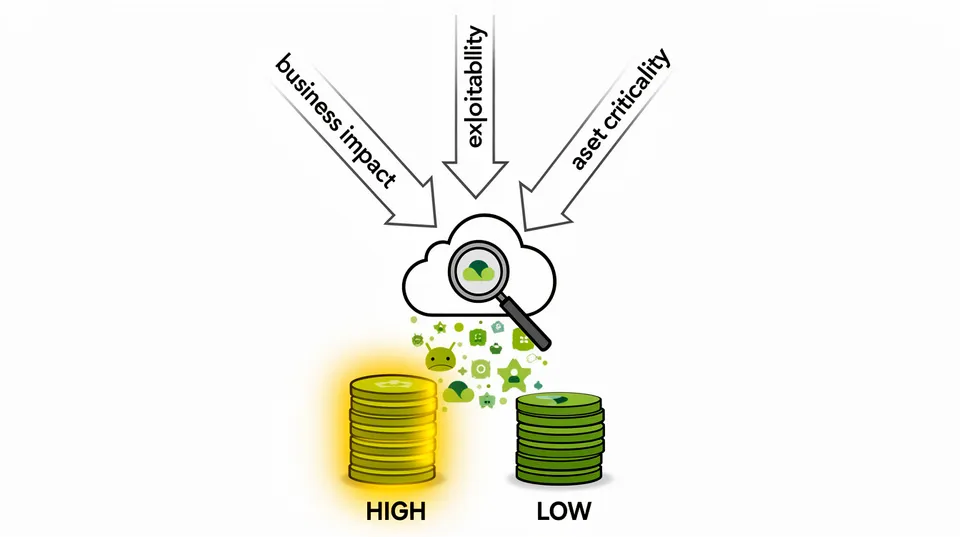
Risk-based vulnerability management prioritizes security findings based on their potential business impact, exploitability, and the criticality of the affected assets. This strategic shift moves beyond simple severity scoring, focusing remediation efforts where they matter most to the organization's unique threat landscape and operational context. It helps CISOs make informed decisions, ensuring security resources are allocated efficiently and effectively.
This approach means understanding your crown jewels: the applications, data, and infrastructure components essential to your business. It requires mapping vulnerabilities not just to a technical score, but to these critical assets, considering how their compromise could disrupt operations, lead to data breaches, or incur regulatory fines. CIO.economictimes.indiatimes.com recommends mapping out organizational goals and classifying systems based on criticality (such as customer-facing apps or sensitive data repositories) to understand business risk appetite. This means a vulnerability on a customer-facing payment processing service takes precedence over an identical vulnerability on an internal development server, even if both have the same CVSS score.
Core Components of a Risk-Based Approach
Implementing a risk-based strategy involves several key elements:
- Asset Inventory and Criticality Mapping: You can't protect what you don't know you have. A complete, real-time inventory of all cloud assets - virtual machines, containers, serverless functions, databases, storage buckets, network configurations - is foundational. Organizations should use a CMDB or IT asset management software for this, tagging assets based on business value, data sensitivity, and connectivity. This includes integrating data from sources like Wiz Code and Wiz ASM, which provide comprehensive code-to-cloud vulnerability management.
- Threat Intelligence Integration: Understanding current threats is crucial. Feed threat intelligence feeds into your vulnerability management process to identify which vulnerabilities are actively being exploited in the wild. This helps differentiate between theoretical risks and immediate dangers.
- Contextual Analysis: This is where the 'risk' comes in. It's not just about the vulnerability, but its environment. Considerations include network exposure (internet-facing vs. internal), access controls, identity permissions associated with the asset, and the sensitivity of data processed or stored.
- Quantified Risk Scoring: Develop a customized scoring model that combines vulnerability severity (CVE, CVSS) with asset criticality, exposure, and exploitability. This provides a, business-aligned risk score.
- Remediation Prioritization and Orchestration: Once risks are quantified, prioritize remediation efforts. This isn't just about creating a list. It's about enabling engineering teams to efficiently address the highest risks with production-safe fixes.
- Continuous Monitoring and Re-evaluation: Cloud environments are always changing. New assets appear, configurations shift, and new vulnerabilities are discovered daily. The risk posture is fluid, requiring continuous monitoring and frequent re-evaluation of prioritized risks.
"We see this through a 'credentials-stealing prism,' whereby the evolving mindset of threat actors means that, rather than breaking through technical defenses, they increasingly seek to steal the very credentials that allow legitimate access."
Verizon 2026 DBIR, TechTarget
This highlights why identity and access context are so critical in risk assessment. A credential-stealing attack can bypass many technical defenses, making misconfigured IAM roles or exposed keys a high-risk vulnerability, regardless of their CVSS score.
Building a Risk-Based Vulnerability Management Program
Building a robust risk-based program requires a phased approach, integrating tooling, processes, and cross-functional collaboration to ensure effective, production-safe remediation. Start with a clear understanding of your organizational risk appetite and critical assets. This foundational knowledge guides all subsequent steps, preventing wasted effort on low-impact findings.
Step 1: Inventory and Classify Cloud Assets
Begin by gaining a complete picture of your cloud estate. Use tools like AWS Config, Azure Inventory, or GCP Asset Inventory, complemented by CNAPPs such as Wiz, Orca Security, or Palo Alto Cortex Cloud, to discover all resources. Integrate this with a CMDB or IT asset management software. Crucially, tag assets based on business criticality, data sensitivity (e.g., PCI, PII, internal), and exposure (public-facing, internal, isolated).
Example tagging in AWS:
aws ec2 create-tags \ --resources i-0abcdef1234567890 \ --tags Key=Environment,Value=Production Key=DataSensitivity,Value=PCI \ Key=BusinessUnit,Value=Finance Key=Exposure,Value=Public
For Kubernetes, you'd use labels:
kubectl label deployment my-app environment=production data-sensitivity=pii business-unit=customer-facing
Consistent tagging is non-negotiable for accurate risk assessment. It feeds directly into your risk scoring model, allowing you to automatically elevate the risk of vulnerabilities on critical, sensitive, or exposed assets.
Step 2: Implement Comprehensive Cloud Exposure Scanning
Deploy CNAPP solutions like Wiz, Orca, Prisma Cloud, or Upwind to continuously scan your cloud infrastructure, configurations, and identity postures. These tools go beyond basic vulnerability scanning by identifying misconfigurations, identity risks (e.g., overprivileged IAM roles), and exposed secrets, not just CVEs. Make sure your scanning includes code-to-cloud vulnerability management using tools like Wiz Code, which extends security left into your CI/CD pipelines.
Integrate these findings into a centralized platform. For example, connect your CNAPP outputs to AWS Security Hub or Azure Defender for Cloud, which can aggregate findings from various sources. This central view is crucial for getting a consolidated picture of your cloud security posture.
Step 3: Develop a Contextual Risk Scoring Model
This is the heart of risk-based vulnerability management. Your scoring model should combine:
- Technical Severity: CVE/CVSS scores from scanners.
- Asset Criticality: Based on the tags from Step 1.
- Exposure: Network reachability (e.g., public IP, internet gateway, VPC peering).
- Exploitability: Is there a known exploit? Is it easily exploitable? Threat intelligence feeds from sources like Mandiant or CrowdStrike inform this.
- Data Sensitivity: Based on asset tags.
- Privilege Escalation Potential: For IAM-related issues, how much damage can an attacker do if they compromise this identity?
Define a weighting system for these factors. For instance, a critical vulnerability (CVSS 9.0+) on a public-facing production asset containing PCI data should have a significantly higher risk score than the same vulnerability on an internal dev environment. Tools like Palo Alto Cortex Cloud or Sentinel One Singularity can help build and operationalize these models by integrating various data sources.
Step 4: Prioritize Remediation with Actionable Intelligence
Once risks are scored, prioritize them for remediation. This isn't just about a top-N list. It's about providing the remediation teams (often DevOps or SREs) with actionable intelligence. Tamnoon helps here by taking these prioritized alerts and applying AI-powered remediation to generate specific fix-actions, moving beyond simple detection to actual, production-safe remediation. It integrates with existing stacks like Wiz, Orca Security, and Prisma Cloud, providing the agentic prioritization necessary to focus efforts.
A CISO's focus must shift from 'how many vulnerabilities' to 'which vulnerabilities pose the greatest threat to my business and how quickly can we fix them.' Nearly half of all incidents (48%) involved some form of ransomware, up from 44% in the previous period (prior to 2026), according to the Verizon 2026 DBIR. This indicates that attackers are increasingly targeting easily exploitable vulnerabilities with high impact potential, reinforcing the need for risk-based prioritization.
Step 5: Orchestrate and Automate Remediation Workflows
This is often the most challenging part: closing the loop between detection and fix. Remediation should be as automated as possible, especially for recurring or well-understood issues. Tamnoon's AI-Powered Remediation engine orchestrates this by analyzing alerts and generating specific fix-actions. It uses Remediation Playbooks, which are pre-configured, battle-tested workflows for common cloud threats, like IAM misconfigurations or S3 exposure.
Example of a remediation playbook for an unencrypted S3 bucket in a highly sensitive environment:
- Detect: CSPM tool flags an S3 bucket
my-sensitive-data-bucketinus-east-1with no default encryption. - Contextualize (Tamnoon): Identify bucket tags:
DataSensitivity=PII,Environment=Production,BusinessUnit=Legal. Confirm public access is denied but internal access is wide. High-risk score assigned due to PII and production environment. - Propose Fix: Tamnoon suggests applying AES256 server-side encryption as the default for the bucket.
- Generate IaC (Tamnoon): Create a Terraform or CloudFormation snippet to enforce this encryption.
resource "aws_s3_bucket_server_side_encryption_configuration" "example" { bucket = "my-sensitive-data-bucket" rule { apply_server_side_encryption_by_default { sse_algorithm = "AES256" } }
}
- Human-in-the-Loop Validation: For complex changes, Tamnoon's Human-in-the-Loop experts validate the proposed fix to ensure zero downtime.
- Execute: Apply the IaC change via your existing CI/CD pipeline. This is a production-safe playbook. You can find more about securing S3 buckets with Tamnoon here.
- Verify: Re-scan to confirm the vulnerability is resolved and no new issues are introduced.
This systematic approach drastically reduces MTTR and helps close the cloud security remediation gap, as discussed in a previous article. It also helps in shrinking your remediation backlog and conquering CNAPP alert fatigue.
Operationalizing Risk-Based Remediation
Operationalizing risk-based remediation means integrating it into daily DevSecOps workflows, fostering collaboration, and continuously optimizing the process for efficiency and safety. It's an ongoing practice that adapts as your cloud environment evolves. This requires a cultural shift where security is a shared responsibility, and remediation is an integral part of development and operations.
Regular communication between security, development, and operations teams is . Security teams provide the risk-prioritized findings and recommended fixes. Development and operations teams incorporate these fixes into their sprint planning and deployment pipelines. Tools like Tamnoon act as the orchestrator, automating the fix generation and validation, thereby eliminating much of the manual back-and-forth that often slows remediation down. 94% of organizations say AI is reshaping cybersecurity, and this includes streamlining the remediation process.
Integrating with CI/CD Pipelines
The most effective remediation happens left in the development pipeline. Integrate security scans into CI/CD to catch vulnerabilities before they reach production. For issues that slip through or surface in production, use automated remediation playbooks triggered by your risk-based alerts. Tamnoon's production-safe playbooks ensure that fixes for issues like overprivileged IAM roles or unencrypted storage are deployed without impacting live services, as demonstrated here for EBS volumes.
For example, if an infrastructure-as-code (IaC) change introduces a high-risk misconfiguration, the CI/CD pipeline should flag it, and an automated remediation playbook could generate a pull request with the fix, or even automatically apply it after approval. This proactive stance significantly reduces your attack surface and MTTR.
Metrics and Reporting for Continuous Improvement
Measure the effectiveness of your risk-based program. Key metrics include:
- Reduced MTTR for high-risk vulnerabilities: Track how quickly critical issues are resolved.
- Percentage of high-risk vulnerabilities remediated: Focus on closing the riskiest gaps.
- Vulnerability backlog reduction: Ensure the backlog isn't growing uncontrollably, especially for top-tier risks.
- Cost of remediation: Measure the efficiency of your automated processes.
- False positive rate reduction: A risk-based approach should reduce the noise, leading to fewer wasted efforts.
Regularly review these metrics with leadership and engineering teams to identify bottlenecks and areas for improvement. Tamnoon provides reporting and compliance capabilities to help track these metrics and demonstrate ROI for your security investments.
The Role of Cloud Security Remediation Platforms
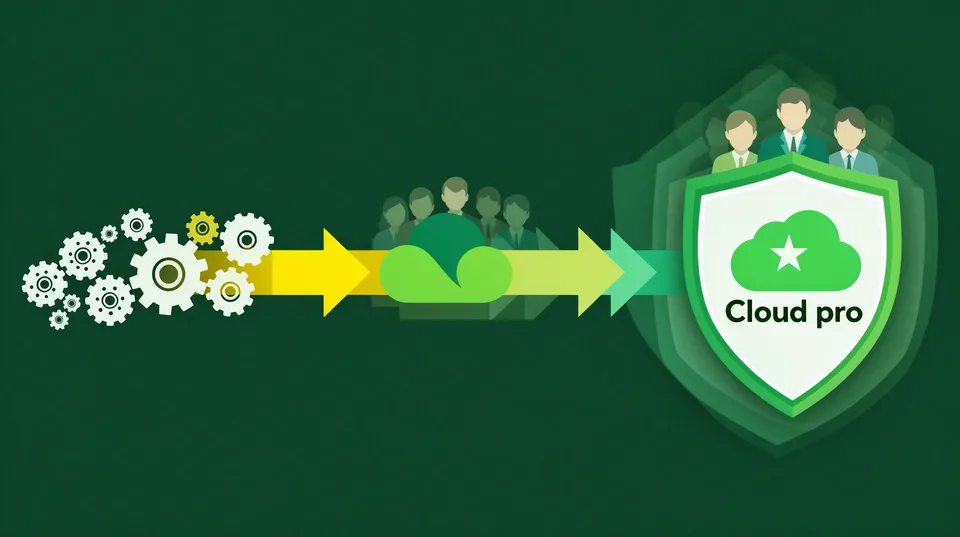
Specialized platforms are no longer a luxury. They're essential for operationalizing risk-based vulnerability management at cloud scale. They bridge the gap between detection and fix, which is a major pain point for most organizations. These platforms:
- Aggregate findings: Collect data from various CNAPPs, threat intelligence, and cloud provider APIs.
- Apply context: Use asset tags, network topology, and identity information to calculate true risk scores.
- Orchestrate remediation: Generate specific, production-safe fix actions, often as IaC or API calls.
- Automate workflows: Integrate with existing CI/CD tools, ticketing systems, and approval processes.
- Provide expert validation: Offer human-in-the-loop oversight for complex or high-impact remediations.
By automating the 'last mile' of cloud security, these platforms enable security teams to become force multipliers, rather than just alert generators. They transform security insights into operational action, ensuring that vulnerabilities posing the highest risk to the business are addressed swiftly and safely.
Reduce your MTTR by automating remediation with Tamnoon.

Tamnoon helps security teams remediate cloud risks faster with AI-augmented managed services — combining human expertise with automation so nothing falls through the cracks.
Learn more at tamnoon.ioFAQs
What distinguishes risk-based vulnerability management from traditional approaches?
Risk-based vulnerability management moves beyond simply categorizing vulnerabilities by technical severity scores like CVSS. It integrates critical context such as asset criticality, network exposure, data sensitivity, and exploitability to prioritize findings. Traditional methods often result in alert fatigue because they treat all high-severity issues equally, regardless of their actual business impact. A risk-based approach ensures that remediation efforts focus on the vulnerabilities that pose the most significant threat to an organization's specific assets and operations, leading to more efficient resource allocation and a stronger security posture.
Why isn't a high CVSS score always the highest priority for remediation?
A high CVSS score indicates a technically severe vulnerability, but it doesn't account for real-world impact within a specific environment. For example, a vulnerability with a CVSS 9.0 on an isolated, non-production asset with no sensitive data might pose less actual risk than a CVSS 6.0 vulnerability on a public-facing application processing critical customer data. Risk-based prioritization layers on contextual factors like asset criticality, network exposure, and data sensitivity to determine true business risk, ensuring that resources aren't wasted on low-impact, albeit technically severe, issues while higher-impact threats remain unaddressed.
How do cloud security remediation platforms like Tamnoon fit into a risk-based strategy?
Cloud security remediation platforms like Tamnoon are crucial for operationalizing a risk-based strategy. They bridge the gap between vulnerability detection and actual remediation. Tamnoon takes risk-prioritized alerts from CNAPPs, applies AI-powered analysis to generate specific, production-safe fix actions, often as IaC. It automates remediation workflows, integrates with CI/CD pipelines, and provides human-in-the-loop expert validation for complex changes. This approach ensures that the highest-risk vulnerabilities are not only identified but also efficiently and safely resolved, significantly reducing mean time to remediation (MTTR) and operational friction.
What are the essential steps for implementing a risk-based vulnerability management program?
Implementing a risk-based vulnerability management program involves several key steps. First, establish a comprehensive asset inventory and classify assets based on business criticality, data sensitivity, and exposure using consistent tagging. Second, deploy comprehensive cloud exposure scanning tools (CNAPPs) to detect vulnerabilities, misconfigurations, and identity risks. Third, develop a contextual risk scoring model that combines technical severity with asset context and threat intelligence. Fourth, prioritize remediation efforts based on these risk scores, providing actionable intelligence to engineering teams. Finally, orchestrate and automate remediation workflows, ideally by integrating production-safe playbooks into CI/CD pipelines, and continuously monitor metrics for improvement.
How does risk-based vulnerability management improve collaboration between security and development teams?
Risk-based vulnerability management improves collaboration by shifting the conversation from a sheer volume of alerts to a focus on business-critical risks. Security teams can present a prioritized list of vulnerabilities with clear explanations of their business impact, making it easier for development and operations teams to understand the 'why' behind a fix request. By providing actionable, production-safe remediation playbooks and automating much of the fix process, platforms like Tamnoon reduce manual effort and friction, allowing engineers to implement security fixes efficiently without disrupting their primary development work. This fosters a shared understanding and accountability for security, aligning efforts with overall business goals.