

The number of alerts your CNAPP or SIEM generates is an indicator of tool configuration, not security posture. Security teams are overwhelmed, with organizations processing an average of 960 security alerts per day. This torrent of notifications forces analysts into a constant state of reactive triage, where the signal-to-noise ratio is impossibly low and burnout is high.
This isn't just an efficiency problem; it's a direct threat to the business. When analysts are swamped, they miss things. In fact, research shows that 61% of teams admitted to ignoring alerts that later proved critical. The core issue is that raw alerts lack the context needed for effective decision-making, turning your security operations into a high-stakes guessing game.
The solution isn't to buy another scanner or hire more Tier 1 analysts. The path forward requires a fundamental shift from counting alerts to measuring and remediating risk. It involves building a systematic, automated funnel that filters, enriches, and prioritizes findings so that response teams can focus on meaningful actions that demonstrably reduce exposure without breaking production systems.
Build a Triage Funnel That Actually Filters
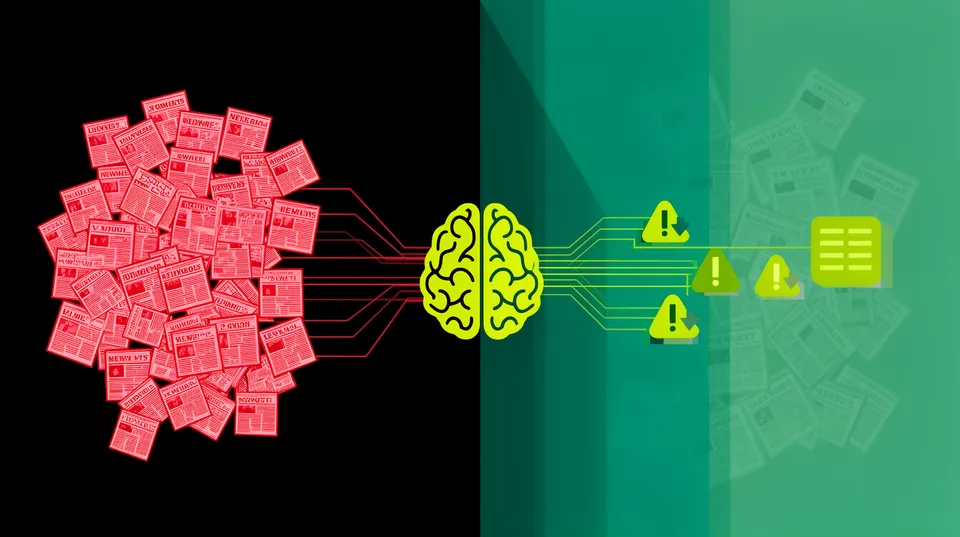
A functional triage process doesn't just pass alerts from one queue to another. It actively culls the noise at each stage, ensuring that only validated, high-impact findings demand human attention. This requires moving beyond the default severities provided by tools like Wiz, Prisma Cloud, or Defender for Cloud and implementing a multi-layered filtering and enrichment strategy.
Step 1: Consolidate and Deduplicate Alert Streams
Your environment likely has multiple tools watching the same assets. AWS Security Hub, a third-party CSPM, and your container scanner might all flag the same exposed port on an EC2 instance. Without consolidation, three different analysts could waste time investigating the same non-issue. The first step is to pipe all findings into a central platform that can deduplicate them based on the affected asset and the specific finding type (CVE, misconfiguration, etc.).
This consolidation point isn't just about a single pane of glass. It's about creating a unified data model for risk. Whether the alert comes from Orca Security or native cloud tools, it should be normalized into a standard format that includes asset ID, finding type, original severity, and source tool. This normalization is the foundation for all subsequent enrichment and automation.
Step 2: Automate Contextual Enrichment
A raw alert is useless. An alert about an S3 bucket with public read access is low-priority noise if the bucket only contains public marketing assets. The same alert becomes a five-alarm fire if that bucket contains customer PII or application secrets. Automation is the only way to append this critical context at scale.
A modern remediation platform like Tamnoon integrates with your cloud environment and CMDB to enrich alerts automatically. For each finding, the system should answer key questions before a human ever sees it:
- Asset Criticality: Is this a production database or a dev sandbox instance? Connect to your asset inventory (e.g., ServiceNow CMDB) or use cloud tags (
env=prod,app=billing) to determine business impact. - Data Sensitivity: Does the asset contain sensitive data? Integrate with a DSPM (Data Security Posture Management) tool or run classifiers to identify PII, PHI, or financial data.
- Ownership: Who owns this resource? Pull ownership information from cloud tags (
owner=jane.doe) or code repository history to route the finding to the correct team. - Network Exposure: Is the asset internet-facing? Analyze security groups, network ACLs, and routing tables to determine its actual exposure level.
- Identity and Access: What identities (users or roles) can access this resource, and what can they do? An exposed resource with an over-privileged role attached is a far greater risk.
This enrichment process transforms a generic alert like "EC2 Instance has Port 22 Open" into an actionable insight: "Production billing-app EC2 instance, owned by AppDev-Team-Alpha, is exposed to the internet on port 22 and has an IAM role attached that grants write access to the customer-data S3 bucket." The priority is now self-evident.
Design Remediation That Won't Get You Fired
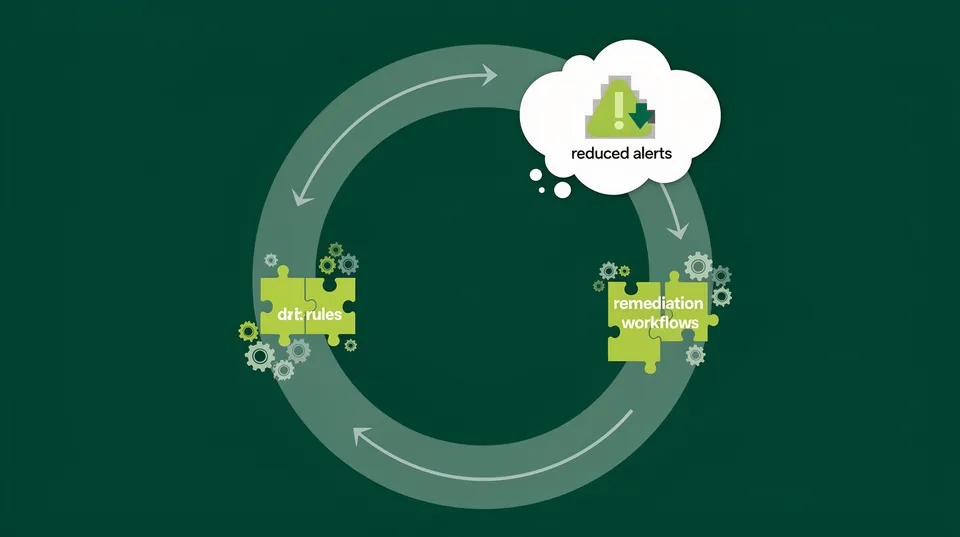
The ultimate goal of reducing alert noise is to accelerate remediation. However, reckless automation is just as dangerous as inaction. A naive script that blindly reverts every detected misconfiguration will inevitably break a critical application, erode trust between security and DevOps, and set your program back months. Production-safe remediation is a non-negotiable requirement.
The Problem with One-Click "Fix" Buttons
Many security tools offer a seductive "remediate" button. Clicking it often triggers a direct API call to change the resource's configuration. This approach is brittle and dangerous because it ignores application context and infrastructure-as-code (IaC) drift.
Consider an alert for an overly permissive security group. The one-click fix might be to remove the offending rule (0.0.0.0/0). But what if a legacy application relies on that rule for a health check from an external monitoring service? The fix just caused a production outage. , if your infrastructure is managed by Terraform or CloudFormation, this direct API change creates drift. The next time the IaC is applied, it will revert your security fix, putting you right back where you started. This is a key reason why managing playbook risk is so critical.
A Framework for Production-Safe Playbooks
A robust remediation playbook is a workflow, not a single action. It must include checks and balances to ensure safety and permanence. Tamnoon orchestrates these workflows by integrating with both the cloud provider and your development ecosystem.
A safe playbook for an IaC-managed resource looks like this:
- Detection & Enrichment: The finding is ingested and enriched as described previously.
- Ownership & Code Discovery: The system identifies the resource owner and the specific Git repository and IaC file (e.g.,
main.tf) that defines it. - Code Generation: Instead of making a direct API call, the playbook generates the corrected code. It creates a new branch in the source repository and commits the updated, more secure IaC.
- Pull Request & Human-in-the-Loop: The system automatically opens a pull request (PR) and assigns it to the resource owner. The PR includes details of the vulnerability, the proposed fix, and a link to the original alert. This is the crucial human-in-the-loop step; the DevOps engineer who owns the application reviews and approves the change.
- Deployment & Validation: Once the PR is merged, the existing CI/CD pipeline deploys the change. The remediation platform then queries the cloud API to validate that the misconfiguration is truly gone.
This IaC-native approach respects the DevOps workflow, eliminates configuration drift, and provides a full audit trail through Git history. It s developers to fix security issues using the tools and processes they already use every day.
Example: Safely Remediating a Public S3 Bucket with Terraform
Let's say a CSPM flags a public S3 bucket defined in Terraform. A naive fix would be to immediately make it private via an API call. A production-safe playbook would do the following:
It identifies the risky code in the .tf file:
resource "aws_s3_bucket" "sensitive_data" { bucket = "my-super-secret-data-bucket" acl = "public-read"
}
The remediation system automatically generates a fix by modifying the acl and adding block public access settings. It then opens a PR with the suggested change:
resource "aws_s3_bucket" "sensitive_data" { bucket = "my-super-secret-data-bucket" acl = "private"
} resource "aws_s3_bucket_public_access_block" "sensitive_data_block" { bucket = aws_s3_bucket.sensitive_data.id block_public_acls = true block_public_policy = true ignore_public_acls = true restrict_public_buckets = true
}
The bucket owner reviews this PR, confirms it won't break anything, and merges it. Security is improved without disrupting operations, and the fix is permanent within the codebase.
Measure What Matters: MTTR and Risk Reduction
Shifting your focus from alert volume to remediation outcomes requires changing your metrics. The SOC's performance shouldn't be judged by the number of tickets closed. Success is measured by the tangible reduction of risk in your environment. Analyst burnout rates hit record highs in 2025, a direct result of being measured on inefficient activity metrics.
Shift from Alert Counts to Mean Time to Remediate (MTTR)
The single most important metric for a response program is Mean Time to Remediate (MTTR). A low MTTR indicates that you are finding and fixing real problems quickly, shrinking the window of opportunity for an attacker. Track MTTR separately for different risk levels and asset types. For example, your goal might be an MTTR of under 4 hours for critical, internet-facing production vulnerabilities, but 7 days for low-priority misconfigurations in dev environments.
Platforms like Tamnoon provide dashboards that visualize MTTR trends, helping you identify bottlenecks. If MTTR for a specific team is high, it may indicate a need for better training, more refined playbooks, or clearer ownership. Focusing on shrinking your cloud MTTR for misconfigurations provides a clear, measurable goal that directly improves security posture.
Report on Exposure, Not Alerts
Your reports to leadership shouldn't be a list of 10,000 alerts. They should tell a story about risk exposure over time. Use frameworks like the NIST Cybersecurity Framework to structure your reporting around Identify, Protect, Detect, Respond, and Recover capabilities. Show trend lines for critical attack paths, the number of internet-exposed sensitive data stores, or the prevalence of standing privileges. Tools and resources from agencies like CISA provide excellent guidance on prioritizing vulnerabilities based on known exploitation.
When you can show a chart where the number of unpatched, internet-facing servers with critical CVEs is steadily decreasing, you are demonstrating real value. This moves the conversation from "the SOC is busy" to "the security program is reducing the company's risk profile." It's how you justify budget and prove the effectiveness of your strategy. This approach is key to streamlining security operations and focusing resources where they matter most.
Transforming your SOC from an alert factory to a risk reduction engine is achievable. It requires a disciplined approach to filtering, contextual enrichment, and most importantly, building a strong capability for production-safe, automated remediation. Learn more about how to put these strategies into practice with Tamnoon.

Tamnoon helps security teams remediate cloud risks faster with AI-augmented managed services — combining human expertise with automation so nothing falls through the cracks.
Learn more at tamnoon.ioFAQs
Is simply turning off noisy alert rules a valid reduction strategy?
No, blindly disabling alert rules is a dangerous practice that creates significant blind spots. While it might reduce the alert count, it doesn't reduce risk; it only hides it. A better approach is tuning. For example, instead of disabling an alert for 'unusual login location,' tune it to only trigger when combined with other factors, like a privileged account or a failed MFA attempt. The goal isn't fewer alerts, but alerts with higher fidelity. Effective SOCs use contextual data to suppress low-priority findings or group them, rather than turning off the detection mechanism entirely.
How do you calculate a custom risk score for a cloud security alert?
A custom risk score is calculated by combining multiple static and dynamic factors. It moves beyond the vendor's generic 'critical' or 'high' rating. Key inputs should include asset criticality (Is it a production database?), data sensitivity (Does it hold PII?), network exposure (Is it internet-facing?), and identity context (Does it have a privileged role attached?). An effective model weights these factors. For instance, an exploitable vulnerability on an internal dev server might be a 5/10, but that same vulnerability on an internet-facing production database becomes a 10/10. Automation is key to gathering these data points and applying the scoring logic consistently to every alert.
What is the very first step for a SOC drowning in alerts?
The first step is consolidation and enrichment. You can't prioritize what you can't see clearly in one place. Funnel all your alert sources—from your CSPM, CWPP, and CIEM tools—into a single platform. This central system must then deduplicate findings related to the same asset. Once consolidated, the immediate next step is automated enrichment. Before an analyst even sees an alert, the system should automatically append business context, asset ownership, and network exposure data. This initial triage provides the clarity needed to begin separating real threats from noise.
Can fully automated remediation work for stateful or legacy applications?
It can, but with extreme caution and a mandatory human-in-the-loop (HITL) process. For complex, stateful, or brittle legacy applications, a fully autonomous 'click-to-fix' approach is too risky. Instead, automation should be used to do the prep work. The system can detect the issue, identify the fix, and even generate the required IaC or script. However, the remediation plan must be presented to the application owner or a senior SRE for review and approval before execution. This HITL model balances the speed of automation with the critical context and judgment of a human expert, preventing costly outages.
How do you prove to leadership that alert reduction efforts are working?
Shift the conversation from activity to outcome. Instead of reporting on 'alerts closed,' report on the 'Mean Time to Remediate (MTTR) for critical risks.' Show a downward trend in MTTR. Secondly, report on the reduction of your actual attack surface. Present metrics like 'number of internet-exposed assets with critical CVEs' or 'percentage of IAM roles with standing privileges.' When you can demonstrate that the window of exposure is shrinking and that high-risk configurations are being systematically eliminated, you are proving tangible risk reduction, which is a far more powerful story than just being busy.