
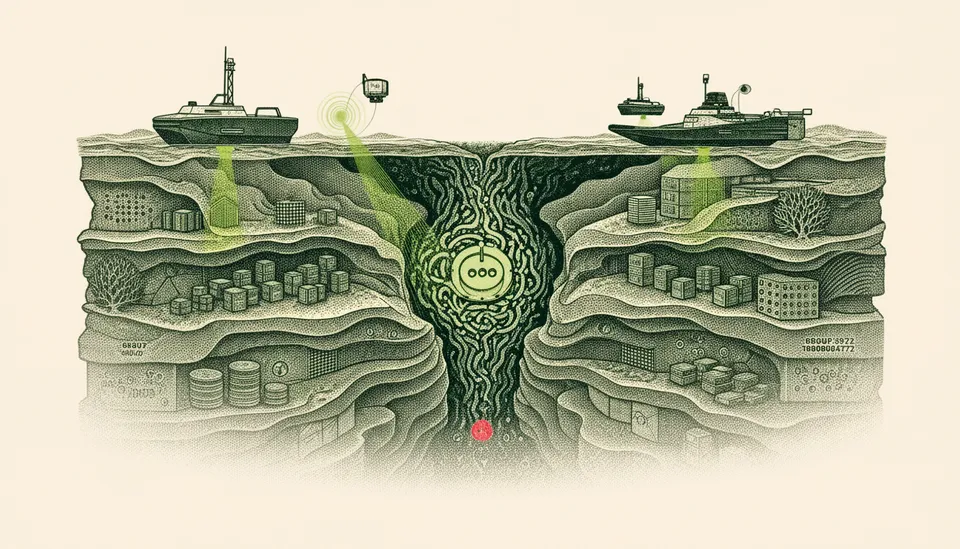

Integrating security into Infrastructure as Code (IaC) pipelines isn't an option. It's a necessity. Leaving IaC configurations unchecked until deployment introduces unacceptable risk and remediation friction, impacting both security posture and developer velocity.
Security teams often find themselves swamped with alerts generated by post-deployment scans, many of which trace back to misconfigurations in IaC templates. This creates a reactive cycle that's costly in terms of time, resources, and potential breaches. Embedding IaC security scanning directly into the CI/CD process shifts security left, catching issues before they ever reach a cloud environment.
This integration demands specific tooling, workflow adjustments, and a clear understanding of how to operationalize the findings without stifling development. It's about proactive prevention, not just reactive detection, and it requires a methodical approach to scanner selection, pipeline integration, and automated remediation. Mastering Terraform CI/CD, for example, is critical for many organizations.
Build an IaC Scanning Strategy

Building an effective IaC scanning strategy involves selecting the right tools, defining clear security policies, and establishing automated workflows to catch misconfigurations early in the development lifecycle. Without a structured approach, organizations risk deploying insecure infrastructure, leading to vulnerabilities that are harder and more expensive to fix later. Your strategy should account for the types of IaC you use, your compliance requirements, and your preferred level of automation.
Defining Your IaC Landscape and Risk Profile
Before selecting tools, understand your IaC footprint. Are you primarily using Terraform, CloudFormation, Azure Resource Manager (ARM) templates, or Kubernetes manifests? Each type has specific nuances that impact scanner effectiveness. Identify the critical assets managed by IaC and their sensitivity. A misconfigured S3 bucket with public access, for instance, poses a higher risk than a poorly tagged EC2 instance. This risk assessment helps prioritize scanner findings. For example, fixing S3 bucket policies often requires careful, production-safe remediation. Define what constitutes an unacceptable risk that should block a deployment versus a minor issue that warrants an alert but allows deployment to proceed with follow-up tasks.
Selecting the Right IaC Scanning Tools
The market offers various IaC scanning tools, each with its strengths. Some tools specialize in static analysis, checking code against predefined rules. Others integrate with cloud provider APIs to validate configurations. Consider tools that support your specific IaC languages. For Terraform, Terrascan, Checkov, or Open Policy Agent (OPA) with Rego policies are common choices. For Kubernetes, Kube-bench or Polaris can provide valuable insights. Many enterprises use tools like Prisma Cloud, Wiz, or Orca Security for broader cloud security posture management (CSPM) that includes IaC scanning capabilities. Don't overlook open-source options. Betterscan Community Edition is an open-source DevSecOps orchestration toolchain that integrates multiple security scanning tools to analyze source code and IaC, offering SAST, SCA, and secret scanning features. Another example is SonarQube which can integrate into CI/CD processes for software.
Establishing Security Policies as Code
Convert your organization's security policies into machine-readable code. This allows scanners to automatically check compliance. For instance, define a policy that all S3 buckets must be encrypted at rest or that all database instances must be launched in private subnets. Tools like OPA enable fine-grained policy enforcement across various IaC types. This approach helps standardize security across teams and environments. It also simplifies audits since policies are version-controlled alongside your IaC. This codification of policy creates consistency, which is crucial for preventing production impact from inconsistent policies. By 2026, many organizations have implemented IaC security scanning. 82% are conducting IaC security scanning, showing a clear trend towards proactive security measures.
Integrate Scanners into the CI/CD Pipeline
Integrating IaC scanners into your CI/CD pipeline ensures security checks are a mandatory part of every code commit and deployment, catching issues before they ever reach production environments. This shift-left approach reduces remediation costs and prevents insecure configurations from being deployed. It means security isn't an afterthought. It's an inherent quality gate.
Pre-Commit and Pre-Receive Hooks
Implement Git pre-commit hooks to run quick, localized IaC scans before developers even commit their code. Tools like pre-commit or Git hooks can execute linters or basic security checks. While these are client-side and can be bypassed, they catch many common errors early, providing immediate feedback. For more robust enforcement, use pre-receive hooks on your Git server. These server-side hooks prevent commits that violate critical security policies from ever entering the repository. For example, GitGuardian or GitLeaks can be used to scan for secrets in pre-commit or pre-receive stages. According to one study, 76% of organizations have security as part of their CI/CD pipelines, which highlights the broad adoption of this practice.
CI Pipeline Integration Points
The most critical integration point is within the continuous integration (CI) pipeline. Every pull request or merge request should trigger an automated IaC scan. This happens after code is committed but before it's merged into a main branch. Common CI tools like GitLab CI/CD, GitHub Actions, Jenkins, or Azure DevOps all offer ways to integrate scanners. Use dedicated stages in your pipeline for security checks. For instance, a 'security-scan' stage can run Checkov against Terraform files or Trivy against Kubernetes manifests. If the scan identifies high-severity issues, the pipeline can be configured to fail, blocking the merge. This direct integration is a core aspect of conquering cloud alert fatigue with actionable DevSecOps. Burp Suite Enterprise simplifies DevSecOps by integrating security into CI/CD pipelines, offering multi-AST scanning for enhanced protection within existing setups cybersecuritynews.com.
# Example: GitHub Actions Workflow for IaC Scan with Checkov
name: IaC Scan on: [pull_request] jobs: checkov_scan: runs-on: ubuntu-latest steps: - name: Checkout code uses: actions/checkout@v4 - name: Run Checkov Scan id: checkov uses: bridgecrewio/checkov-action@master with: directory: . output_format: cli output_file_path: checkov_results.txt soft_fail: false # Set to true to allow pipeline to pass on failures - name: Upload Checkov Report uses: actions/upload-artifact@v4 with: name: checkov-report path: checkov_results.txt
Gatekeeping with Policy as Code
After scanning, apply policy-as-code rules to decide if a pipeline can proceed. This often involves tools like OPA that can ingest scan results and apply custom logic. For instance, if a scan finds an S3 bucket without server-side encryption, an OPA policy can trigger a build failure. This isn't just about detecting issues. It's about enforcing a baseline security posture. The goal is to prevent insecure infrastructure from being deployed, shifting the security burden away from manual reviews and towards automated gates. This approach is instrumental in codifying security policy for Terraform to prevent cloud misconfigurations. Tools like Trivy and Snyk are commonly used to provide security scan results for this type of gatekeeping.
"These integrations help developers unify fragmented toolchains, reduce alert fatigue, and turn compliance into a real-time, automated process. This approach embeds security within the tools teams already use."
Wiz wiz.io/academy/what-is-devsecops-build-scale-maturity
Operationalize Scan Results for Remediation
Operationalizing IaC scan results means translating raw findings into actionable remediation steps that developers can quickly and safely implement without introducing new issues or breaking existing functionality. This is where the gap between detection and effective remediation often widens, leading to alert fatigue and unaddressed vulnerabilities. Effective operationalization bridges this gap.
Parsing and Prioritizing Findings
Raw scan results can be overwhelming. Develop processes to parse these results, filter out noise, and prioritize findings based on severity, exploitability, and impact. Integrate scan outputs with existing issue tracking systems like Jira or ServiceNow. Automatically assign issues to the relevant development teams or individuals. This ensures that critical vulnerabilities aren't lost in a sea of low-priority alerts. Focus on remediation velocity for high-risk items. Slashing MTTR in cloud security operations requires this kind of focused prioritization.
Automated Remediation Playbooks
This is where automation truly shines. For common IaC misconfigurations, create automated remediation playbooks. These playbooks are pre-defined sets of steps or code snippets that can fix an issue. For instance, if an S3 bucket is found to be publicly accessible, a playbook could automatically generate a pull request with the necessary Terraform code to block public access. The key is that these playbooks are production-safe, validated to ensure they don't break functionality. Tamnoon's AI-Powered Remediation engine identifies these issues, generates specific fix-actions, and provides Production-Safe Playbooks. For complex remediations, Tamnoon's Human-in-the-Loop approach brings in cloud experts to validate changes before deployment, ensuring zero downtime. This helps organizations with closing the cloud security remediation gap with expert services.
# Example: Automated remediation for S3 public access via Terraform (pseudo-code) # Detected: S3 bucket 'my-sensitive-bucket' has public access enabled # Remediation Playbook Action:
# 1. Read existing Terraform state for 'my-sensitive-bucket'.
# 2. Add 'block_public_acls = true' and 'restrict_public_buckets = true' to the aws_s3_bucket_public_access_block resource.
# 3. Generate a new Terraform plan.
# 4. Create a Pull Request (PR) to the IaC repository with the proposed changes.
# 5. Add comments to the PR explaining the fix and linking to the security finding.
# 6. Trigger CI/CD pipeline for the PR to validate the proposed fix.
Feedback Loops and Continuous Improvement
Implement feedback loops to refine your scanning and remediation processes. Developers should be able to mark false positives or suggest improvements to policies. Analyze remediation times and success rates. Use this data to improve your playbooks, fine-tune scanner configurations, and enhance policy-as-code rules. This continuous improvement cycle helps reduce friction, fosters collaboration between security and development teams, and increases overall security posture maturity. It’s also crucial for managing alert overload resolution with remediation playbooks. Organizations using static code analysis often benefit from extensive rule sets, for example, static code analysis tools include 2,800+ detectors for various code issues.
Measure and Refine Your DevSecOps Security Posture
Measuring and refining your DevSecOps security posture involves tracking key metrics, continuously evaluating tool effectiveness, and adapting your strategy to evolving threats and organizational changes. This ensures that your investment in IaC security scanning translates into tangible improvements in risk reduction and operational efficiency, rather than just generating more data.
Key Metrics for Success
Track metrics like Mean Time To Remediation (MTTR) for IaC vulnerabilities, the number of security findings caught pre-deployment versus post-deployment, the percentage of IaC changes that trigger a security policy violation, and the false positive rate of your scanners. A low MTTR, a high percentage of pre-deployment catches, and a manageable false positive rate indicate a healthy DevSecOps practice. These metrics provide objective data to justify security investments and demonstrate improvements over time. Reducing your MTTR is a key driver for platforms like Tamnoon, which integrates with existing CNAPP/CSPM tools like Wiz, Orca Security, and Prisma Cloud to orchestrate remediation.
Regular Tool and Policy Review
The cloud security landscape and IaC technologies change constantly. Regularly review your chosen IaC scanning tools, their configurations, and your policy-as-code rules. New vulnerabilities are discovered, and best practices evolve. What was secure last year might not be today. Conduct periodic assessments to ensure your tools still meet your needs and that your policies remain effective and relevant. This also helps identify opportunities to consolidate tools or adopt new capabilities, such as advanced dependency scanning or software supply chain security features. This iterative approach is essential for maintaining a strong security posture.
Integrating with Broader Security Ecosystems
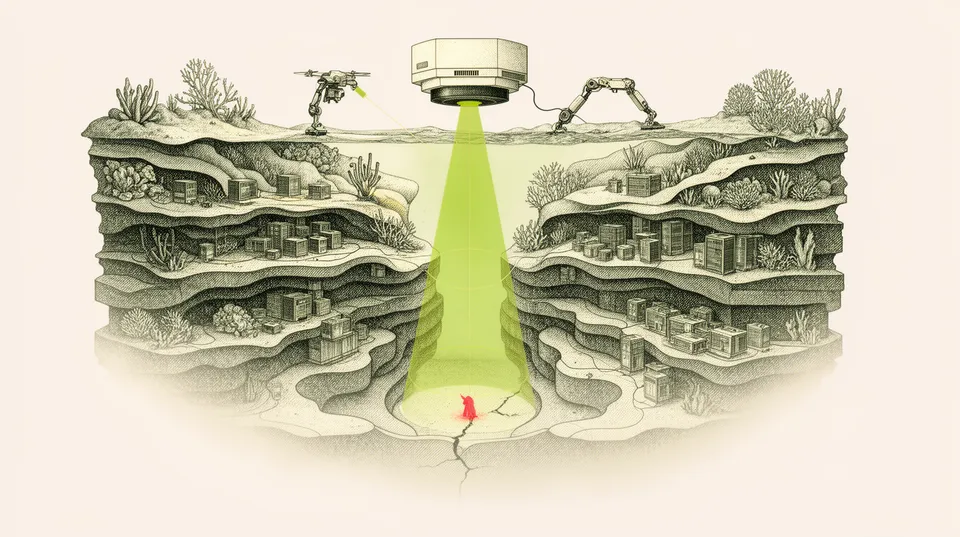
IaC security scanning doesn't operate in a vacuum. Integrate its results and remediation processes with your broader cloud security ecosystem. This includes CSPM platforms like Wiz, Palo Alto Cortex Cloud, Orca Security, or Microsoft Defender for Cloud, and security information and event management (SIEM) or security orchestration, automation, and response (SOAR) systems. By feeding IaC security findings into these platforms, you gain a unified view of your security posture across the entire cloud environment. This ensures that IaC-driven misconfigurations are visible alongside runtime vulnerabilities and compliance deviations, creating a complete picture for security operations. Tamnoon's platform acts as the bridge here, connecting detection from various tools with AI-Powered Remediation and expert validation.

Tamnoon helps security teams remediate cloud risks faster with AI-augmented managed services — combining human expertise with automation so nothing falls through the cracks.
Learn more at tamnoon.ioFAQs
What is IaC security scanning and why is it important?
IaC security scanning involves analyzing Infrastructure as Code templates (like Terraform, CloudFormation, or Kubernetes manifests) for security misconfigurations, compliance violations, and vulnerabilities before they are deployed to cloud environments. It's crucial because it shifts security left, enabling organizations to detect and fix issues much earlier in the development lifecycle. This reduces the cost and effort of remediation, minimizes the attack surface, and prevents insecure infrastructure from ever reaching production. Catching misconfigurations at the IaC stage is significantly more efficient than identifying them after deployment, which can lead to emergency fixes and potential downtime. This proactive approach supports a stronger overall security posture.
How do IaC scanners integrate into CI/CD pipelines?
IaC scanners integrate into CI/CD pipelines through automated stages that run checks on code commits or pull requests. Developers can use pre-commit hooks to catch local issues instantly, while the CI pipeline enforces more comprehensive scans before code merges into main branches. Tools like Checkov, Terrascan, or OPA can be added as steps in GitHub Actions, GitLab CI/CD, or Jenkins. If a scan identifies high-severity vulnerabilities or policy violations, the pipeline can be configured to fail, blocking the deployment. This ensures that security checks are a mandatory gate, preventing insecure configurations from progressing further in the development process and enhancing overall DevSecOps maturity.
What kind of issues can IaC security scanning detect?
IaC security scanning can detect a wide range of issues, including misconfigured security groups allowing overly permissive access, S3 buckets with public read/write permissions, unencrypted storage volumes, missing logging configurations, outdated software versions in container images defined in IaC, and non-compliance with organizational or regulatory security policies. It can also identify hardcoded secrets or sensitive information within templates. By identifying these issues before deployment, organizations avoid creating easily exploitable attack vectors. These checks ensure that the infrastructure provisions meet a defined security baseline from the outset, reducing the likelihood of runtime vulnerabilities stemming from flawed configurations.
How does automated remediation work with IaC scanning?
Automated remediation with IaC scanning involves using playbooks or scripts to automatically generate fixes for detected misconfigurations. Once a scanner identifies a vulnerability in an IaC template, an automated system can, for example, create a pull request with the necessary code changes to resolve the issue. For instance, if an S3 bucket is found to be publicly accessible, a playbook might add a `block_public_acls = true` setting. Tamnoon’s platform, with its AI-Powered Remediation, takes this further by analyzing alerts, generating specific fix-actions, and providing production-safe playbooks. For complex cases, a Human-in-the-Loop process ensures expert validation, preventing unintended production impacts. This moves beyond mere detection to actionable, safe resolution.
What are the benefits of integrating IaC security scanning into DevSecOps?
Integrating IaC security scanning into DevSecOps offers several benefits. It significantly reduces Mean Time To Remediation (MTTR) by catching vulnerabilities early, where they're cheapest and easiest to fix. It improves compliance by enforcing security policies as code, ensuring every deployment adheres to defined standards. Developers receive immediate feedback, fostering a security-aware culture and reducing friction between development and security teams. It also minimizes alert fatigue for security teams by preventing easily avoidable issues from reaching production, allowing them to focus on more complex threats. Ultimately, it builds a more resilient and secure cloud infrastructure from the ground up, reducing overall organizational risk and improving operational efficiency.