
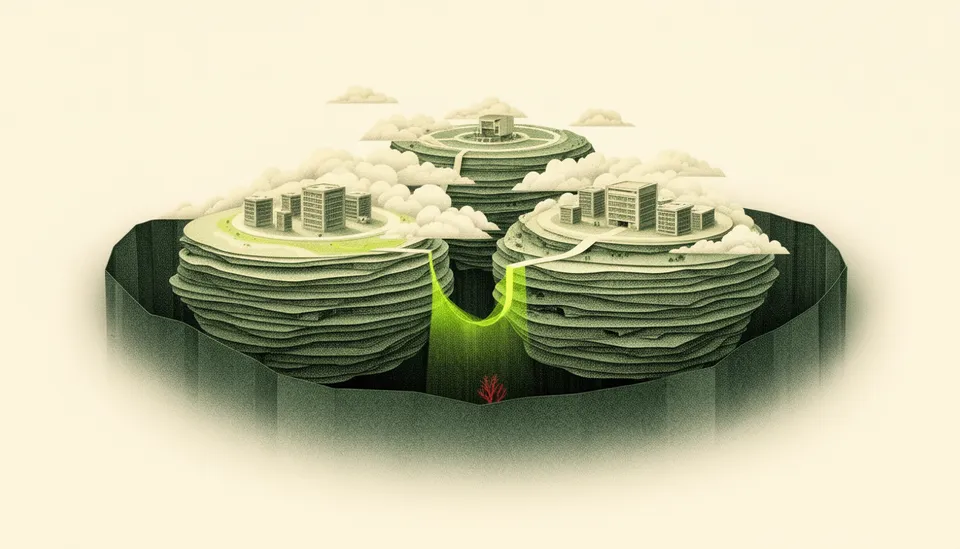

A single faulty Terraform apply can wipe out an entire cloud availability zone within seconds.
Most infrastructure teams discover that their declarative configurations are too coupled only after an engineer attempts a minor security group adjustment and watches Terraform plan propose the destruction of a shared transit gateway or primary database cluster. The convenience of keeping every virtual private cloud, container registry, identity boundary, and relational database inside one root module creates a lethal blast radius where every code run risks organization-wide downtime.
Engineering teams that want to survive rapid deployment cadences have to isolate their state boundaries, decouple networking layers from microservices, and pair automated policy checks with production-safe execution guardrails.
Shrinking the Blast Radius with State File Decoupling
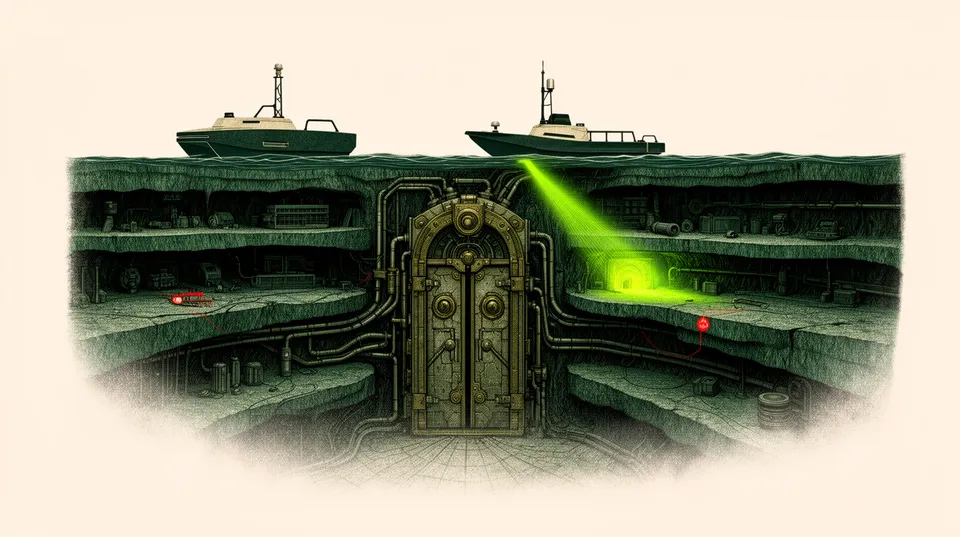
Decoupling monolithic state files into smaller, domain-specific modules is the most effective operational strategy to limit infrastructure destruction. Breaking environments into distinct root modules isolates failures so that a misconfiguration in an application layer can't cascade into shared networking or foundational compute. This separation reduces the total number of cloud resources modified during any single pipeline run.
When organizations rely on declarative tools like AWS CloudFormation, Azure Resource Manager, or declarative Infrastructure as Code tooling, state coupling remains the most common operational failure mode. A monolithic state file creates tight coupling between completely unrelated components. If a pipeline applies a plan containing fifty disparate resources, a single API rate limit or validation error from your cloud provider can leave the entire state lock stranded or corrupt remote tracking.
Breaking the infrastructure apart begins with separating base networking, identity governance, data persistence, and application compute into distinct root directories. Networking configurations like route tables, VPC peering connections, and internet gateways change rarely after initial rollout, meaning they should never live inside the same module that deploys stateless application containers twice an hour. Keeping persistence layers isolated ensures that high-velocity developers don't touch relational databases or shared storage buckets during normal operational rollouts.
To safely consume foundational networking values without hardcoding raw IP blocks or subnets, teams implement remote state data sources or central secret managers. Passing subnet identifiers and security group IDs through remote state lookups creates read-only dependency boundaries. If an engineer breaks an application configuration, the underlying base network stays completely untouchable because the application pipeline lacks write permissions to the networking state store.
State segmentation also dramatically accelerates planning time in your CI/CD runners. Running a speculative plan against five hundred resources takes several minutes and exhausts provider API quotas, while running against twenty tightly scoped resources takes less than thirty seconds. Fast, focused plans give on-call engineers immediate visibility into exact changes before hitting apply, eliminating the alert fatigue that causes teams to blindly approve massive changes.
Restricting Cloud Provider Execution Identities and Entitlements
Applying least privilege to Terraform execution roles guarantees that a rogue pipeline run can't destroy critical resources outside its immediate operational domain. Pipeline service principals should only hold write permissions for the specific services and resource naming conventions defined in that workspace. Restricting pipeline credentials prevents automated deployments from escalating privileges across unrelated infrastructure.
Many DevOps pipelines run with broad administrative permissions like AdministratorAccess on AWS or Contributor on Azure because granting fine-grained permissions feels inconvenient during rapid prototyping. This broad trust turns every pipeline runner into an existential risk. A syntax error, an unpinned module download, or a compromised CI credential can delete production networks or alter identity stores within seconds.
Real-world incidents show that identity is consistently where architectural blast radius becomes disastrous. A compromise of an on-premises domain admin account often leads to privilege escalation across cloud environments via AWS role assumption and privileged execution on Azure virtual machines, as documented in analysis of hybrid identity lateral movement attacks. When pipeline roles share similar expansive execution power, any failure in CI/CD isolation ripples across the entire organization.
To limit execution privileges, create specialized roles for each pipeline workspace that match the underlying module responsibility. The network workspace role should only permit actions on VPC, transit gateway, and route table resources, with zero access to modify IAM policies or database clusters. The Kubernetes workspace role should hold permission to scale worker nodes and update cluster add-ons, but have no authority to terminate shared storage volumes.
Enforce strict permission boundaries and service control policies that explicitly deny the deletion of production databases, root encryption keys, and security monitoring agents. Even if an automated tool or tired engineer mistakenly generates a destruction plan for an encrypted datastore, the cloud provider identity layer must reject the call. Combining strong identity boundaries with proactive mapping of your cloud blast radius ensures that security policies stop accidental catastrophic teardowns before they hit production.
Implementing Directory Isolation and Module Version Pinning
Structuring workspaces by environment and pinning all module and provider versions protects staging and production from simultaneous, unexpected regressions. Isolating environments through dedicated accounts, separate state buckets, and distinct provider version constraints prevents upstream module updates from destabilizing live workloads. This structure guarantees that breaking changes stay contained to development sandboxes.
Infrastructure teams often attempt to manage multi-environment architectures using workspace names inside a single directory, but workspaces share the same configuration files and provider constraints. A subtle change made for staging can inadvertently introduce unverified resource arguments or provider deprecations to production during the next push. Moving to strict directory-based separation or adopting wrapper tools helps keep configurations manageable while isolating environments across accounts.
To establish durable boundaries, teams separate their environments across physical cloud accounts and subscriptions using isolated environment state files. Production environments should reside in a dedicated AWS account or Azure subscription with distinct encryption keys and zero network connectivity to non-production accounts. This account-level partitioning ensures that a completely destructive script running against staging can't interact with production APIs under any circumstance.
Module version pinning is equally for operational stability. When you source external community modules or internal shared components, always bind the source declaration to an exact Git tag or explicit registry release. Leaving module versions floating allows unvetted upstream updates to alter resource defaults, security group rules, or storage policies without the platform team noticing until runtime.
Pinning provider blocks prevents underlying SDK updates from changing how resources are evaluated. A provider version upgrade can alter the default encryption settings of an object store or change how subnet associations are calculated, triggering unwanted in-place replacements. Standardizing version constraints ensures deterministic behavior across every execution environment, allowing teams to safely roll out updates one tier at a time.
Preventing Catastrophic Drifts and Accidental Deletions
Enforcing resource protection attributes like prevent_destroy alongside automated drift detection prevents accidental deletions before any API call is executed. Unmanaged out-of-band modifications create drift that causes Terraform to propose replacing live resources to match stale local code. Establishing strict operational guardrails and continuous drift reconciliation protects active production workloads from abrupt deletion.
Accidental deletions often happen when an engineer manually adjusts a cloud resource in the web console to resolve an active production incident. When the CI/CD pipeline runs the next scheduled plan, it identifies the delta between the live environment and the stored state file, frequently deciding that the cleanest way to reconcile the conflict is to destroy and recreate the modified resource. Without guardrails, this can drop a production cache, an active load balancer, or an encrypted storage volume in the middle of a business day.
Engineers protect business-critical components by setting lifecycle protection rules directly in resource configurations. Flagging critical databases, storage buckets, and core identity roles with deletion prevention instructions forces the execution engine to throw a fatal error if any plan proposes destroying that resource. This hard stop prevents catastrophic mistakes and forces the team to consciously alter code before touching delicate infrastructure.
Handling live drift also requires reconciling runtime changes back into code rather than letting blind automation tear down running services. As explained in our breakdown on exposing Terraform drift and stabilizing cloud environments, continuous detection allows teams to catch divergence early and bring code into alignment safely. Pairing continuous drift tracking with structured Terraform CI/CD pipelines ensures all production changes undergo peer review and risk assessment prior to execution.
Threat reports continuously emphasize why defense in depth and scoped controls are necessary to stop runaway operations. As detailed in the Red Canary Threat Detection Report, modern operational breaches illustrate that:
Layering security controls limits the blast radius when a single control fails.Red Canary, Threat Detection Report
When automated workflows or integration tokens operate with overly broad authority, the absence of defensive layers guarantees an incident. Implementing layered validation checks, pre-execution cost and plan analyzers, and deletion protections ensures that human and machine errors stay contained within safe operational boundaries.
Safely Orchestrating Remediation Without Application Downtime
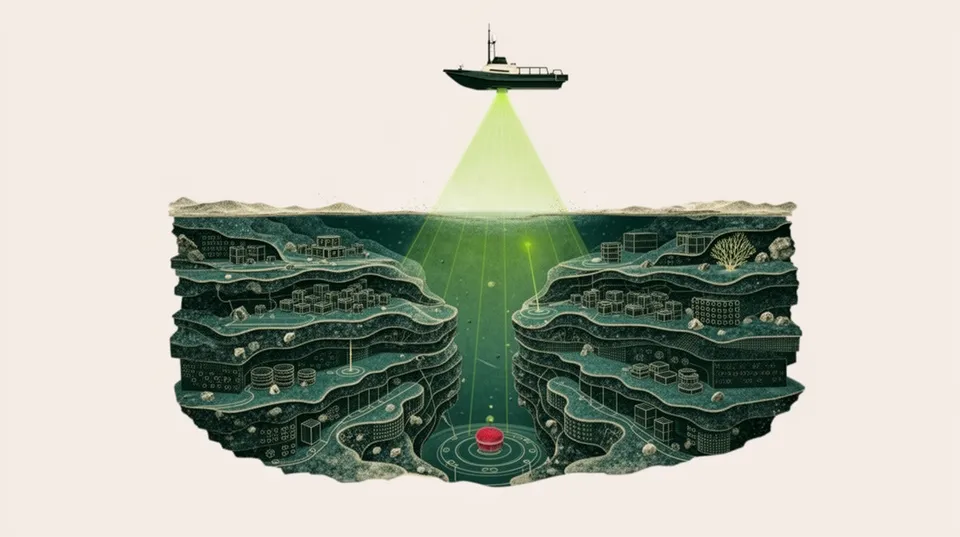
Production-safe remediation orchestration fixes cloud security exposures identified by CNAPP and CSPM tools without introducing unexpected pipeline failures. Rather than relying on blunt, destructive auto-remediation scripts that break live traffic, teams require structured playbooks that validate service dependencies before modifying running resources. This method resolves misconfigurations while maintaining maximum uptime.
Modern enterprises run excellent posture scanners and vulnerability detection platforms like Wiz, Orca Security, Prisma Cloud, AWS Security Hub, and Azure Defender for Cloud. These detection engines surface thousands of misconfigurations across compute instances, storage volumes, and identity roles. The bottleneck is no longer detecting the flaw, but executing the fix safely without tearing down live services or colliding with active Terraform state locks.
Applying automated security fixes directly against cloud runtime environments often introduces configuration drift that breaks your next Infrastructure as Code run. If an automated script locks down an overly permissive S3 bucket policy or tightens a security group without updating the underlying Terraform repository, the next scheduled pipeline apply will simply overwrite the fix or crash due to resource conflicts. True remediation requires synchronizing the runtime fix with the codified state.
This is where the Tamnoon Platform changes the operational equation. Tamnoon provides AI-Powered Remediation paired with human oversight to convert alerts from tools like Wiz and SentinelOne into Production-Safe Playbooks. By analyzing live traffic patterns, service dependencies, and codified infrastructure, the Tamnoon Platform generates verified remediation actions that eliminate risks like open IAM roles and exposed storage endpoints without breaking production workflows.
By blending expert-led validation with automated playbooks, organizations eliminate the friction between security analysts who need rapid risk reduction and DevOps engineers who must maintain uptime. The Tamnoon Platform acts as an operational layer over your existing detection tools, orchestrating safe fixes that protect your infrastructure while respecting state boundaries.

Tamnoon helps security teams remediate cloud risks faster with AI-augmented managed services — combining human expertise with automation so nothing falls through the cracks.
Learn more at tamnoon.ioFAQs
What is a monolithic Terraform state file, and why is it dangerous for teams?
A monolithic Terraform state file occurs when an organization manages its entire infrastructure—including networking, compute, databases, identity, and application-level resources—within a single, unified state file. This architecture is dangerous because it tightly couples unrelated components, creates severe operational bottlenecks, and dramatically expands the blast radius of any change. When every team member must lock and modify the same centralized state file, concurrency conflicts and accidental misconfigurations inevitably compromise production stability.
How does maintaining a single state file increase the blast radius during deployments?
A monolithic state file drastically expands the blast radius because Terraform refreshes and calculates the dependency graph for every managed resource during a run. If an engineer makes a minor update to an application configuration, an unintended schema drift, bug, or validation error can inadvertently trigger modifications or deletions of mission-critical components like core VPCs or primary databases. Isolating resources into independent state files ensures failures remain strictly localized to specific domains.
What performance issues occur as a Terraform state file grows excessively large?
As a state file grows to encompass thousands of resources, executing standard plan and apply cycles becomes agonizingly slow. Terraform must poll cloud provider APIs to refresh the status of every single resource listed in the state. This behavior frequently triggers cloud provider API rate limits and throttling, causing continuous pipeline timeouts, developer friction, and prolonged emergency fixes during production outages when rapid mitigation is most critical.
What is the recommended architectural pattern for breaking down monolithic state files?
Teams should decompose monolithic architectures into smaller, decoupled state files organized by environment (development, staging, production) and infrastructure layer (foundational networking, persistent data storage, compute platforms, and application services). Using dedicated directory structures, Terraform workspaces, or orchestrators like Terragrunt allows teams to apply changes independently. Data can be safely shared across discrete states using remote state data sources, output values, or dedicated cloud parameter stores.
How can an engineering team migrate resources out of a monolithic state without downtime?
To safely migrate resources, teams should avoid recreating infrastructure by leveraging Terraform’s built-in state manipulation mechanisms. You can use the state move command, the native moved configuration block introduced in modern Terraform releases, or carefully execute state removals followed by importing resources into newly isolated root modules. Always create comprehensive state backups before starting migrations and thoroughly validate the execution plan in non-production environments to guarantee zero infrastructure downtime.