
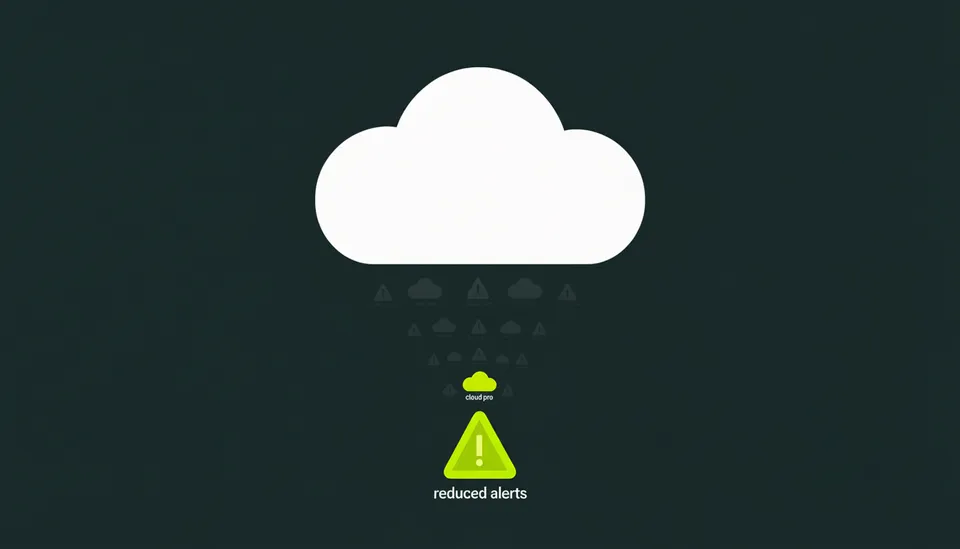

Cloud security alert fatigue isn't just an annoyance. It's a critical operational risk that blinds teams to actual threats. Security tools are excellent at identifying potential issues, but the sheer volume of alerts overwhelms even the most dedicated engineers, leading to missed critical vulnerabilities and increased mean time to remediation (MTTR).
Organizations now face an average of 2,992 security alerts per day in 2026, a slight decrease from 3,832 daily alerts in 2025, yet the problem persists. The real challenge isn't detection. It's the gap between detection and effective, production-safe remediation. Security teams get bogged down triaging thousands of alerts, most of which are false positives or low-priority noise, while DevOps teams struggle to translate abstract findings into concrete, safe fixes without disrupting live services.
This guide outlines a strategic approach to move beyond alert overload by integrating automated, production-safe remediation directly into DevSecOps workflows. It's about shifting from a notification-centric model to an action-centric one, ensuring every alert has a clear, predefined path to resolution.
Build a Prioritization Framework for Effective Alert Management
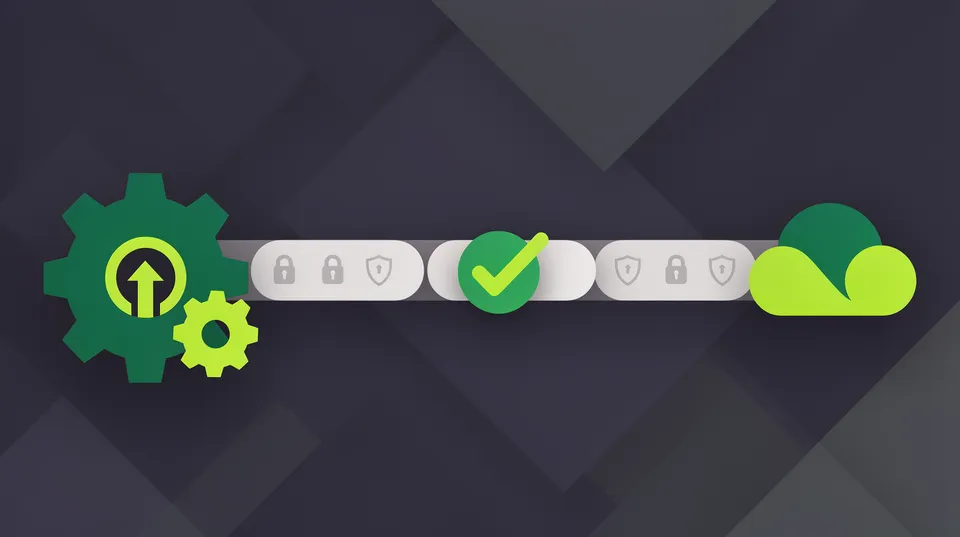
Effective alert management begins with a robust prioritization framework that filters noise and highlights critical issues demanding immediate attention. This It's making sure the alerts that matter rise to the top. Many organizations still struggle with this, reporting that fewer than 5% of alerts actually require action. A proper framework helps identify those actionable alerts.
Defining Risk Context for Alerts
Prioritization can't happen in a vacuum. Each alert needs context. This means understanding:
- Asset criticality: Is the affected resource a production database handling sensitive customer data, or a development sandbox instance? Tools like Wiz, Orca Security, and Prisma Cloud often provide asset inventory and classification features. Use these to tag resources based on business impact.
- Data sensitivity: Does the misconfiguration expose PII, PCI, or PHI? DSPM tools like Cyera or Sentra Data Security can feed this context directly into your alert stream.
- Exploitability: How easily can this vulnerability be exploited? Is there a known exploit in the wild? CVSS scores are a starting point, but combine them with threat intelligence feeds.
- Blast radius: What's the potential impact if this alert isn't addressed? How many other services or data stores could be affected? Understanding blast radius is key to effective remediation strategies.
For example, an S3 bucket misconfiguration allowing public read access is critical if it contains customer invoices, but less so if it holds static public website assets. Your framework needs to reflect these nuances.
Implementing Alert Suppression and Deduplication
Too many alerts are redundant or false positives. Surveys show 52% of all alerts are false positives and 64% are redundant. This volume is unsustainable. Configure your CNAPP and security tools (like AWS Security Hub, Azure Defender for Cloud, Google Security Command Center) to:
- Suppress known false positives: If a specific pattern consistently triggers non-issues (e.g., a specific IAM role designed for cross-account access that always flags as over-privileged but is correctly configured), create suppression rules. Document these exceptions thoroughly.
- Deduplicate alerts: Multiple tools might report the same issue. Use a centralized platform, like Tamnoon, to ingest alerts from various sources (Wiz, Palo Alto Cortex Cloud, Orca, SentinelOne Singularity) and correlate them. This prevents multiple tickets for a single underlying problem.
- Aggregate similar findings: Instead of 100 alerts for 100 EC2 instances with the same missing security patch, aggregate them into a single finding related to the patch status of that fleet.
This type of filtering is crucial. AI filtering helps cut false positive fatigue dramatically. Focus on the few alerts that truly indicate a risk.
Automate Remediation with Production-Safe Playbooks
Moving beyond detection to automated, production-safe remediation is the most impactful step in defeating alert fatigue. Remediation must be fast, consistent, and validated not to break production. This is where the gap typically widens between security and operations teams. Tools like Tamnoon bridge this divide by turning alerts into executable fixes.
Developing Remediation Playbooks
Remediation playbooks are pre-defined, tested workflows for common security findings. They transform a detected issue into a series of automated steps to resolve it. For example:
- S3 Bucket Public Access:
- Identify the bucket with public access.
- Check if the bucket policy explicitly allows public reads/writes.
- If so, apply a restrictive bucket policy (e.g., block all public access).
- Verify the policy change.
- Generate a ticket for review if the bucket was intentionally public (e.g., for static websites) but needs refinement.
- Over-privileged IAM Role:
- Identify the IAM role and its excessive permissions.
- Analyze CloudTrail logs to determine actual permissions used.
- Generate a least-privilege policy based on usage.
- Attach the new policy and detach the old one.
- Monitor for any access denied errors post-change.
These playbooks should be version-controlled in Git, just like application code. This allows for peer review, testing, and rollback capabilities. Organizations can significantly reduce mean time to resolution (MTTR) by having these pre-built.
Integrating AI-Powered Remediation and Human-in-the-Loop
AI agents are expected to triage alerts and help end alert fatigue for SOCs in 2026. This extends to remediation. Tamnoon's AI-Powered Remediation engine analyzes alerts from your existing CNAPP tools, understands the context, and generates specific, actionable fix recommendations. It does this by understanding cloud provider APIs, IaC standards, and common misconfiguration patterns.
For critical or complex remediations, the Human-in-the-Loop model is essential. Tamnoon's cloud experts validate proposed remediations, especially those touching sensitive production environments, before execution. This ensures zero downtime and prevents unintended side effects. It’s a pragmatic approach that combines the speed of AI with the judgment of experienced security professionals. This hybrid approach helps teams address issues like AWS IAM over-permissioning with confidence.
Implementing Remediation as Code
Treating remediations as code means automating the deployment of fixes via IaC tools like Terraform, CloudFormation, or Azure Bicep. Instead of manual console clicks, a playbook might generate a corrected Terraform manifest for an S3 bucket policy and then apply it via a CI/CD pipeline. This provides:
- Idempotency: Applying the fix multiple times yields the same result.
- Version control: Track changes, review, and roll back if necessary.
- Auditability: Every change is logged and attributable.
- Consistency: Fixes are applied uniformly across environments.
For example, if an Azure Network Security Group (NSG) rule is too permissive, a playbook could generate a Bicep template snippet for the corrected rule and trigger a pipeline to deploy it. This significantly reduces manual effort and errors.
Embed Security into the Development Lifecycle
True DevSecOps means shifting security left, embedding it directly into development workflows to prevent issues before they reach production. The DevSecOps market is substantial, valued between USD 8.58 billion and USD 10.88 billion in 2026, with 28% of this driven by secure CI/CD automation. This market growth highlights the importance of integrating security early and often.
Shifting Left with Automated Security Checks
Integrate security scanning tools into your CI/CD pipelines:
- Static Application Security Testing (SAST): Scan source code for vulnerabilities (e.g., SonarQube, Checkmarx).
- Secrets Scanning: Prevent credentials from being committed to repositories (e.g., GitGuardian, detect-secrets).
- Infrastructure as Code (IaC) Scanning: Scan Terraform, CloudFormation, Bicep, Kubernetes manifests for misconfigurations before deployment (e.g., Checkov, Terrascan, Bridgecrew).
- Container Image Scanning: Scan Docker images for known vulnerabilities (e.g., Trivy, Clair, Anchore).
These checks should run on every pull request, providing immediate feedback to developers. Alert fatigue has created friction between DevOps and security teams, with 60% of respondents noting this issue. Shifting left reduces this friction by making security feedback part of the developer's normal workflow, preventing issues from ever becoming operational alerts.
Developer-Centric Feedback Loops
When a security issue is found in code or IaC, the feedback to the developer must be:
- Timely: Within minutes of code commit or PR creation.
- Actionable: Explain *what* the issue is, *why* it's a problem, and *how* to fix it, often with code snippets.
- Integrated: Delivered within the developer's tools (e.g., IDE integration, PR comments in GitHub/GitLab).
Developers shouldn't have to leave their workflow to address security issues. The goal is to make security a natural part of the development process, not a gate at the end. This is where products like Tamnoon's AI-Powered Remediation can provide direct, executable fixes that developers can integrate with minimal effort, reducing the cognitive load on both security and development teams.
"The future of cybersecurity is preventative, with automated, memory-based, pre-execution prevention becoming the only metric that truly matters."
Morphisec Blog, 2026 Strategic Cybersecurity Planning
Measure, Monitor, and Continuously Improve
Defeating alert fatigue is an ongoing process that requires continuous measurement, monitoring, and adaptation. What gets measured gets managed. You can't improve what you don't track. This approach ensures that investments in security tools and processes actually yield tangible benefits.
Key Metrics for Alert Fatigue and Remediation
Track these metrics to understand your progress:
- Mean Time To Detect (MTTD): How long does it take from an issue's creation to its detection?
- Mean Time To Remediate (MTTR): How long does it take from detection to full resolution? A low MTTR is a strong indicator of effective remediation processes.
- Alert Volume vs. Actionable Alerts: Monitor the total number of alerts generated by your security tools versus the number of alerts that actually lead to a remediation action. The goal is to reduce the gap.
- False Positive Rate: Percentage of alerts that are deemed non-issues. Work to drive this down.
- Remediation Backlog Size: The number of open security issues. Track trends here to ensure you're not accumulating technical debt.
- Developer Fix Rate: How often do developers fix security issues flagged during CI/CD?
Tools like Grafana, Cilium, and OpenTelemetry can help visualize these metrics, providing a real-time view of your public cloud security hygiene (devopscon.io). This data helps justify security investments and demonstrates ROI.
Observability and AI for Alert Correlation
AI-powered observability platforms are transforming SRE teams by addressing alert fatigue directly (devops.com). These systems can correlate disparate signals, identify root causes, and suppress redundant alerts more effectively than rule-based systems. AI correlation aims to end the noise for NOC and SOC teams in 2026.
Integrate your security alert data with your observability platforms. If an application is misconfigured, causing both security alerts and application performance issues, correlating these can provide a clearer picture of the impact and urgency. This cross-domain visibility helps teams understand the full impact of an issue.
Regular Review and Tuning of Security Controls

Your security controls, policies, and suppression rules aren't set it and forget it. Conduct regular reviews, perhaps quarterly, to:
- Update policies: As your cloud environment evolves, so should your security policies.
- Refine suppression rules: Are any old suppressions still valid? Are new ones needed?
- Optimize tool configurations: Ensure your CSPM, CNAPP, and other security tools are configured to be as precise as possible, minimizing false positives.
- Review remediation playbooks: Are they still effective? Do they need updates for new cloud service features or changes in best practices?
This iterative process ensures your security posture remains effective and efficient, preventing a slow creep back into alert overload. The goal is to constantly refine the signal-to-noise ratio, ensuring security teams spend their time on actual threats and proactive improvements.
Defeating cloud alert fatigue is about shifting from a reactive, alert-driven model to a proactive, remediation-centric one. By prioritizing effectively, automating production-safe fixes, embedding security early, and continuously measuring progress, organizations can transform their DevSecOps operations. Reduce your MTTR by automating remediation with Tamnoon.

Tamnoon helps security teams remediate cloud risks faster with AI-augmented managed services — combining human expertise with automation so nothing falls through the cracks.
Learn more at tamnoon.ioFAQs
What is cloud alert fatigue and why is it a problem?
Cloud alert fatigue happens when security teams are overwhelmed by a massive volume of security alerts generated by various tools. With organizations receiving thousands of alerts daily, many of which are false positives or low-priority, security professionals become desensitized. This leads to critical alerts being missed, increased stress, burnout, and a higher risk of actual breaches going undetected or unaddressed for too long. It directly impacts the mean time to remediation (MTTR) and creates friction between security and DevOps teams trying to fix issues.
How do DevSecOps practices help combat alert fatigue?
DevSecOps practices combat alert fatigue by integrating security throughout the software development lifecycle, rather than as a final gate. This 'shift-left' approach means security issues are caught and fixed earlier, often before they reach production where they'd generate alerts. By automating security checks in CI/CD, providing developers with actionable feedback, and using Infrastructure as Code for secure deployments, DevSecOps reduces the number of vulnerabilities that manifest as production alerts, leading to a more manageable and impactful alert stream.
What is production-safe automated remediation?
Production-safe automated remediation refers to the process of automatically fixing cloud security vulnerabilities and misconfigurations in live environments without causing service disruptions or outages. This involves using pre-tested 'playbooks' or scripts that apply changes idempotently, verify their success, and ideally have built-in rollback mechanisms. Platforms like Tamnoon use AI to generate these fixes and often include a human-in-the-loop component for complex or high-risk remediations, ensuring that automated fixes don't inadvertently break critical production systems.
How do AI and machine learning contribute to reducing alert fatigue?
AI and machine learning play a crucial role in reducing alert fatigue by improving the signal-to-noise ratio of security alerts. AI algorithms can analyze vast amounts of data to correlate alerts, identify patterns, and distinguish between true threats and false positives more effectively than traditional rule-based systems. AI-powered tools can prioritize alerts based on context and criticality, automate triage, and even suggest or generate specific remediation actions, allowing security teams to focus their efforts on the most impactful issues and streamline their response.
What are the key metrics to track when addressing alert fatigue?
To effectively address alert fatigue, organizations should track several key metrics. These include Mean Time To Detect (MTTD), Mean Time To Remediate (MTTR), the total volume of alerts versus the number of truly actionable alerts, and the false positive rate. Additionally, monitoring the size of the remediation backlog and the developer fix rate for security issues identified during CI/CD provides insight into the efficiency of security integration. These metrics help evaluate the effectiveness of new processes and tools, ensuring continuous improvement in managing security posture.