


A single misconfiguration can bring down critical services or expose sensitive data. Understanding and minimizing blast radius is fundamental for DevSecOps teams to maintain operational stability and security posture.
Cloud environments are inherently interconnected, meaning a flaw in one component can cascade into widespread compromise. This interconnectedness makes a precise understanding of potential failure domains crucial for effective risk mitigation.
This discussion focuses on actionable strategies to identify, measure, and contain the impact of security vulnerabilities before they become incidents, ensuring that remediation efforts are both effective and production-safe.
Identify Your Cloud Assets and Their Interdependencies

You can't mitigate risks effectively if you don't know what you have and how it connects. Start by creating a comprehensive inventory of all cloud resources and mapping their relationships to understand potential impact pathways.
Cloud environments grow organically, often leading to shadow IT or forgotten resources. Tools like Wiz, Orca Security, and Palo Alto Cortex Cloud (Prisma Cloud) excel at discovering cloud assets across AWS, Azure, and GCP. They provide visibility into compute instances, storage buckets, databases, serverless functions, and networking components. However, discovery is only the first step. The real challenge lies in understanding how these assets interact. For instance, an S3 bucket configured with public read access might seem like a contained risk. But if that bucket contains application configuration files used by an EC2 instance that subsequently accesses a production database, the blast radius extends significantly.
Mapping Resource Relationships for Impact Analysis
Manual mapping is unsustainable at scale. Infrastructure as Code (IaC) tools like Terraform or CloudFormation are excellent sources of truth for declared relationships. Analyzing these IaC templates can reveal intended connections. However, runtime configurations often drift from declared states. This drift introduces blind spots. For instance, a network ACL might be configured to deny egress to the internet in IaC, but a manual override or a security group change could open a critical port, increasing potential exposure. Tools that visualize cloud topology and overlay security findings, like Upwind or Cyera, can help identify these discrepancies and illuminate actual data flows and access paths. This is essential because approximately 80% of documented cloud intrusions stem from long-standing, classic weaknesses rather than novel or exotic techniques. Understanding these common weaknesses in your specific environment helps prioritize where to focus blast radius reduction efforts.
Consider a scenario where an AWS Lambda function has excessive IAM permissions. Its intended role might be to process files from a specific S3 bucket. However, if its role allows access to all S3 buckets, or worse, to modify IAM policies, a compromise of that single function could lead to data exfiltration from unrelated buckets or even privilege escalation within the account. The Google Cloud Threat Horizons Report H1 2026 highlights that identity and isolation are the primary fail-safes when the cloud perimeter is breached by a trusted internal transfer. This emphasizes the criticality of understanding identity-based blast radius. When reviewing potential impacts, always ask: if this resource is compromised, what else can it touch, read, write, or execute?
Implement Granular Access Controls and Network Segmentation
Granular access controls and network segmentation are your primary defenses against lateral movement, directly limiting how far a breach can spread. Design them to enforce the principle of least privilege at every layer of your cloud infrastructure.
The principle of least privilege isn't just about reducing attack surface. It's about minimizing blast radius. If an attacker gains access to a compromised workload, their ability to move laterally depends directly on the permissions assigned to that workload's identity. This applies to both human and non-human identities. For instance, an AWS IAM role attached to an EC2 instance should only have permissions absolutely necessary for its function. If an application needs to write logs to CloudWatch, it shouldn't have s3:GetObject on all buckets. Tools like AWS Security Hub or Azure Defender for Cloud flag over-privileged identities, but remediation requires precise adjustments.
Zero Trust Principles in Practice
NIST SP 800-207 provides guidance on Zero Trust Architecture, which dictates that no user or device should be implicitly trusted. In the cloud, this translates to micro-segmentation at the network layer and fine-grained authorization at the application layer. For example, using AWS Security Groups or Azure Network Security Groups to restrict traffic between specific subnets or even individual instances dramatically reduces the impact of a compromised host. If a database server only accepts connections from specific application servers on a specific port, a breach in another segment of the network won't immediately grant access to the database.
"Prioritize identity over network. Define shared responsibilities between you and the cloud provider. Limit serverless resource consumption to cap DoS."
Siddhant Bhattarai, DevSecOps Roadmap 2026
Beyond network controls, application-level authorization is key. If an application's API endpoint is compromised, robust authorization within the application itself should limit the scope of data that can be accessed or modified. This means validating every request against the authenticated user's permissions, even if the request originates from an internal network segment. This multi-layered approach ensures that even if one control fails, subsequent layers can contain the damage. One out of four organizations experienced a cloud or SaaS related data breach last year. This statistic underscores the urgency of robust access controls and segmentation.
Automate Vulnerability Remediation with Production-Safe Playbooks
Automating remediation is essential to reduce Mean Time To Remediation (MTTR), but these automations must be rigorously tested to ensure they don't cause production outages. Production-safe playbooks are the solution.
Detecting misconfigurations and vulnerabilities is only half the battle. Fixing them without breaking production is the real challenge. Traditional security tools like Wiz, Orca, and SentinelOne Singularity excel at identifying issues. However, security teams often hand off long lists of alerts to DevOps, who then struggle to prioritize and implement fixes without detailed context or impact analysis. This friction leads to alert fatigue and delayed remediation, leaving systems vulnerable longer. This is where a platform like Tamnoon bridges the gap. Tamnoon's AI-Powered Remediation engine takes alerts from existing CNAPPs and CSPMs and generates specific, actionable fix-actions.
Developing and Deploying Production-Safe Fixes
Tamnoon’s Remediation Playbooks are pre-configured, battle-tested workflows designed to resolve common cloud threats like IAM misconfigurations or S3 exposure. These aren't just generic scripts. They're Production-Safe Playbooks, verified code designed to resolve issues without impacting application uptime. For example, if a publicly accessible S3 bucket is detected, a Tamnoon playbook might automatically apply a bucket policy to restrict access to authenticated users or specific IP ranges. Before deployment, these playbooks incorporate checks for existing permissions or dependencies to prevent unintended consequences. This human-in-the-loop (expert-led) approach allows Tamnoon's cloud experts to validate complex remediations, ensuring zero downtime for critical services. For more details on safe S3 fixes, refer to our article on safely fixing S3 bucket policies.
# Example of an AWS CloudFormation snippet for remediation (simplified)
# This template snippet would be part of a larger, validated playbook.
# It ensures an S3 bucket policy explicitly denies public read access.
AWSTemplateFormatVersion: '2010-09-09'
Resources: MySecuredBucketPolicy: Type: AWS::S3::BucketPolicy Properties: Bucket: !Ref MyUnsecuredBucketName PolicyDocument: Statement: - Effect: Deny Principal: '*' Action: 's3:GetObject' Resource: !Join ['', ['arn:aws:s3:::', !Ref MyUnsecuredBucketName, '/*']] Condition: Bool: { 'aws:SecureTransport': 'false' } - Effect: Deny Principal: '*' Action: 's3:GetObject' Resource: !Join ['', ['arn:aws:s3:::', !Ref MyUnsecuredBucketName, '/*']] Condition: StringEquals: { 'aws:PrincipalOrgID': 'o-xxxxxxxxxx' } # Allow only within org
This automated, yet carefully controlled, approach dramatically reduces MTTR. When Red Hat was hacked, one of the key discussions revolved around how to reduce blast radius. Effective remediation playbooks are a direct answer to this challenge. They ensure that when a vulnerability is found, the fix is applied quickly, consistently, and without causing further disruption.
Implement Infrastructure as Code and Immutable Infrastructure
Treating infrastructure as code and deploying immutable infrastructure drastically shrinks your blast radius by ensuring consistent, auditable deployments and simplifying rollbacks. This approach minimizes configuration drift.
IaC tools like Terraform, CloudFormation, and Azure Resource Manager provide a single source of truth for your infrastructure configurations. This allows security policies to be codified directly into the infrastructure definitions. When an environment is defined by code, drift from the desired state can be detected and automatically remediated, preventing unauthorized changes that could expand a blast radius. For example, a Terraform module can define an S3 bucket with specific encryption and access controls. Any deviation from this definition detected by a CSPM can trigger an automated remediation via Tamnoon, pushing the environment back to its secure, defined state.
Building Resilience with Immutable Deployments
Immutable infrastructure takes this a step further. Instead of updating existing servers or services, every change triggers the deployment of entirely new, fully configured instances. Once deployed, these instances are never modified. If a vulnerability is discovered or a misconfiguration occurs, the compromised instance is simply terminated and replaced with a fresh, secure version from a validated image. This significantly limits the lifespan of any compromised component and prevents configuration drift. For instance, if a container image is found to have a critical CVE, a new image with the patch is built, and new containers are deployed, replacing the old ones. This prevents attackers from persisting on a system through modifications.
The NIST SP 800-204C provides guidance on implementing DevSecOps for microservices-based applications with service mesh, which aligns well with immutable infrastructure principles. By ensuring that every change goes through a secure CI/CD pipeline, vulnerabilities are caught earlier, and deployed environments are more predictable. This approach reduces the operational impact of security issues by simplifying incident response: rather than patching in place, you revert to a known good state or deploy a new, fixed one. This dramatically reduces the time and effort required to neutralize threats and contain their potential spread.
Continuous Monitoring and Threat Modeling for Proactive Defense
Continuous monitoring detects deviations from your security baseline in real-time, while systematic threat modeling proactively identifies potential attack paths and informs your blast radius reduction efforts.
Even with robust preventative controls, new vulnerabilities emerge, and configurations can drift. Continuous monitoring is essential for detecting anomalies, misconfigurations, and suspicious activities that might indicate a breach or a widening blast radius. CNAPPs and CSPMs like Wiz, Orca, SentinelOne's AI-powered CNAPP, and Prisma Cloud provide continuous scanning and policy enforcement. They can detect publicly exposed assets, over-privileged identities, and misconfigured security groups. However, the sheer volume of alerts from these tools can overwhelm security teams, leading to alert fatigue. This is where Tamnoon's Ecosystem Integration becomes critical. It ingests alerts from these tools and prioritizes them based on actual risk and potential blast radius, then initiates automated, production-safe remediation workflows.
Incorporating Threat Modeling into DevSecOps
Threat modeling should be an integral part of the DevSecOps lifecycle, not an afterthought. It helps teams identify potential threats and vulnerabilities early in the development process, before they reach production. Using frameworks like STRIDE (Spoofing, Tampering, Repudiation, Information Disclosure, Denial of Service, Elevation of Privilege) allows teams to systematically analyze their applications and infrastructure for weaknesses. For example, during threat modeling, you might identify that a specific API endpoint processes sensitive user data without sufficient input validation. This knowledge allows you to implement controls like WAF rules or API gateways and enforce stricter input validation in code, thereby shrinking the blast radius if an attacker attempts to exploit that endpoint. The OWASP API Security Top 10 Risks is another excellent resource for identifying common API vulnerabilities that directly impact blast radius.
Regularly reviewing your threat models and updating them as your architecture evolves ensures that your security controls remain effective. This proactive approach, combined with continuous monitoring and automated remediation, creates a resilient cloud security posture. When a botnet like Mirai produces massive DoS attacks against key internet service providers, disrupting service to millions, it highlights the need for effective DoS mitigation strategies informed by threat modeling to limit the blast radius of such attacks. By integrating these practices, you move from a reactive security posture to one that proactively identifies and mitigates risks, ensuring that when an incident does occur, its impact is minimized.
Post-Incident Analysis and Learning
Every security incident or even a detected vulnerability should trigger a thorough post-mortem analysis to identify root causes, improve controls, and further reduce future blast radii. This learning loop is for continuous improvement.
When a security event occurs, the immediate goal is containment and recovery. However, the work doesn't end there. A critical step is the post-incident review, also known as a post-mortem or blameless retrospective. This process aims to understand what happened, why it happened, and how to prevent similar incidents in the future. Focusing on blast radius in this analysis means asking specific questions: How far did the incident spread? What mechanisms failed to contain it? What configurations or permissions allowed the lateral movement or data exfiltration?
Iterative Improvement for Reduced Impact
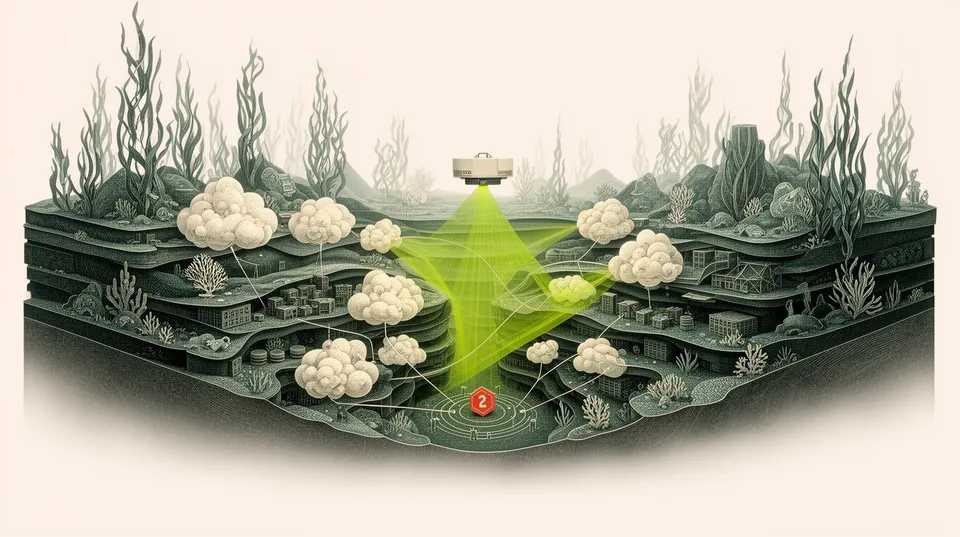
For example, if an exposed API key led to unauthorized access to a database, the post-mortem should investigate: how was the key exposed? Why did the key have broad database access instead of least privilege? Were there network controls that could have blocked the malicious traffic? The answers to these questions directly inform concrete actions, such as implementing stricter secret management, refining IAM policies to adhere to least privilege, or enhancing network segmentation. This iterative process feeds back into your DevSecOps pipeline, leading to updated IaC templates, new remediation playbooks, or enhanced monitoring rules. Tamnoon's Remediation Playbooks themselves evolve through this feedback loop, incorporating lessons learned from real-world incidents to make future automated fixes even more precise and effective.
By treating each incident as a learning opportunity, organizations can continually refine their understanding of their cloud environment's blast radius and implement more robust preventative and detective controls. This commitment to continuous improvement ensures that the next time a similar threat emerges, its potential impact is significantly reduced, moving closer to a truly self-healing and resilient cloud environment.
Understanding and proactively reducing your cloud blast radius is a continuous effort, not a one-time project. It demands a systematic approach to asset discovery, access control, automated remediation, IaC, immutable infrastructure, threat modeling, and post-incident analysis. Tamnoon helps organizations move beyond alert fatigue by automating the critical last mile of security: actual, production-safe remediation. It integrates with your existing security ecosystem, turning detected vulnerabilities into resolved issues without breaking production.
Reduce your MTTR by automating remediation with Tamnoon.

Tamnoon helps security teams remediate cloud risks faster with AI-augmented managed services — combining human expertise with automation so nothing falls through the cracks.
Learn more at tamnoon.ioFAQs
What is blast radius in cloud security?
Blast radius in cloud security refers to the maximum potential impact or scope of damage that could occur if a specific resource or component is compromised. It defines how far a security incident could spread from its initial point of compromise, affecting other interconnected systems, data, or services. Understanding blast radius helps prioritize security efforts by focusing on containing potential damage and ensuring that a failure in one area doesn't lead to widespread system failure or data exposure.
How do you calculate or determine blast radius in a cloud environment?
Determining blast radius involves mapping asset interdependencies, analyzing network flows, and evaluating identity and access management (IAM) permissions. It's not a single calculation but an ongoing assessment. This includes understanding which applications use which data stores, what services communicate over specific network paths, and what permissions are granted to each service identity. Tools that visualize cloud topology and security posture help identify these connections, revealing potential lateral movement paths or data exposure points if a resource is compromised.
Why is reducing blast radius important for DevSecOps success?
Reducing blast radius is crucial for DevSecOps success because it directly impacts system resilience and security posture. In a DevSecOps model, rapid deployment cycles mean configurations change frequently. Minimizing blast radius ensures that any misconfiguration or vulnerability introduced doesn't lead to a catastrophic failure. It helps maintain business continuity, reduces the financial and reputational impact of breaches, and allows teams to remediate issues faster and more safely without causing wider outages.
What tools help in identifying and mitigating blast radius?
Several tools assist in identifying and mitigating blast radius. Cloud Native Application Protection Platforms (CNAPPs) and Cloud Security Posture Management (CSPM) tools like Wiz, Orca Security, Palo Alto Cortex Cloud (Prisma Cloud), Upwind, and Cyera provide asset inventory, topology visualization, and misconfiguration detection. Identity and Access Management (IAM) analysis tools help scrutinize permissions. Infrastructure as Code (IaC) allows for codified security policies. For actual remediation, platforms like Tamnoon automate the fixing of identified issues with production-safe playbooks, working with alerts from these detection tools.
How does automated remediation affect blast radius management?
Automated remediation significantly enhances blast radius management by drastically reducing the Mean Time To Remediation (MTTR). When a vulnerability or misconfiguration is detected, automated systems like Tamnoon can apply production-safe fixes rapidly and consistently. This limits the window of opportunity for attackers to exploit a weakness and prevents further lateral movement. By quickly restoring systems to a secure state, automated remediation directly contains and shrinks the potential blast radius of identified issues, preventing them from escalating into larger incidents.