


When security policies aren't automated and enforced across CI/CD pipelines, production environments inherit vulnerabilities that are costly to fix. Manual security checks simply can't keep pace with modern development velocity, leading to misconfigurations, compliance gaps, and increased breach risk.
Organizations often find themselves in a reactive state, addressing security issues after deployment. This approach causes significant operational friction, delaying releases, consuming valuable engineering resources, and stretching Mean Time To Remediation (MTTR) figures. Implementing Policy as Code (PaC) shifts security left, embedding guardrails directly into the development workflow.
This article examines the operational consequences of failing to implement effective Policy as Code within CI/CD pipelines and outlines how a proactive remediation strategy reduces production impact.
How Unenforced Policies Lead to Production Incidents

Unenforced policies in CI/CD pipelines directly cause critical production incidents by allowing insecure configurations and vulnerable code to propagate to live systems without intervention. This results in a higher likelihood of data breaches, service outages, and regulatory non-compliance. The primary issue stems from the disconnect between security definitions and their automated application.
Without Policy as Code, security checks frequently occur late in the development lifecycle or are conducted manually. When these checks identify issues, developers must halt work, context switch, and apply fixes to code that's already progressed through several stages. This creates bottlenecks and pressure to bypass security steps in the interest of release speed. A significant portion of the DevSecOps market is driven by secure CI/CD automation, accounting for 28% of market segment shares by 2025 (Source: DevSecOps Statistics (2026)). Neglecting this automation makes systems brittle.
Consider an AWS S3 bucket misconfiguration. Without PaC, a developer might inadvertently deploy a bucket with public read/write access. A post-deployment scan by a CSPM solution like Wiz, Orca Security, or Prisma Cloud might detect this, but only after the resource is live and potentially exposed. The remediation then involves modifying the live resource, which carries its own set of risks. An incorrect change could break an application or disrupt access, leading to downtime. The alternative is to roll back the deployment, which is a time-consuming and disruptive process, particularly in critical production systems.
The blast radius of such an incident can be extensive. Public S3 buckets have been the source of numerous high-profile data leaks. If sensitive customer data or proprietary intellectual property resides in that bucket, the reputational damage and financial penalties from a breach can be severe. This reactive model significantly increases MTTR and consumes valuable incident response resources that could be focused on more sophisticated threats. CI/CD pipeline breaches are up 742% as of 2026, highlighting the direct risk of insufficient pipeline security (Source: CI/CD Pipeline Security Masterclass 2026).
The Operational Consequences of Ignoring Policy as Code
Ignoring Policy as Code incurs significant operational debt, manifested through increased Mean Time to Remediation, compliance failures, and a higher probability of security incidents impacting production. Organizations experience a continuous cycle of firefighting rather than proactive risk reduction. This directly impacts operational efficiency and trust in the security program.
Increased Mean Time to Remediation (MTTR)
Without PaC, security issues detected late in the lifecycle require manual intervention, often involving multiple teams. A developer might fix the code, an operations engineer might apply a configuration change, and a security analyst might verify the fix. This handoff process is inherently slow and error-prone. Each communication loop and manual step adds latency. The average MTTR for cloud security incidents can easily stretch into days or even weeks for complex issues. For example, fixing an over-permissioned IAM role after deployment means security teams identify it, report it, developers investigate its usage, and then apply a least-privilege policy. This entire process is protracted and can impact application availability during the remediation phase. Effective remediation strategies are crucial here.
Compliance Failures and Audit Burdens
Many industry regulations (e.g., HIPAA, GDPR, PCI DSS) and internal governance policies mandate specific security controls. Without automated policy enforcement, demonstrating continuous compliance becomes an arduous task. Organizations must frequently conduct manual audits, which are resource-intensive and often only provide a snapshot in time. A policy violation might persist undetected between audits. Organizations implementing Policy as Code report 61% faster compliance (Source: Transforming DevSecOps through CI/CD Integration). Tools like Tamnoon's Remediation Playbooks can help streamline this by providing codified, repeatable remediation for common compliance violations, ensuring that when an issue is detected by a CSPM tool against benchmarks like NIST Frameworks or CIS Frameworks, it can be addressed quickly and consistently. (Source: Cloud Security Posture Management: A Strategic Guide to Cloud Resilience in 2026).
Higher Risk of Production Outages and Data Loss
Each security misconfiguration or vulnerability that makes it to production represents a potential attack vector. An exposed database, a misconfigured firewall, or an overprivileged service account can lead to unauthorized access, data exfiltration, or system compromise. The resulting incident isn't just a security problem. It's a production outage. Applications become unavailable, sensitive data is lost, and customer trust erodes. The financial and reputational costs of these incidents far outweigh the investment in proactive security measures. Organizations implementing Policy as Code report 79% fewer security policy violations in production environments (Source: Transforming DevSecOps through CI/CD Integration). This directly translates to fewer production disruptions.
Developer Friction and Alert Fatigue
When security issues are found late, developers are pulled away from new feature development to fix older code. This interrupts their flow and reduces productivity. The constant stream of late-stage security alerts, often from different tools like SentinelOne Singularity or Palo Alto Cortex Cloud, also leads to alert fatigue, causing legitimate threats to be overlooked. This friction between security and development teams is a common challenge, and addressing alert fatigue is critical for efficient security operations.
Implementing Effective Policy as Code
Effective Policy as Code implementation involves defining security policies as machine-readable code, integrating them into the CI/CD pipeline, and automating their enforcement to prevent non-compliant deployments. This proactive approach ensures security is built in, not bolted on.
Step 1: Define Policies as Code
Start by identifying critical security and compliance requirements. Translate these into explicit rules and conditions. For example, a policy might dictate that all S3 buckets must be encrypted, or that no EC2 instance can expose SSH to the public internet. Use policy languages designed for this purpose, such as Rego for Open Policy Agent (OPA) or HCL for HashiCorp Sentinel. OPA is a popular open-source PaC tool (Source: Most popular Policy-as-Code tool in Open-Source Software projects). Cloud Custodian is another widely used open-source option for cloud resource management and policy enforcement (Source: Most popular Policy-as-Code tool in Open-Source Software projects).
Example Policy (Rego for OPA, simplified for illustration):
package kubernetes.admission deny[msg] { input.request.kind.kind == "Pod" not input.request.object.spec.securityContext.runAsNonRoot msg := "Pods must not run as root"
} deny[msg] { input.request.kind.kind == "Pod" not input.request.object.spec.containers[_].resources.limits.cpu msg := "All containers must have CPU limits defined"
}
This Rego policy denies Kubernetes Pods that attempt to run as root or don't have CPU limits defined. Policies like these ensure baseline security and resource management from the outset.
Step 2: Integrate Policies into CI/CD
Embed policy checks at various stages of the CI/CD pipeline. The earlier a policy violation is detected, the cheaper and easier it's to fix. Tools like Kubescape can be used to secure CI/CD pipelines through security gates (Source: Securing CI/CD Pipelines: Security Gates). Harness also offers robust Policy as Code capabilities for automated governance in CI/CD pipelines (Source: Harness: Best Practices for Policy as Code in CI/CD).
Pre-commit/Pre-push Hooks:
Run static analysis tools and local policy checks before code is even committed to the repository. This provides immediate feedback to developers.
Build Stage:
Integrate policy enforcement into the build process. For Infrastructure as Code (IaC) templates (e.g., CloudFormation, Terraform), use tools like Checkov, Kics, or Terrascan to scan configurations for policy violations before deployment. For container images, scan them for vulnerabilities and non-compliance.
Deployment Stage (Security Gates):
[object Object]Step 3: Automate Remediation for Policy Violations
While blocking non-compliant deployments is crucial, sometimes policies need to be applied to existing resources or automatically remediated for specific scenarios. This is where automated remediation platforms like Tamnoon become invaluable. Tamnoon integrates with existing CSPM and CDR tools, such as Upwind, Cyera, and AWS Security Hub, to ingest security alerts related to policy violations. Its AI-Powered Remediation engine then suggests and orchestrates production-safe fixes. This is particularly important because 88% of organizations operate across hybrid or multi-cloud environments, and 81% depend on at least two cloud providers for critical workloads (Source: Cloud Security Governance Report 2026). A unified remediation platform simplifies managing policy violations across these complex landscapes.
"Effective policy enforcement isn't just about saying 'no' at the gate. It's about providing automated, context-aware remediation that aligns with development velocity and maintains production stability. Security must enable, not obstruct."
Wiz Cloud Security Platform
Tamnoon's Human-in-the-Loop (Expert-led) model ensures that even complex remediations are validated by cloud experts, preventing unintended production impact. For example, if a policy dictates that all unencrypted S3 buckets must be encrypted, Tamnoon can trigger a Remediation Playbook to enable server-side encryption on the bucket, often without disrupting ongoing operations. This bridges the gap between detection and actual fixing, significantly reducing MTTR and alert fatigue for SecOps teams. Conquering alert fatigue is a major benefit.
The Role of Automated Remediation in PaC Effectiveness
Automated remediation complements Policy as Code by providing a mechanism to not only detect policy violations but also to fix them consistently and safely, especially for existing resources or when a policy requires continuous enforcement. Without it, even the most robust PaC system can lead to a backlog of remediation tasks.
PaC primarily focuses on preventing non-compliant deployments. However, cloud environments are . Resources change, new services are adopted, and sometimes policy exceptions are granted temporarily, only to be forgotten. An automated remediation platform like Tamnoon acts as the operational arm of your PaC strategy, ensuring continuous compliance and security posture. It takes signals from your CSPM tools, which define the 'what' of the policy violation based on industry benchmarks and internal rules (as outlined in Gartner's CSPM Definition), and then executes the 'how' of the fix.
Production-Safe Remediation Playbooks
Tamnoon’s Production-Safe Playbooks are pre-configured, battle-tested workflows designed to resolve common cloud security issues identified by PaC tools without impacting application uptime. For instance, if a policy requires all public IP addresses to be restricted, a playbook can automatically apply appropriate network ACLs or security group rules. These playbooks are crucial in environments where automating patching without breaking production is a primary concern. This capability reduces the burden on development and operations teams, allowing them to focus on innovation rather than manual security fixes.
Consider the scenario of an IAM misconfiguration, a common source of security alerts. A PaC system might block a new deployment if an IAM role is overly permissive. But what about existing roles that become over-permissioned due to policy changes or evolving threats? Tamnoon can identify these existing violations through integrations with tools like Wiz or Orca and then trigger a playbook to automatically restrict permissions based on least privilege principles. This is key for fixing overprivileged IAM roles.
Reducing Operational Overhead and Friction
By automating the remediation of policy violations, security teams reduce their operational overhead. Instead of triaging thousands of alerts and manually assigning tasks, they can trust the platform to handle routine fixes. This frees up security engineers to focus on more complex threat analysis and strategic initiatives. This also minimizes the friction between security and development teams, as remediations are handled consistently and often without direct developer involvement. The goal is to move beyond merely detecting vulnerabilities to actually fixing them at scale, an area where traditional CNAPPs often fall short. Tamnoon provides the 'last mile' of cloud security, ensuring that insights from tools like Palo Alto Cortex Cloud and Cyera lead directly to secure outcomes.
Automated remediation also contributes significantly to compliance. With policies enforced and violations fixed automatically, organizations maintain a continuously compliant posture. This eliminates the need for reactive audits and manual evidence collection, streamlining the entire governance process. Ultimately, integrating Policy as Code with automated remediation creates a closed-loop security system that continuously monitors, enforces, and fixes deviations from security and compliance baselines, significantly enhancing the overall cloud security posture.
The Path Forward for Secure Pipelines
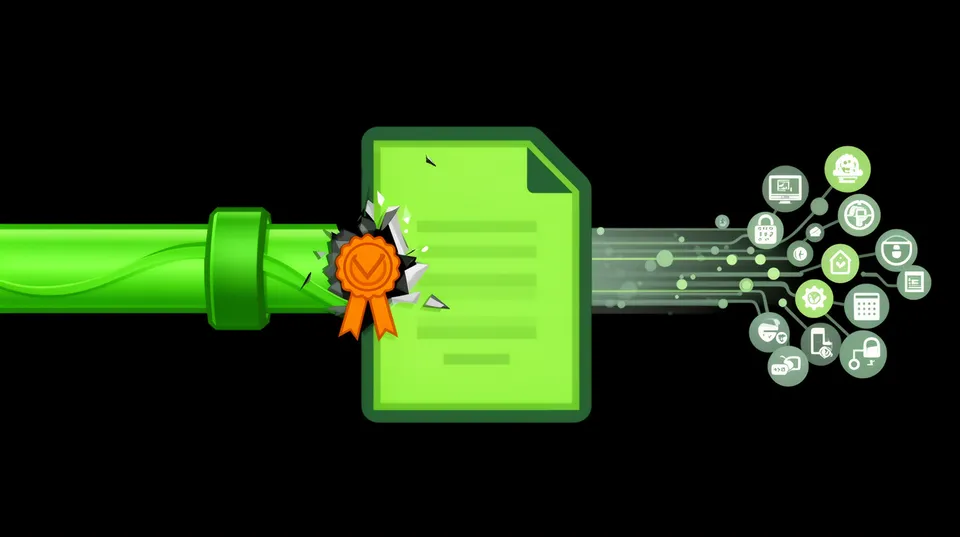
To achieve truly secure pipelines, organizations must embrace Policy as Code as a foundational element, integrate it deeply into the CI/CD process, and couple it with robust automated remediation capabilities. This comprehensive approach transforms security from a reactive bottleneck into an enabler of development velocity.
Start by identifying the most critical security policies that, if violated, would have the highest production impact. Implement these policies first, focusing on areas like network access, data encryption, and identity and access management (IAM). Leverage open-source tools like OPA or Cloud Custodian for defining and enforcing policies, or commercial solutions like Pulumi for programmatic infrastructure and policy. (Source: Most popular Policy-as-Code tool in Open-Source Software projects). Integrate these policy checks at every stage of your CI/CD pipeline, from local development environments to deployment gates.
Secondly, acknowledge that prevention alone isn't enough. Production environments are complex and, with constant changes and evolving threats. Therefore, a strategy for automated remediation of identified policy violations is essential. This is where platforms like Tamnoon provide immense value, moving beyond simple detection to actual, production-safe remediation. Tamnoon’s AI-powered remediation and Human-in-the-Loop validation ensure that fixes are not only effective but also maintain operational stability. This proactive approach significantly reduces the potential for disruptions from cloud security misconfigurations.
Finally, foster a culture of shared responsibility for security. Policy as Code shouldn't be solely a security team's burden. Developers should be ed with tools and processes that provide immediate feedback on policy violations, allowing them to fix issues at the source. Security teams, in turn, can focus on defining clear policies, overseeing automated enforcement, and managing the more complex, expert-led remediations that arise. This collaborative approach, d by platforms that bridge the gap between security insights and operational action, is the key to building and maintaining secure, efficient, and compliant cloud environments.
Reduce your MTTR by automating remediation with Tamnoon.

Tamnoon helps security teams remediate cloud risks faster with AI-augmented managed services — combining human expertise with automation so nothing falls through the cracks.
Learn more at tamnoon.ioFAQs
What is Policy as Code and why is it critical for CI/CD pipelines?
Policy as Code (PaC) defines security and compliance rules as machine-readable code, allowing them to be version-controlled, tested, and automated. It's critical for CI/CD pipelines because it embeds security checks early in the development process, preventing insecure configurations and code from reaching production. This shifts security left, reducing the cost and effort of remediation significantly compared to finding issues after deployment. Without PaC, manual checks create bottlenecks, increase the risk of human error, and lead to a reactive security posture where issues are discovered and fixed in live environments, causing potential disruptions.
What are the primary production impacts of not implementing Policy as Code?
Not implementing Policy as Code leads to several critical production impacts. Firstly, it results in a higher Mean Time to Remediation (MTTR) as security issues are found late and require manual, multi-team efforts to fix, often impacting live services. Secondly, it increases the risk of compliance failures and audit burdens because continuous adherence to regulations becomes difficult to prove without automated enforcement. Thirdly, it significantly raises the probability of security incidents, data breaches, and production outages, as insecure configurations and vulnerabilities propagate unchecked. This causes reputational damage, financial penalties, and operational downtime.
How do tools like OPA and Cloud Custodian support Policy as Code?
Open Policy Agent (OPA) and Cloud Custodian are popular open-source tools that directly support Policy as Code implementation. OPA provides a high-level declarative language, Rego, that lets you define policies for various systems, including Kubernetes, API gateways, and CI/CD pipelines. It acts as a policy engine to evaluate requests against defined rules. Cloud Custodian focuses on cloud resource management, allowing organizations to define policies in YAML to govern, remediate, and report on cloud resources across AWS, Azure, and GCP. Both tools enable organizations to write, version-control, and enforce security and operational policies as code, ensuring consistency and automation.
How does automated remediation complement Policy as Code?
Automated remediation complements Policy as Code by providing the 'fix' component after a policy violation is detected. While PaC excels at preventing new non-compliant deployments, cloud environments are dynamic and existing resources can drift out of compliance. An automated remediation platform like Tamnoon ingests alerts from CSPM tools, identifies policy violations, and then executes production-safe playbooks to fix these issues automatically. This reduces the remediation backlog, decreases MTTR, and ensures continuous compliance. It allows security teams to scale their efforts, moving beyond just detection to proactive, production-safe action, even in complex multi-cloud environments.
What steps should an organization take to adopt effective Policy as Code?
To adopt effective Policy as Code, an organization should first identify its most critical security and compliance requirements and translate them into machine-readable policies using tools like OPA or Cloud Custodian. Second, integrate these policies into the CI/CD pipeline at multiple stages: pre-commit, build, and deployment, using security gates to block non-compliant code. Third, establish a robust automated remediation strategy for when policy violations occur on existing resources or for situations requiring continuous enforcement. Platforms like Tamnoon can orchestrate these fixes, reducing manual effort and ensuring production stability. Finally, foster a DevSecOps culture where developers receive immediate feedback and collaborate with security teams on policy definitions and remediation strategies.