

That queue of unaddressed security alerts on your dashboard? It's growing. Every Monday, the count seems higher, the severity scores more alarming, yet you know chasing the highest-rated findings often delivers the least impact. You're not alone in feeling this operational pain point.
What Cloud Security Alert Fatigue Actually Is
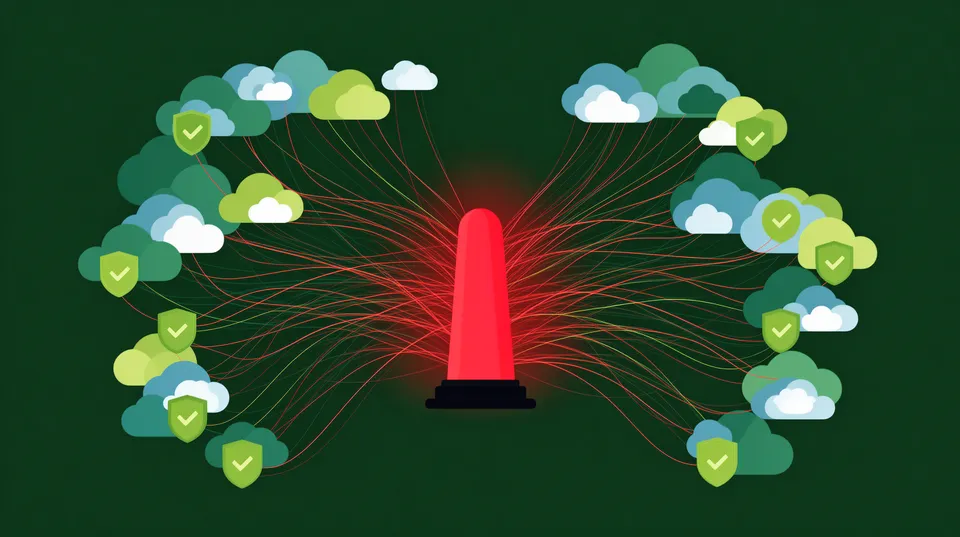
Cloud security alert fatigue describes the diminished responsiveness of security professionals to alerts due to an excessive volume of notifications. It's when the sheer quantity of security alerts overwhelms an analyst's capacity to effectively triage, investigate, and remediate them. The result is critical threats blending with benign noise, leading to missed incidents.
Why Alert Volume Keeps Growing
The problem stems from several factors. Organizations increasingly adopt multi-cloud environments, expanding their attack surface. Tool sprawl also contributes. Each new Cloud Security Posture Management (CSPM), Cloud Workload Protection (CWPP), and Cloud Native Application Protection Platform (CNAPP) solution adds its own detection rules. Many of these tools come with default-on detection that prioritizes comprehensiveness over relevance to a specific environment. Shift-left scanners, while valuable, often generate findings that pile on top of runtime tool alerts, creating a layered notification problem. For instance, Vectra AI reported organizations received an average of 3,832 security alerts per day in 2025. In 2023, that number was even higher, with organizations receiving an average of 4,484 security alerts daily. This constant barrage makes distinguishing signal from noise nearly impossible for SecOps teams.
The Cost of More Alerts
Alert fatigue carries significant costs. Mean Time To Remediate (MTTR) increases because analysts spend more time sifting through irrelevant alerts instead of fixing actual threats. Burnout and analyst attrition become real problems. When teams are overwhelmed, critical alerts get missed. A report found 40% of alerts are never investigated, and 61% of teams admitted to ignoring alerts that later proved critical. This directly impacts an organization's security posture. Organizations experiencing alert fatigue show 34% longer mean time to containment and 43% more security incidents. 55% of cybersecurity teams have missed critical security alerts.
Why Filtering and Deduplication Are Not The Answer
Many teams try to solve alert fatigue with more dashboards, complex correlation rules in their SIEM (Security Information and Event Management) such as TheHive, or tighter SLAs for investigation. While these actions might re-prioritize alerts or reduce duplicates, they often just shift the problem. They don't address the core issue of a lack of clear remediation pathways. Filtering might hide alerts, but it doesn't eliminate the underlying security debt or reduce the actual risk. The focus needs to move from mere severity scores to prioritization based on actual exploitability and business context. High severity doesn't always equal high risk, especially if a finding is on an isolated, non-production asset. Conversely, a low-severity finding on a critical production system could be a severe risk.
What Agentic Prioritization Changes

Agentic prioritization redefines how security teams engage with alerts. Instead of simply receiving notifications based on static rules, agentic systems triages alerts with a comprehensive understanding of runtime exposure, blast radius, and remediation feasibility. These systems integrate with existing tools like Wiz, Orca Security, or Palo Alto Cortex Cloud, and then go beyond detection. They analyze the context of an alert, its potential impact on critical assets, whether it's truly exposed, and how difficult it would be to fix. Then, the agentic system drives the fix end-to-end, offering production-safe remediation options or even executing them with human oversight. This approach moves the security function from a reactive alert-processing unit to a proactive remediation engine, changing the equation from ". How many alerts can we handle?". To ". How quickly can we reduce actual risk?".
A low-alert, high-action SecOps function doesn't mean ignoring threats. It means a security function that acts decisively on what matters most. It's a focus on reducing your mean time to remediation (MTTR) by automating fixes for genuine exposures and eliminating the operational burden of chasing phantom alerts.
Learn more about how agentic systems can help your organization streamline cloud security operations at tamnoon.io/platform/agentic-prioritization/.

Tamnoon helps security teams remediate cloud risks faster with AI-augmented managed services — combining human expertise with automation so nothing falls through the cracks.
Learn more at tamnoon.ioFAQs
What is cloud security alert fatigue?
Cloud security alert fatigue happens when security teams receive so many alerts they become overwhelmed and less effective at responding. This overabundance of notifications, often stemming from numerous security tools, makes it difficult to distinguish real threats from false positives or low-priority issues. Consequently, teams may miss critical security incidents because they're buried in a mountain of noise, leading to increased risk and operational inefficiency.
What causes alert fatigue in cloud security teams?
Alert fatigue in cloud security teams is primarily caused by the sheer volume of alerts from multiple sources. This includes tool sprawl from various CSPM, CNAPP, and CWPP platforms, each generating its own set of findings. Default-on detection rules, often overly broad, and a lack of context-aware vulnerability scanning also contribute significantly. The expanding attack surface of multi-cloud environments further exacerbates the issue, ensuring a constant, unmanageable flow of notifications.
How does alert fatigue affect mean time to remediate?
Alert fatigue directly impacts an organization's mean time to remediate (MTTR) by prolonging the time it takes to address actual threats. When analysts are bogged down with thousands of alerts, many of which are false positives or low priority, they spend less time investigating and more time sifting. This delay means genuine vulnerabilities remain exposed longer, increasing the window for potential exploitation. <a href="https://www.esentire.com/blog/from-10-000-alerts-to-10-stories-how-correlated-attack-chains-can-help-beat-soc-burnout">Organizations experiencing alert fatigue show 34% longer mean time to containment</a>, directly correlating to higher MTTR.
How does prioritization differ from filtering?
Prioritization focuses on understanding the genuine risk and business impact of an alert, then acting on the most critical items that reduce actual exposure. This involves assessing exploitability, blast radius, and ease of remediation. Filtering, on the other hand, often simply hides or ignores alerts based on predefined rules or perceived low severity, without necessarily addressing the underlying security debt or truly reducing risk. Filtering can create a false sense of security by removing alerts from view without resolving the problems they represent.
What is agentic remediation in cloud security?
Agentic remediation in cloud security refers to using intelligent, automated systems to not only triage alerts but also to orchestrate and execute their fixes. These systems understand the full context of an alert, including its runtime exposure and potential blast radius. They can identify the most effective remediation steps and, with validation, deploy production-safe fixes directly, often through playbooks. This approach moves beyond simple detection to active, intelligent resolution, significantly reducing manual effort and speeding up risk reduction.