

Cyber threat actors aren't slowing down, and their methods are getting more sophisticated. Organizations must pivot from detection overload to decisive, production-safe remediation to counter these evolving risks.
Security teams face an increasing deluge of alerts from powerful cloud security posture management (CSPM) tools like Wiz, Orca Security, and Palo Alto Cortex Cloud. While these tools excel at identifying misconfigurations and vulnerabilities, the sheer volume of findings often overwhelms operational capacity. The critical challenge isn't finding problems. It's fixing them at scale without introducing new risks to live environments. This article outlines key cyber threats anticipated for 2026 and provides actionable strategies for immediate, safe remediation.
How AI and Identity Become Primary Attack Vectors in 2026
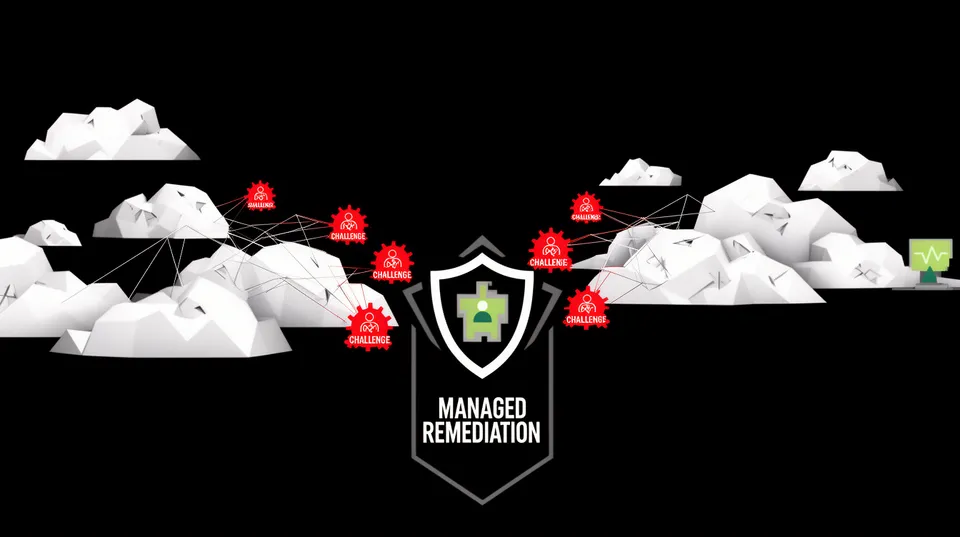
AI-driven vulnerabilities and identity-based attacks are becoming dominant threat vectors, requiring organizations to prioritize automated remediation for these critical areas.
Threat actors are constantly innovating, and artificial intelligence now plays a significant role on both sides of the cybersecurity battlefield. Organizations saw an 89% increase in attacks by AI-enabled adversaries. This translates directly into more sophisticated attacks that bypass traditional defenses, making manual remediation insufficient. AI-related vulnerabilities were identified by 87% of respondents as the fastest-growing cyber risk over the course of 2025, emphasizing the urgency to address this area.
Identity-based attacks are another major concern. Identity drove 43.9% of incidents, highlighting how compromised credentials and misconfigured IAM policies open doors to critical cloud resources. Attackers exploit these weaknesses to gain initial access, move laterally, and exfiltrate data, often remaining undetected for extended periods. Addressing identity issues requires precise, automated fixes to prevent over-permissioning and detect anomalies quickly.
Tamnoon’s platform integrates with existing security tools to ingest alerts related to AI-related misconfigurations or compromised identities. Its AI-Powered Remediation engine then analyzes the context, suggesting and executing specific fixes. For instance, if a service principal has excessive permissions that could be abused in an AI-driven attack, Tamnoon can generate an AWS IAM policy snippet to restrict those permissions to the minimum necessary, then apply it safely through an automated workflow. This moves beyond simple detection, directly to resolution, significantly reducing the Mean Time To Remediation (MTTR) for critical identity and AI-related issues. For deeper insights into managing IAM risks, explore our article on mitigating damage from non-human identity breaches.
Why Ransomware and Exploitation Continue to Plague the Public Sector
Ransomware remains a pervasive and destructive threat, especially against public sector entities, necessitating robust, production-safe remediation playbooks to restore services rapidly.
The public sector experienced an incredibly hostile cyber threat environment in Q1 2026, with U.S. government agencies and educational institutions under siege. Ransomware gangs like Qilin, Akira, and Cl0p dominated the landscape, with AI-enhanced campaigns targeting state governments and school districts. The sheer volume of ransomware victims escalated dramatically from approximately 1,600 to 7,831, with more than 3,100 U.S. victims in 2025 alone.
Exploitation of known vulnerabilities also rose by 105%, indicating that threat actors are efficiently weaponizing publicly disclosed weaknesses. This means organizations can't afford to have unpatched systems or misconfigured cloud resources. Traditional vulnerability management often ends with detection. Security teams then generate a ticket, which might sit in a DevOps backlog for days or weeks. This delay is precisely where attackers gain an advantage.
"Organizations must shift from a reactive security posture to proactive, automated remediation to effectively counter the escalating ransomware and exploitation threats, especially in critical infrastructure sectors."CISA Director Jen Easterly
Tamnoon addresses this by providing Remediation Playbooks designed for production environments. For instance, if a new critical vulnerability is announced for a commonly used library in a serverless function, Tamnoon can automate the update process. It won't just flag the vulnerability. It will, with human-in-the-loop validation, deploy a patched version, ensuring no production impact. This automation is crucial for public sector entities, where critical services can't endure prolonged downtime. Automating vulnerability patching is for operational stability, as discussed further in automating safe cloud vulnerability patching.
How to Implement Production-Safe Remediation
Implementing production-safe remediation involves orchestrating automated fixes with expert oversight to ensure operational stability while resolving security issues.
The core of effective remediation lies in turning insights from tools like Sentinel One Singularity or AWS Security Hub into immediate, safe action. The alert fatigue caused by thousands of findings often leads to critical issues being overlooked. Tamnoon works by connecting these detection tools to an intelligent remediation workflow.
Step-by-Step Remediation Workflow:
- Integrate Cloud Security Posture Management (CSPM) and Detection Tools: Connect your existing security ecosystem. This includes CSPMs like Wiz, Orca Security, Prisma Cloud, and Palo Alto Cortex Cloud, as well as Cloud Workload Protection Platforms (CWPPs) like Sentinel One Singularity and native cloud security services like AWS Security Hub or Azure Defender for Cloud. These tools provide the raw data identifying misconfigurations, vulnerabilities, and threats.
- Automated Prioritization and Contextualization: Once alerts are ingested, Tamnoon’s AI-Powered Remediation engine contextualizes them. It assesses blast radius, potential impact on production, and existing compensating controls. This allows for intelligent prioritization, focusing on issues that pose the highest risk to business operations rather than simply the highest CVSS score.
- Generate Production-Safe Fix Actions: Based on the prioritized alerts, Tamnoon generates specific, executable remediation actions. These aren't generic recommendations. For example, if an S3 bucket is publicly exposed, it might generate an Infrastructure-as-Code (IaC) snippet to modify the bucket policy to restrict access, rather than just telling you it's exposed. The system considers the specific cloud environment (AWS, Azure, GCP) and resource configuration.
- Human-in-the-Loop Validation: For critical or complex remediations, the platform incorporates a Human-in-the-Loop (Expert-led) mechanism. Tamnoon’s cloud experts or your own security engineers review and approve the suggested fix before it's applied to production. This ensures zero downtime and prevents unintended side effects. This crucial step balances automation with operational safety.
- Automated Execution and Verification: Once approved, the remediation action is automatically executed. This could involve applying an IaC change, updating a security group, or rotating a credential. Post-execution, the system verifies that the issue is resolved and that no new misconfigurations were introduced. This complete lifecycle is critical for reducing MTTR and maintaining compliance.
Consider an example: a security alert from Wiz indicates an over-privileged IAM role in AWS, allowing unauthorized access to sensitive S3 buckets. Tamnoon would ingest this alert, analyze the role's permissions, and propose a least-privilege IAM policy. This proposed policy might be presented to a security engineer for approval. Once approved, Tamnoon would apply the revised policy, then confirm the original alert is resolved. This orchestration transforms raw alerts into verified fixes, closing the loop on cloud security. For more details, explore Tamnoon’s platform.
Addressing Malware-Free Detections and Supply Chain Risks
Malware-free attacks and software supply chain vulnerabilities necessitate a shift from signature-based detection to behavioral analysis and automated, preventative remediation in CI/CD pipelines.
The threat landscape is moving beyond traditional malware. In 2025, 82% of detections were malware-free. This means attackers are relying on legitimate tools, stolen credentials, and misconfigurations to achieve their objectives, making them harder to detect with conventional antivirus solutions. This trend highlights the importance of strong identity and access management, robust logging, and continuous monitoring for anomalous behavior.
Software supply chain attacks also remain a significant concern. Compromised open-source libraries, vulnerable dependencies, and misconfigured CI/CD pipelines can introduce weaknesses before code even reaches production. Preventing these issues requires a preventative approach, embedding security early in the development lifecycle.
Tamnoon integrates with DevSecOps workflows, using its Agentic Remediation capabilities to scan IaC templates and container images for misconfigurations and vulnerabilities before deployment. If a Terraform template attempts to provision an S3 bucket without encryption, Tamnoon can automatically flag it and suggest a corrected snippet. This pre-production validation is crucial to stop misconfigurations from ever reaching a live environment. For instance, in Kubernetes environments, ensuring token security in CI/CD pipelines is critical, as detailed in our article fortify Kubernetes token security in CI/CD pipelines.
By proactively fixing issues within the CI/CD pipeline, organizations can prevent malware-free attacks that exploit configuration weaknesses. This approach significantly reduces the attack surface and minimizes the operational overhead of fixing issues in production. It’s about building security in, not bolting it on.
Building Resilience Through Remediation Playbooks and Expert-Led Actions
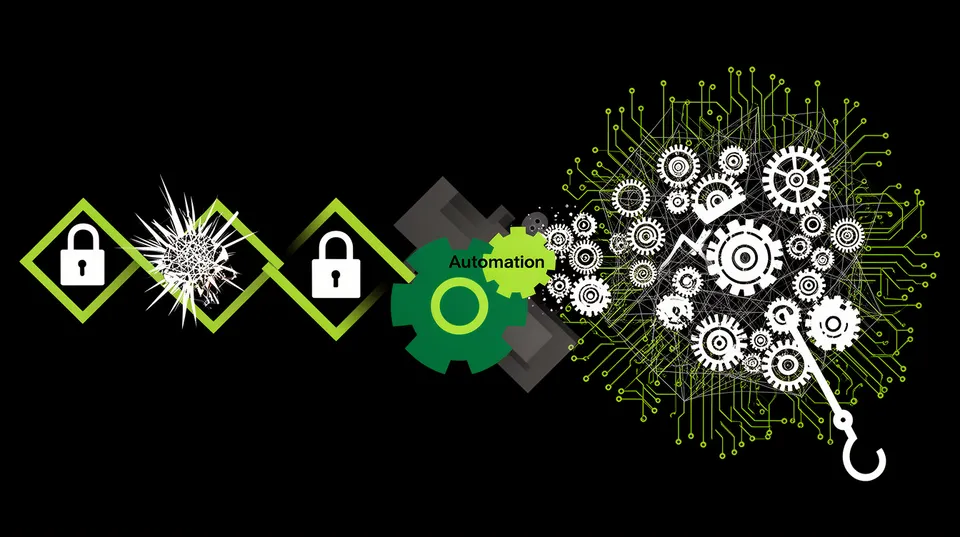
Developing and deploying Remediation Playbooks, combined with expert-led oversight, forms the backbone of organizational resilience against a complex threat landscape.
Simply identifying vulnerabilities isn't enough. An organization's ability to recover and respond to threats defines its resilience. This means having predefined, tested, and automated Remediation Playbooks for common and critical cloud security threats. These playbooks are sequences of actions designed to remediate specific issues, from IAM misconfigurations to S3 bucket exposures or unpatched container images.
Tamnoon provides a library of Production-Safe Playbooks that are battle-tested and designed to resolve issues without impacting application uptime. These playbooks aren't generic. They adapt to the specific context of your cloud environment. For instance, a playbook for an over-privileged IAM role wouldn't just revoke all permissions. It would analyze the role's actual usage patterns to propose the least disruptive, most secure set of permissions. This precision prevents outages and ensures business continuity.
The Expert-led Human-in-the-Loop component is particularly valuable for complex remediation scenarios or when dealing with highly sensitive production systems. It ensures that while automation handles the bulk of routine fixes, critical decisions always have human oversight. This hybrid approach allows organizations to scale their remediation efforts without compromising safety or control. Tamnoon's integration with tools like Wiz Cloud Security and Orca Security ensures that alerts from these platforms directly trigger relevant, pre-configured remediation playbooks, turning detection into immediate, measurable action.
Reduce your MTTR by automating remediation with Tamnoon.

Tamnoon helps security teams remediate cloud risks faster with AI-augmented managed services — combining human expertise with automation so nothing falls through the cracks.
Learn more at tamnoon.ioFAQs
What are the most significant new cloud cyber threats expected by 2026?
By 2026, we anticipate a surge in highly sophisticated, AI-driven polymorphic malware capable of evading traditional detection methods. Additionally, the proliferation of quantum computing will pose a significant threat to current encryption standards, demanding a swift transition to quantum-resistant cryptography. Supply chain attacks targeting cloud service providers themselves, rather than just their clients, are also expected to become more prevalent and damaging, leveraging compromised infrastructure to propagate widespread breaches.
Why are traditional cyber remediation strategies insufficient for cloud threats in 2026?
Traditional remediation often relies on isolated incident response and manual intervention, which is too slow and fragmented for the dynamic and interconnected nature of 2026 cloud environments. The speed and scale of AI-powered attacks will necessitate automated, real-time remediation capabilities. Furthermore, the ephemeral nature of cloud resources means that simply patching a compromised server might not address the root cause, requiring a more holistic approach that integrates security throughout the entire development and deployment lifecycle.
What does 'production-safe remediation' entail in the context of cloud security for 2026?
Production-safe remediation in 2026 will involve automated, policy-driven responses that can isolate, contain, and neutralize threats without disrupting critical business operations. This includes granular control over resource access, automated rollback capabilities for compromised services, and 'shift-left' security practices that embed remediation capabilities directly into CI/CD pipelines. The goal is to achieve rapid recovery and minimize downtime, ensuring business continuity even in the face of advanced attacks, rather than reactive, disruptive interventions.
How will AI and machine learning be leveraged in 2026 for both threat and remediation?
By 2026, AI will be a double-edged sword. Adversaries will utilize AI for advanced evasion techniques, automated reconnaissance, and crafting highly targeted attacks. Conversely, defensive AI will be crucial for real-time threat detection, anomaly behavior analysis, and predictive security. Machine learning models will power intelligent automation platforms, enabling rapid and context-aware remediation actions, such as automatically reconfiguring network security groups or deploying micro-segmentation to contain a breach, far exceeding human response capabilities.
What role will regulatory compliance play in shaping cloud remediation strategies by 2026?
Regulatory compliance will play an increasingly pivotal role in 2026, with stricter mandates around data privacy, breach notification, and continuous security posture management. Organizations will need to demonstrate not only that they have robust remediation capabilities, but also that these strategies are auditable, verifiable, and align with global frameworks like GDPR 2.0 (hypothetical, but representing stricter data laws) and sector-specific regulations. Non-compliance will carry significant financial penalties and reputational damage, driving the adoption of standardized and automated remediation processes.