


Reducing mean time to remediation (MTTR) for cloud security misconfigurations is an operational imperative. Organizations today face a relentless barrage of security alerts, many of which stem from infrastructure misconfigurations. These are direct access paths for attackers, contributing to a significant portion of initial access events.
Security teams often find themselves drowning in a sea of detections from tools like Wiz, Orca Security, and Palo Alto Cortex Cloud, but lack the efficient mechanisms to translate those alerts into production-safe fixes. Bridging this gap between detection and effective remediation is where many security programs falter, leaving critical vulnerabilities exposed for prolonged periods.
Understanding the Misconfiguration Remediation Challenge
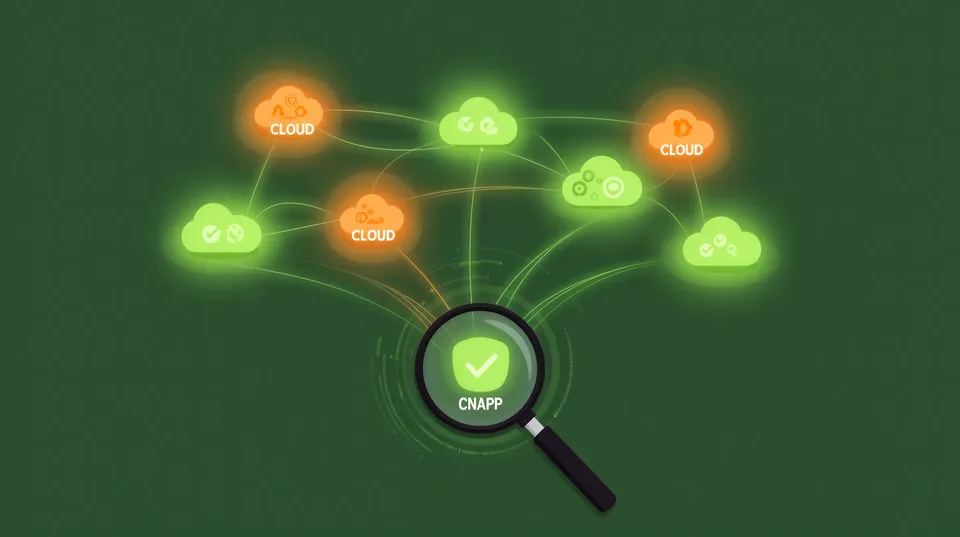
Cloud environments are, making misconfigurations almost inevitable. Infrastructure as Code (IaC) templates, rapid deployment cycles, and sprawling resource dependencies create numerous opportunities for errors. These errors aren't always glaring, they can be subtle permission gaps or overlooked security group rules.
The impact of unchecked misconfigurations is tangible. Sennovate reported that 47.1% of GCP incidents start with weak or missing credentials. It's not just Google Cloud, either. Misconfigurations across all cloud providers contribute to significant breach vectors. Another statistic from the same report indicates that 29.4% of initial access events are caused by misconfigurations. This highlights a clear and present danger that traditional detection-focused security tools often identify but struggle to resolve.
The Cascade Effect of Slow Remediation
When a security team identifies a misconfiguration, the clock starts ticking. Every hour a misconfiguration remains unaddressed increases the window of exposure. This risk compounds across thousands of alerts, turning a manageable problem into an insurmountable backlog. It's about validating the fix, ensuring no negative side effects, and documenting the process.
The typical remediation workflow involves multiple handoffs: security engineers identify an issue, create a ticket, assign it to a DevOps team, who then manually reproduce the issue, write code to fix it, test it, and deploy. This manual, serial process often takes days or weeks. Meanwhile, new misconfigurations appear, and the backlog grows, leading to alert fatigue for security professionals and frustration for developers.
Establishing a Clear Remediation Framework
Effective MTTR reduction begins with a well-defined and consistently applied remediation framework. It's an operational blueprint for handling every misconfiguration from detection to verification. Without clear steps and responsibilities, remediation becomes chaotic, leading to delays and potential production outages.
The core of this framework should involve categorization, prioritization, and standardized response procedures. Not all misconfigurations are equally critical. A publicly exposed S3 bucket with sensitive data demands immediate attention, while an overly permissive IAM role on a non-production resource might have a lower, though still important, priority.
Implementing Risk-Based Prioritization
Organizations must move beyond treating all alerts as equal. Risk-based prioritization involves assigning a score to each misconfiguration based on its potential impact, exploitability, and likelihood. Tools like Wiz, Orca Security, and Prisma Cloud provide context that helps with this, often integrating with existing vulnerability management platforms. However, consuming these scores and translating them into actionable priorities for remediation is the challenge.
Consider a misconfiguration where an EC2 instance in AWS has port 22 open to the world. If this instance holds sensitive data or is part of a critical application, its risk score would be high. Conversely, if it's a transient development instance with no sensitive data, the risk, while present, might be lower. Your prioritization engine needs to consider these factors. For more details on this, see how risk-based vulnerability management directly impacts MTTR.
# Example: Prioritization logic pseudocode
function calculate_risk_score(misconfiguration_alert): impact = get_impact_from_asset_tags(misconfiguration_alert.resource_id) # e.g., 'production', 'dev', 'sensitive_data' exploitability = get_exploit_vector_score(misconfiguration_alert.severity) # e.g., 'publicly_exposed', 'internal_only' likelihood = get_likelihood_score(misconfiguration_alert.type) # e.g., 'common_exploit', 'rare_vulnerability' if impact == 'production' and exploitability == 'publicly_exposed': return HIGH_CRITICALITY elif impact == 'development' and exploitability == 'internal_only': return LOW_CRITICALITY else: return MEDIUM_CRITICALITY
Automating this prioritization helps security teams focus their efforts where they matter most, preventing resource drain on lower-impact issues. This is where cloud security orchestration platforms like Tamnoon really shine, by taking these inputs and driving the remediation process.
Automating Detection and Contextualization
Before remediation can even begin, detection needs to be accurate and provide the right context. Modern Cloud Native Application Protection Platforms (CNAPPs) like Sentinel One Singularity Cloud, Upwind, and Cyera excel at identifying misconfigurations across vast cloud estates. These tools offer deep visibility into cloud assets, configurations, and network flows. They don't just tell you about a misconfiguration, they provide details about the affected resource, its connections, and potential blast radius.
However, the sheer volume of alerts from these platforms can overwhelm security teams. The key is to transform raw alerts into actionable insights. This involves enriching alert data with context about the asset owner, its business criticality, and any associated compliance requirements. Automated tools, like those mentioned, already do a lot of the heavy lifting here, but the integration layer that feeds this data into the remediation pipeline is often where friction arises.
Integrating Detection with Remediation Workflows
A significant portion of cloud security issues are identified by CSPMs, which automate detection and policy enforcement. CSPMs identify misconfigurations, ensuring policies like encryption-at-rest and access restrictions are met. This capability is critical. Integrating findings from these tools directly into a remediation workflow eliminates manual alert triaging and ticket creation. For example, an AWS Security Hub finding for an unencrypted S3 bucket should automatically trigger a pre-defined remediation playbook.
# Pseudo-code for an integration trigger if new_alert_from_Wiz.resource_type == 'AWS::S3::Bucket' and \ new_alert_from_Wiz.encryption_status == 'Disabled': trigger_tamnoon_playbook('S3UnencryptedBucketRemediation', \ bucket_id=new_alert_from_Wiz.resource_id, owner=new_alert_from_Wiz.resource_owner)
This automated handoff is a critical step in accelerating MTTR, reducing the time from detection to the initiation of a fix. Tamnoon integrates with these platforms to ingest alerts, enrich them, and kick off the remediation process. It's about making the alert useful, not just present.
AI-Powered Remediation and Playbooks
Once a misconfiguration is detected and prioritized, the next challenge is executing the fix quickly and safely. This is where AI-powered remediation and battle-tested playbooks become indispensable. Manual fixes are slow and prone to human error, especially in complex cloud environments. Automated remediation, guided by intelligence, can dramatically cut down MTTR.
Tamnoon employs AI to analyze security alerts and generate specific, production-safe fix actions. This goes beyond simple scripting. The AI considers the resource's state, dependencies, and potential impact of the change before proposing a remediation. This agentic remediation capability ensures that fixes aren't generic but tailored to the specific context, increasing the likelihood of successful, non-disruptive resolution.
Developing and Deploying Remediation Playbooks
Remediation playbooks are pre-configured, battle-tested workflows for common cloud threats. These encapsulate the necessary steps to resolve issues like IAM misconfigurations, S3 exposure, or overly permissive network rules. Having a library of these playbooks means that when a known issue arises, the response is immediate and standardized.
For example, a playbook for an S3 bucket publicly exposed could involve steps like:
- Identify the bucket and its owner.
- Restrict public access blocks.
- Rotate access keys if compromised.
- Notify the owner.
- Verify the fix.
# Example: AWS S3 Public Access Block Remediation (Terraform snippet) resource "aws_s3_bucket_public_access_block" "this" { bucket = aws_s3_bucket.example.id block_public_acls = true block_public_policy = true ignore_public_acls = true restrict_public_buckets = true
}
This kind of IaC snippet can be embedded directly into a remediation playbook, allowing for programmatic and version-controlled fixes. Tamnoon's platform orchestrates the execution of these playbooks, ensuring they run within defined guardrails and with necessary approvals.
The Human-in-the-Loop Advantage
While automation is critical for speed, complex cloud environments often require human oversight, especially for high-impact remediations. Unforeseen dependencies or subtle architectural nuances can turn an automated fix into a production incident. The Human-in-the-Loop (Expert-led) approach combines the efficiency of AI with the judgment of experienced cloud security experts.
This hybrid model means Tamnoon's cloud experts validate complex remediations before they're applied to production. They review the proposed changes, assess potential side effects, and provide a final approval, ensuring zero downtime. This level of oversight removes the fear of automated actions, a common barrier to widespread automation adoption among organizations. The integration of human expertise ensures remediation validation is rigorous.
Defining Approval Workflows for Production Safety
An effective Human-in-the-Loop process requires clear approval workflows. For critical systems, a remediation might require approval from the security team, the affected application team, and even a compliance officer. These workflows need to be configurable and integrate with existing ITSM tools like Jira or ServiceNow.
These processes aren't just about approvals, they're about information flow and accountability. Everyone involved needs to understand the proposed change, its implications, and who is responsible for what. Automated notifications and dashboards can keep stakeholders informed throughout the remediation lifecycle.
Measuring and Optimizing MTTR
You can't improve what you don't measure. Tracking Mean Time to Remediate (MTTR) is fundamental to demonstrating the effectiveness of your security program. This involves collecting data across the entire remediation lifecycle, from initial detection to final verification. Metrics such as mean time to detect (MTTD), mean time to acknowledge (MTTA), and mean time to resolve (MTTR) provide a clear picture of your operational efficiency.
Tools that fall into categories like SOAR, SIEM, XDR, MDR, and GRC all contribute to security automation and can help track these metrics, but a platform specifically designed for remediation orchestration provides the most granular view. Identifying bottlenecks in the remediation process is key to continuous improvement. Is the delay in detection? In prioritization? In execution? Or in approval?
Continuous Improvement through Post-Mortem Analysis
Every significant remediation or failed attempt should trigger a post-mortem analysis. What went well? What could have been done better? Were there any unexpected side effects? This feedback loop is essential for refining playbooks, improving automation, and training teams. Even successful remediations offer lessons.
For example, if a misconfiguration was repeatedly introduced, it might indicate a gap in developer education or an issue with IaC templates. Addressing the root cause, rather than just patching symptoms, leads to more robust long-term security. Such analyses should feed directly into updating remediation playbooks and improving the AI's learning models.
Integrating Across the Cloud Security Ecosystem
No single tool solves all cloud security problems. Effective MTTR reduction relies on a cohesive ecosystem where different security tools work together . This means integrating the remediation platform with existing CNAPPs, CI/CD pipelines, and identity providers.
For example, alerts from Wiz, Orca, Prisma Cloud, or even native AWS Security Hub findings need to flow into Tamnoon. The remediation actions might then require interaction with AWS IAM, Azure Active Directory, or GCP IAM. The ability to integrate with these diverse systems is crucial for a complete remediation solution. This is essential for fixing CNAPP alert fatigue, as it directs raw alerts into actionable workstreams.
Orchestrating Across Multiple Cloud Providers and Tools
Many enterprises operate in multi-cloud environments, adding another layer of complexity. A remediation platform needs to be agnostic to the underlying cloud provider and capable of orchestrating fixes across AWS, Azure, and GCP. It also needs to integrate with a host of other tools: identity management, CMDBs, ticketing systems, and code repositories.
For instance, an identity misconfiguration identified by a CTEM solution, which addresses issues like excessive permissions and credential leaks, should trigger a remediation playbook that updates an identity policy in Azure AD or an IAM role in AWS. The orchestration layer ensures these disparate systems work in concert to achieve the desired security posture, ultimately shortening MTTR. More on CTEM's role can be found here.
The Path Forward: From Detection to Production-Safe Fixes
Reducing MTTR for cloud security misconfigurations is about moving beyond mere detection to systematic, production-safe remediation. It demands a that combines advanced automation, intelligent prioritization, expert oversight, and continuous measurement. The volume and complexity of cloud risks mean that manual approaches are no longer sustainable.
Platforms like Tamnoon are designed to bridge the gap between identifying security gaps and actually closing them. By orchestrating the entire remediation lifecycle, from ingesting alerts from leading CNAPPs to executing AI-powered, human-in-the-loop fixes, organizations can transform their cloud security posture. This shift is critical for mitigating risk, maintaining compliance, and freeing security and DevOps teams to focus on innovation rather than alert firefighting.
Automate remediation with Tamnoon to shrink your MTTR.

Tamnoon helps security teams remediate cloud risks faster with AI-augmented managed services — combining human expertise with automation so nothing falls through the cracks.
Learn more at tamnoon.ioFAQs
Why is Mean Time To Remediate (MTTR) important in cloud security?
MTTR is critical because every minute a misconfiguration or vulnerability remains unaddressed, the attack surface for potential breaches increases. Slow remediation leads to prolonged exposure, higher risk of compromise, and potentially significant financial and reputational losses. Faster MTTR directly reduces the window of opportunity for attackers, strengthens the overall security posture, and helps organizations maintain compliance with regulatory requirements. It also alleviates alert fatigue for security teams by providing efficient pathways to resolve identified issues.
How do misconfigurations contribute to security incidents?
Misconfigurations are a primary cause of cloud security incidents. They often create unintended access pathways, expose sensitive data, or grant excessive permissions. For example, a misconfigured S3 bucket might be publicly accessible, or an IAM role could have privileges far beyond its operational needs. These errors provide attackers with easy entry points or ways to escalate privileges once inside. Sennovate reported that a significant percentage of GCP incidents and initial access events are directly attributable to misconfigurations, highlighting their direct role in security breaches.
What role does AI play in accelerating remediation?
AI plays a transformative role in accelerating remediation by automating and intelligentizing the fix process. AI-powered platforms can analyze complex security alerts, understand the context of the affected resources, and generate specific, production-safe remediation actions. This moves beyond template-based scripting by dynamically tailoring fixes to real-time conditions, which minimizes human intervention for straightforward issues and provides validated starting points for more complex ones. This significantly reduces the time from detection to resolution.
How does the 'Human-in-the-Loop' approach ensure production safety?
The Human-in-the-Loop approach combines the speed of automation with the critical judgment of human experts. While AI can propose and even execute many remediations, complex or high-impact changes, especially in production environments, benefit from human review. Experts validate the proposed fixes, assess potential side effects on crucial applications or services, and provide final approval. This hybrid model mitigates the risk of automated changes causing unintended outages or regressions, ensuring fixes are both fast and production-safe.
How do remediation playbooks streamline the fix process?
Remediation playbooks are standardized, pre-defined workflows that encapsulate the steps required to resolve common cloud security issues. When an alert for a known misconfiguration, like an unencrypted database or an overly permissive network rule, comes in, a corresponding playbook can be automatically triggered. This ensures consistent, repeatable, and rapid response. Playbooks reduce the need for manual analysis and ad-hoc problem-solving, significantly accelerating the mean time to resolution by institutionalizing the best practices for fixing specific types of vulnerabilities efficiently.