


Your CNAPP is a firehose of alerts, not solutions. The cloud security market has perfected detection, leaving security teams with thousands of findings from tools like Wiz, Orca Security, or Prisma Cloud. Yet, the core problem remains: alerts don't fix themselves, and the gap between detection and remediation is where intrusions happen.
True intrusion prevention isn't about achieving a mythical state of zero vulnerabilities. It's about building a robust, rapid, and production-safe remediation engine. This operational model transforms security findings into verified fixes, systematically shrinking the attack surface before attackers can exploit it. It’s a shift from cataloging risk to actively neutralizing it.
This playbook isn't about buying another scanner. It's a CISO's guide to building the operational muscle required to act on the intelligence you already have. It focuses on concrete plays for neutralizing the most common cloud intrusion vectors before they lead to a breach.
Build a Playbook for Your Top Intrusion Vectors
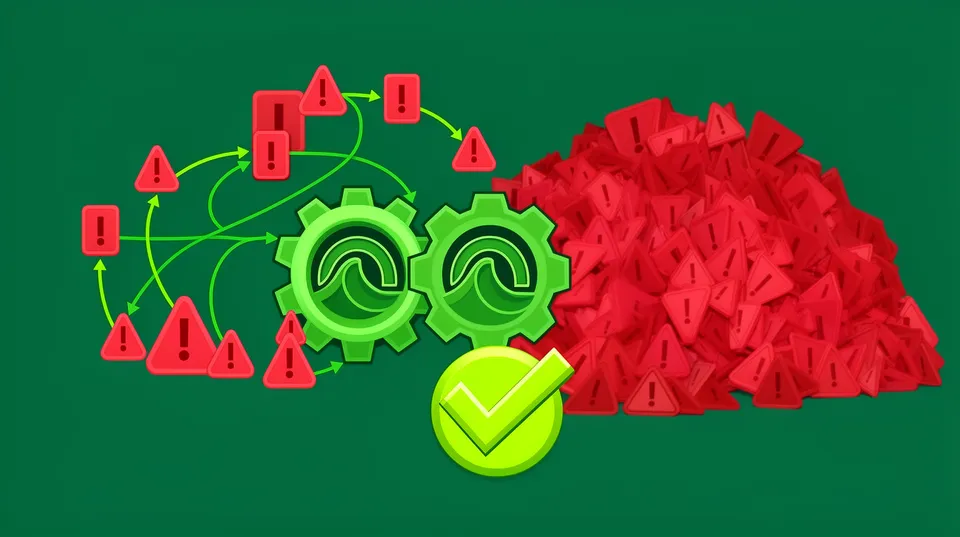
A proactive defense strategy requires battle-tested plays for common attack patterns. Don't try to boil the ocean. Focus on the high-impact, frequently exploited misconfigurations that give attackers their initial foothold. Each play should include a trigger, a precise remediation action, a validation step, and a rollback plan.
Play 1: Eradicate Public Exposure of Data Stores
Exposed S3 buckets, Azure Blob Storage containers, or Google Cloud Storage buckets are the lowest-hanging fruit for attackers. A single misconfiguration can expose terabytes of sensitive data. Your playbook must treat this as a P0 incident, with remediation actions that are both swift and safe.
Trigger: An alert from your CSPM (e.g., Wiz) identifies an S3 bucket with public read/write access.
Remediation Action: The goal is to apply the AWS S3 Block Public Access settings at the bucket level. This is a non-destructive action that provides a strong guardrail. While you could also modify ACLs or bucket policies, Block Public Access is a centralized and definitive control.
Here’s the AWS CLI command to enforce this. It's idempotent, meaning you can run it safely even if the setting is already correct.
aws s3api put-public-access-block \ --bucket your-vulnerable-bucket-name \ --public-access-block-configuration "BlockPublicAcls=true,IgnorePublicAcls=true,BlockPublicPolicy=true,RestrictPublicBuckets=true"Production Impact & Rollback: The main risk is breaking an application that legitimately serves public assets (e.g., a website's CSS files). Before executing, a remediation platform should check asset tags (like public-facing: true) or naming conventions. If an impact is suspected, the fix should be routed for human validation. The rollback is simple: re-run the command with all flags set to false. This simplicity makes it a prime candidate for expert-validated automation.
Play 2: Neuter Over-Permissive IAM Roles
Identity is the new perimeter, and over-privileged IAM roles are unlocked doors. Attackers who compromise a resource with a permissive role gain immediate access to other services, enabling lateral movement. The principle of least privilege must be enforced programmatically, not just recommended in a report.
Trigger: Your CIEM or CSPM tool detects an IAM role with wildcard permissions (*.*) that has been attached to a non-critical EC2 instance.
Remediation Action: The fix involves replacing the overly permissive policy with one that grants only the necessary permissions. This requires analyzing usage data (e.g., via IAM Access Analyzer or CloudTrail) to determine what actions the role actually performs. An AI-driven remediation engine can generate this policy automatically.
Consider a role that gives full S3 access but only ever uses GetObject and PutObject.
Bad Policy:
{ "Version": "2012-10-17", "Statement": [{ "Effect": "Allow", "Action": "s3:*", "Resource": "*" }]
}
Good (Generated) Policy:
{ "Version": "2012-10-17", "Statement": [{ "Effect": "Allow", "Action": ["s3:GetObject", "s3:PutObject"], "Resource": "arn:aws:s3:::specific-data-bucket/*" }]
}
Production Impact & Rollback: The risk here's high. Tightening a policy too much can break an application's core functionality. This is where human-in-the-loop validation is critical. The remediation plan must include a staged rollout or immediate rollback capability. The rollback procedure involves reattaching the last known-good version of the IAM policy, which should be stored before any modification is made. For more on this, see how to approach fixing over-permissive IAM.
Play 3: Automate Vulnerability Patching in Compute
Vulnerable software packages in EC2 instances and container images are direct pathways to remote code execution. Waiting for manual patching cycles is too slow. A proactive defense integrates security scanning directly into the CI/CD pipeline and automates the rebuild-and-redeploy process.
Trigger: A container image scanner (like Trivy or one embedded in your CNAPP) finds a critical RCE vulnerability (e.g., a Log4j-level issue) in a running container.
Remediation Action: The ideal remediation isn't to shell into the container and patch it. It's to treat the infrastructure as immutable. The playbook should:
- Identify the source repository and Dockerfile for the vulnerable image.
- Trigger a CI/CD pipeline (e.g., Jenkins, GitLab CI).
- The pipeline automatically updates the base image in the Dockerfile (
FROM ubuntu:22.04toFROM ubuntu:22.04.2) or runsapt-get upgradewithin the build process. - The new, patched image is built, pushed to the registry, and a rolling deployment is initiated in the production environment (e.g., Kubernetes, ECS).
Production Impact & Rollback: The risk involves introducing breaking changes with updated packages. Automated testing (unit, integration, and smoke tests) within the CI/CD pipeline is the primary safeguard. If a deployment fails health checks, automated rollback mechanisms in the orchestrator (e.g., Kubernetes' deployment strategies) will revert to the previous stable version. This process is detailed further in strategies for shrinking your cloud vulnerability MTTR.
Orchestrate Remediation Without Breaking Production
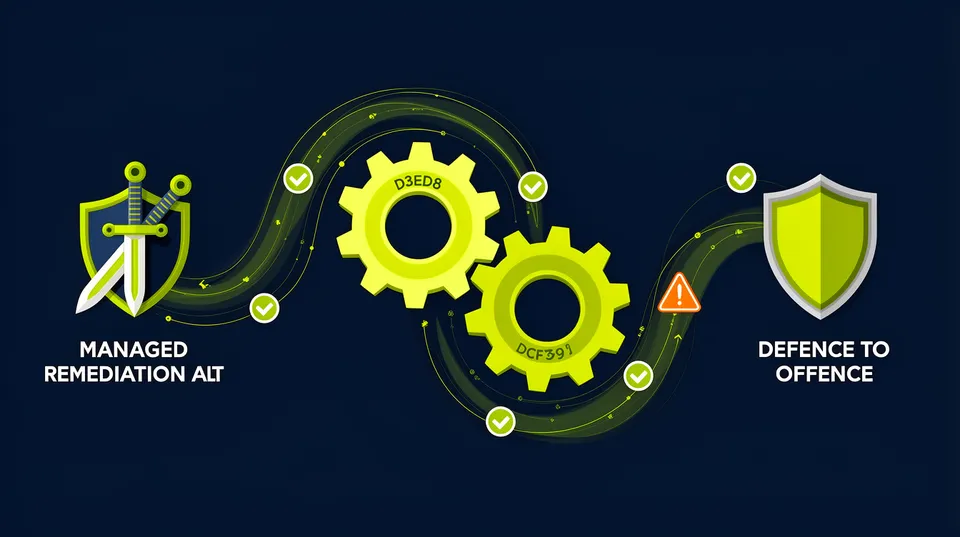
Executing these plays at scale requires more than just scripts. It needs an orchestration layer that connects your detection tools, communication platforms, and the cloud environment itself. It also needs robust safeguards to prevent automated fixes from causing production outages,a top concern for any CISO.
Implement Human-in-the-Loop Validation
Full automation is a noble goal, but it's reckless for complex, high-impact changes. A human-in-the-loop (HITL) model provides a critical safety check, combining the speed of AI-driven analysis with the contextual awareness of a human expert. It's a pragmatic compromise between speed and safety.
The workflow looks like this:
- Ingestion & Triage: An alert is ingested and automatically enriched with business context, asset ownership, and potential blast radius.
- AI-Powered Proposal: A remediation engine like Tamnoon's generates a precise, production-safe fix, such as a code snippet or CLI command.
- Expert Review: The proposed fix is routed to a designated cloud expert or DevOps team member via Slack or Teams. The notification includes the issue, the proposed fix, and the potential impact analysis.
- One-Click Approval: The expert validates the fix and approves it with a single click.
- Execution & Verification: Upon approval, the orchestration platform executes the fix and re-scans the resource to verify resolution.
This model builds trust in automation. It ensures that risky changes are vetted, preventing the kind of automated missteps that can erode the security team's credibility.
Enforce Governance with Policy-as-Code
True prevention starts before deployment. By integrating Policy-as-Code (PaC) into your CI/CD pipeline, you can catch misconfigurations before they ever reach production. Tools like Open Policy Agent (OPA) and Checkov allow you to write and enforce security rules directly against your Infrastructure as Code (IaC) templates.
For example, you can write a simple OPA Gatekeeper constraint in Kubernetes to block any new services of type LoadBalancer unless they have a specific annotation approving their public exposure.
This proactive enforcement, combined with reactive remediation for existing resources, creates a powerful two-pronged defense. It aligns with foundational cyber defense capabilities outlined in frameworks like the DoD Cloud Security Playbook, which emphasizes layered security controls including firewalls, IDS, and IPS.
Address the Cultural Roadblocks to Prevention
Technical solutions alone won't create a culture of proactive defense. Fear and friction are the biggest inhibitors to effective security. When developers are afraid that security fixes will break their applications, they resist. When security analysts fear blame for incidents, they may avoid reporting them.
The data is concerning. Recent statistics show that 30% of cybersecurity leaders admitted 2-4 incidents went unreported to leadership in the past year. The primary reasons include fear of reputational damage (44%) and the belief that an incident could be contained internally (41%). This highlights a systemic failure in trust and process. A CISO’s job is to dismantle these barriers.
Building a trustworthy, non-disruptive remediation process is the solution. When teams know that security fixes are validated, tested, and come with a reliable rollback plan, they move from being adversaries to partners. An effective remediation platform s this collaboration by providing visibility, context, and safe execution mechanisms. It turns the security team from a blocker into an enabler, helping everyone ship more secure code, faster.
The need for this proactive, collaborative posture is underscored by the increasing sophistication of threats. As noted by Google Cloud's security team, state-sponsored actors are already using AI tools like Anthropic's Claude to automate the creation of espionage-related code. Relying on slow, manual processes in the face of automated attacks is a losing strategy.
Ultimately, a CISO's playbook for intrusion prevention isn't a static document. It's a system of people, processes, and technology focused on one goal: making it faster and safer to fix vulnerabilities than it's for attackers to find them.
Ready to move from endless alerts to automated, expert-guided remediation? Let's talk about building your cloud remediation program with a platform that prioritizes production safety. Check out how managed remediation can help your team close security gaps with a focus on fixing, not just finding.

Tamnoon helps security teams remediate cloud risks faster with AI-augmented managed services — combining human expertise with automation so nothing falls through the cracks.
Learn more at tamnoon.ioFAQs
What is the first step in building a cloud remediation playbook?
The first step is to identify and prioritize your most critical and frequently exploited intrusion vectors. Don't try to solve everything at once. Use data from your CSPM, threat intelligence feeds, and incident history to focus on the top 3-5 risks, such as public data store exposure, over-privileged IAM roles, and unpatched critical vulnerabilities. Once identified, document a specific, executable remediation action for each, including the exact commands or API calls needed.
How does human-in-the-loop (HITL) remediation differ from a standard SOAR playbook?
A standard SOAR playbook often follows a rigid, fully automated if-this-then-that logic, which can be risky for complex cloud environments. Human-in-the-loop remediation inserts a critical validation step where an AI-generated fix proposal is reviewed by a human expert before execution. This expert provides the contextual understanding that automation lacks, preventing changes that could break production applications. It combines AI's scale with human judgment for a safer, more reliable process.
How do you measure the success of an intrusion prevention program?
Success isn't measured by the absence of intrusions alone, as that's difficult to prove. Instead, focus on key operational metrics that demonstrate a shrinking attack surface. Track Mean Time to Remediate (MTTR) for critical vulnerabilities—a lower MTTR means a shorter window for exploitation. Also measure the percentage of findings remediated automatically vs. manually, the reduction in recurring misconfigurations, and the rate of successful, non-disruptive automated fixes. These metrics show your program is actively reducing risk.
Why can't our existing DevOps team just handle all cloud security remediation?
While DevOps teams are essential for remediation, they often lack the security-specific context and dedicated bandwidth to handle the sheer volume of alerts from security tools. Their primary focus is on feature velocity and system reliability. A dedicated remediation process, managed by a specialized team or platform like Tamnoon, complements DevOps by providing security expertise, contextualizing alerts, and generating production-safe fixes. This collaboration allows DevOps to approve and implement fixes without being distracted from their core mission.
What's the biggest risk of implementing automated remediation, and how do you mitigate it?
The biggest risk is causing a production outage by applying a fix that has unintended side effects, such as revoking network access needed by a critical application. The best mitigation is a multi-layered approach. First, use a human-in-the-loop model for all high-risk changes. Second, design remediation blueprints that include pre-flight checks and automated post-fix validation. Finally, ensure every automated action has a clear, one-step rollback plan that can be triggered instantly if the post-fix validation fails.