

Cloud deployments demand consistency and speed, but security often becomes a bottleneck. Integrating Terraform into CI/CD pipelines isn't just about automation. It's about embedding security from the start, minimizing risks, and accelerating safe delivery.
Platform leaders face constant pressure to deliver infrastructure quickly while maintaining robust security postures. The traditional approach of security reviews post-deployment creates friction and slows development. Shifting security left within Terraform CI/It's a necessity for operational stability and timely remediation.
This approach moves security validation earlier into the development lifecycle, ensuring that infrastructure code complies with policies before it reaches production. It drastically reduces the chances of misconfigurations leading to incidents, ultimately streamlining the remediation process when issues inevitably arise.
Building a Secure Terraform CI/CD Pipeline
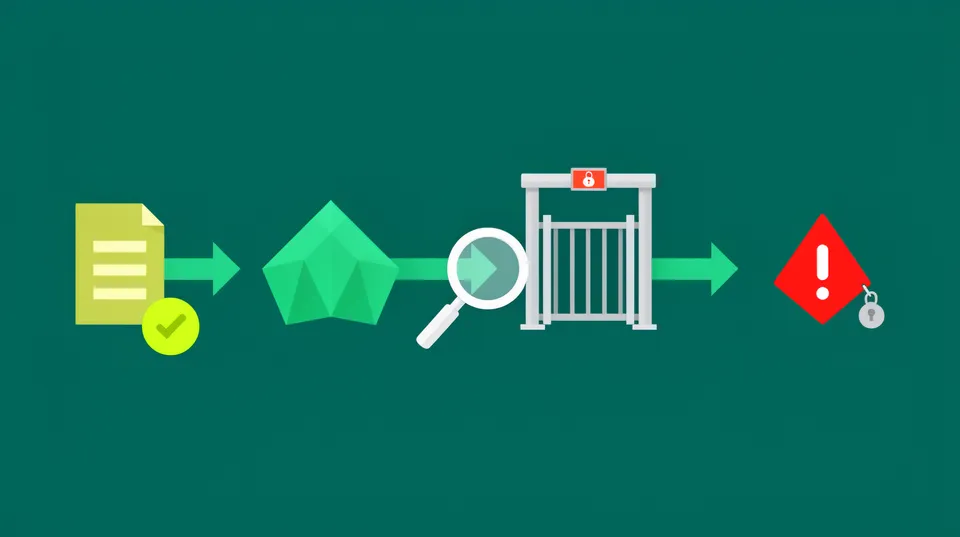
Building a secure Terraform CI/CD pipeline starts with integrating policy enforcement and validation tools directly into the automation workflow, ensuring that every infrastructure change adheres to security standards before deployment. This proactive stance prevents most common misconfigurations from ever reaching a live environment. It's about establishing guardrails, not just after-the-fact audits.
Terraform has cemented its position as a leading Infrastructure as Code (IaC) tool, featuring in courses on O'Reilly and widely used for building production-ready cloud platforms across major providers like AWS, Azure, and Google Cloud. Building secure pipelines with Terraform isn't optional. It's fundamental to modern cloud operations. The goal is to move from reactive firefighting to proactive prevention. A robust pipeline typically involves several key stages: linting, formatting, validation, planning, policy enforcement, and applying. For linting and formatting, tools like terraform fmt and tflint ensure code quality and adherence to style guides, which, while not directly security-related, contribute to maintainability and reduce errors.
Validation and planning are where Terraform shines. terraform validate checks syntax and configuration, catching obvious errors. terraform plan shows what actions Terraform will take, providing a crucial review point before any changes are made to the cloud environment. This stage is critical for detecting potential drift, which can lead to unexpected security gaps. Understanding and managing drift effectively is a continuous challenge that needs to be addressed. Detecting and remediating Terraform drift before production impact helps maintain the desired state of infrastructure.
Policy enforcement is the backbone of security in the pipeline. Tools like Open Policy Agent (OPA) allow defining policies as code, which the CI/CD pipeline can evaluate against the Terraform plan. This means checking for things like public S3 buckets, unencrypted databases, or overly permissive IAM roles before they're deployed. For instance, a policy might prevent the creation of an S3 bucket without server-side encryption enabled. The ability to integrate cloud security validation tools, including policy-as-code frameworks like OPA, directly into CI/CD pipelines is now a standard practice. According to Firefly.ai, platforms like GitHub Actions and GitLab are the most widely adopted CI/CD platforms for building production-ready Terraform pipelines. Organizations need to make sure these pipelines are secure. Firefly.ai identifies GitHub Actions and GitLab as key platforms for these integrations. This early detection capability significantly reduces the attack surface and potential for incidents.
Integrating Security Scanning and Policy Checks Early
Integrating security scanning and policy checks early in the CI/CD lifecycle shifts security left, detecting vulnerabilities and misconfigurations in infrastructure code before they're deployed, drastically reducing remediation effort and risk. This approach prevents bad configurations from ever reaching production environments. Waiting until after deployment means dealing with live incidents, which are always more disruptive and costly.
For example, a common misconfiguration involves S3 bucket policies. If a developer accidentally pushes a Terraform change that exposes an S3 bucket to the public internet, a pre-deployment scan would flag this immediately. Fixing it at the code stage is trivial. Fixing it in production can be an emergency. Tools like Checkov, Kics, or Terrascan integrate with CI/CD to scan Terraform code for security vulnerabilities and compliance violations. These scanners analyze the IaC templates against known security best practices and compliance frameworks like CIS Benchmarks or PCI DSS.
# Example GitHub Actions workflow step for Checkov
- name: Run Checkov scan
uses: bridgecrewio/checkov-action@v1 with: directory: ./ output_format: cli output_file_path: checkov_results.txt soft_fail: false # Set to true to allow pipeline to continue on policy failure
The soft_fail: false setting ensures the pipeline breaks if a critical policy violation is found, enforcing security by design. This integrates directly into the developer workflow, providing immediate feedback. Imagine a scenario where a new AWS EC2 instance is defined in Terraform without an associated security group. A scanner would catch this, preventing a publicly accessible, unprotected server from being provisioned. Such issues can quickly lead to compromise, necessitating urgent remediation. For more on this, consider understanding the production impact of inconsistent policies in CI/CD pipelines.
Beyond static analysis of IaC, security extends to the runtime environment. Cloud Security Posture Management (CSPM) solutions like Wiz, Orca Security, or Palo Alto Cortex Cloud continuously monitor the deployed infrastructure for misconfigurations. While these tools are excellent at detection, they often highlight problems after they've landed in production. The goal is to catch issues earlier with IaC scanning and policy enforcement, reducing the volume of post-deployment alerts. This continuous monitoring, often augmented by AI-powered validation, helps maintain cloud security. Built In highlights automated cloud security validation platforms like Prisma Cloud and Wiz for continuous monitoring.
"Automating security checks within CI/CD pipelines using IaC tools like Terraform significantly reduces the mean time to detect and remediate vulnerabilities, embedding security into the development process rather than bolting it on as an afterthought."
AWS Platform Engineering Course
Automating Remediation in CI/CD and Beyond
Automating remediation in CI/CD goes beyond simply breaking the pipeline on security violations. It involves integrating intelligent systems that can suggest or even automatically apply fixes, drastically cutting down mean time to remediation (MTTR). This transforms security from a gatekeeper function into an enabler of speed and reliability. The reality is that even with robust shift-left practices, some issues will inevitably slip through or emerge post-deployment due to configuration drift or new vulnerabilities.
When a security scanner or a CSPM detects an issue, the traditional response involves a security team filing a ticket, followed by a development or operations team manually fixing the problem. This process is slow, error-prone, and contributes to alert fatigue. Tamnoon's platform addresses this by acting as detection and production-safe remediation. It integrates with existing security tools like Wiz, Orca Security, and Prisma Cloud to consume alerts. Once an alert is received, Tamnoon's AI-Powered Remediation engine analyzes the alert's context, identifies the specific misconfiguration, and generates a precise fix-action.
For example, if an S3 bucket is found to be publicly accessible, Tamnoon won't just flag it. It will identify the exact Terraform resource causing the misconfiguration, propose a code change to restrict access (e.g., adding a block_public_acls = true setting), and even offer to apply this change directly via a pull request to the IaC repository. This moves beyond simple detection, offering concrete, actionable solutions. Tamnoon provides playbooks for S3 public access configuration checks, streamlining this process.
The core value lies in Tamnoon's Remediation Playbooks. These are pre-configured, battle-tested workflows designed to resolve common cloud threats like IAM misconfigurations or S3 exposures. Critically, these are Production-Safe Playbooks. they're verified and designed to resolve issues without impacting application uptime. For complex remediations or critical environments, Tamnoon implements a Human-in-the-Loop model, where Tamnoon's cloud experts validate proposed fixes to ensure zero downtime. This combination of AI-driven automation and expert oversight means issues are resolved quickly and safely, without burdening development teams or risking production.
This automated remediation process is crucial for platform leaders. It minimizes manual effort, reduces the mean time to remediate (MTTR), and frees up valuable engineering time. For instance, if an IAM role is over-permissioned, Tamnoon can suggest and implement least-privilege policies. This process ensures that security teams are not just generating alerts, but actively driving fixes. This is especially relevant given that, on average, 56% of infrastructure provisioning and deployments are automated, showing a significant trend towards automation. HashiCorp's 2025 Cloud Complexity Report states that 56% of infrastructure provisioning and deployments are automated. The more automation there is, the more critical it's to embed automated remediation.
Handling Operational Challenges and Rollback Strategies
Operational challenges in Terraform CI/CD involve managing state consistency, ensuring idempotency, and having clear rollback strategies to minimize blast radius during deployment failures or security incidents. These aspects are for maintaining service reliability and recovering quickly from issues. A failed Terraform apply or a faulty security fix can cause significant downtime, making robust operational processes non-negotiable.
Terraform's state file is its most critical component. It maps real-world resources to your configuration. Any corruption or inconsistency in the state file can lead to disastrous outcomes, like resources being deleted or recreated unexpectedly. Proper state management, often using remote backends like AWS S3 with DynamoDB locking, Azure Blob Storage, or HashiCorp Consul, is fundamental. It prevents concurrent modifications and provides a reliable source of truth. When a deployment fails, understanding the state is the first step in debugging. The terraform state rm and terraform import commands can help correct state inconsistencies, but they should be used with extreme caution and only by experienced engineers.
Idempotency in IaC means that applying the same configuration multiple times yields the same result without unintended side effects. Terraform is inherently idempotent, but issues can arise from external factors or misconfigured providers. Ensuring that your CI/CD pipeline tests for idempotency, especially for critical infrastructure, can prevent unexpected changes. For example, running terraform plan twice with no changes in between should show no proposed changes. If it does, something is amiss, potentially indicating configuration drift or a non-idempotent resource definition.
Rollback strategies are crucial for minimizing downtime when deployments go wrong. The simplest rollback for a Terraform deployment is often to revert the Git commit to a previous, known-good state and re-run the CI/CD pipeline. This leverages the version control system as the source of truth for infrastructure. However, this isn't always straightforward. Depending on the nature of the change and the cloud provider, some resources might not gracefully revert. For complex infrastructure, blue/green deployments or canary releases are better strategies. These involve deploying new infrastructure alongside the old, gradually shifting traffic, and enabling a quick cutover back if problems arise.
# Example: Basic rollback with GitOps
# If a bad deployment from 'main' branch
# 1. git revert <bad_commit_hash>
# 2. git push origin main
# CI/CD pipeline will automatically re-deploy the reverted state.
When an automated remediation is applied, Tamnoon's platform ensures these changes are production-safe. This often means a soft-apply mechanism, or a review by a human expert before merging. For instance, if a security fix changes network ACLs, an incorrect application could block legitimate traffic. Tamnoon's Human-in-the-Loop model ensures that such changes are reviewed by cloud experts, providing an additional layer of safety before the change is merged and applied to production. This approach significantly reduces the blast radius of any potential issue. This level of expert oversight is especially important when dealing with high-risk remediation like patching vulnerabilities. Automating patching without breaking cloud production is a key concern for leaders.
A recent incident highlighted the importance of robust CI/CD security: the Megalodon GitHub attack targeted 5,561 repositories with malicious CI/CD workflows in 2026. This incident shows that the CI/CD pipeline itself is a target. Securing these pipelines with strict access controls, secret management, and continuous monitoring is as important as securing the infrastructure they deploy. The Hacker News reported on the Megalodon GitHub attack, underscoring this risk. Organizations can significantly reduce risk and improve MTTR by addressing issues early and automating safe remediation.
The Path to Continuous Security and Remediation
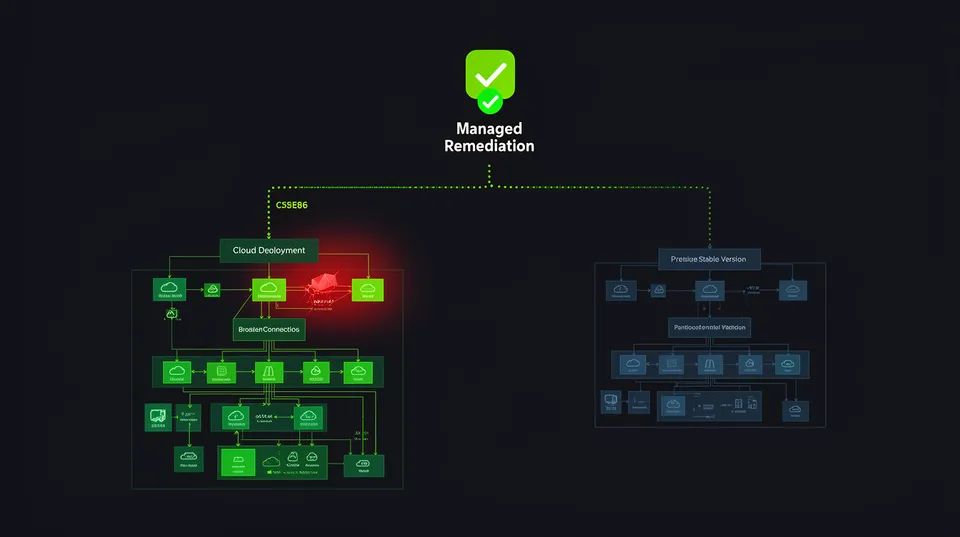
The path to continuous security and remediation requires moving beyond siloed security detection and embracing an integrated, automated approach where remediation is an inherent part of the CI/CD pipeline and runtime operations. This ensures that security isn't just checked but actively maintained throughout the cloud environment's lifecycle. It's about shifting from identifying problems to systematically fixing them.
Platform leaders must cultivate a culture where security is a shared responsibility, not solely owned by a separate security team. Developers writing Terraform code need immediate feedback on security implications. Operations teams deploying and managing infrastructure need confidence that changes are validated and reversible. The tooling and processes discussed here support this cultural shift by making security tangible and actionable for everyone involved.
The rise of GitOps, platform engineering, and AI-generated infrastructure templates are further reshaping how teams manage cloud environments. These new developments emphasize declarative configuration and automated delivery, making the integration of security even more critical. Policy-as-code frameworks and infrastructure testing automation, which validates cloud resources and configurations, are essential for efficiency and consistency. The goal is to move towards a state where security issues are not just detected, but also automatically prioritized and remediated based on their impact and urgency. This proactive approach helps mitigate risks like exposed credentials. Pulumi discusses new developments in IaC tools for 2026, including these trends.
Tamnoon’s platform bridges the gap between identification and resolution. By consuming alerts from various security tools and translating them into production-safe remediation actions, it helps organizations move past alert fatigue. Instead of a backlog of thousands of alerts, teams receive validated fixes, often in the form of pull requests, ready for review and merge. This allows platform leaders to focus on innovation, knowing that their infrastructure is not just monitored, but actively secured.
Adopting automated remediation strategies doesn't eliminate the need for human oversight. Instead, it allows security experts to focus on complex, novel threats and strategic initiatives, rather than repetitive manual fixes. The Human-in-the-Loop model ensures that critical remediations are vetted by experts, preventing unintended production impact. This hybrid approach accelerates security posture improvements while maintaining operational stability. This also helps in closing the cloud security remediation gap, making security operations more efficient.
Reduce your MTTR by automating remediation with Tamnoon.

Tamnoon helps security teams remediate cloud risks faster with AI-augmented managed services — combining human expertise with automation so nothing falls through the cracks.
Learn more at tamnoon.ioFAQs
What is Terraform CI/CD and why is it important for cloud security?
Terraform CI/CD involves integrating Terraform infrastructure as code deployments into a Continuous Integration/Continuous Deployment pipeline. It's crucial for cloud security because it automates the process of validating, planning, and applying infrastructure changes, ensuring that security policies and best practices are enforced at every step. This 'shift-left' approach catches misconfigurations and vulnerabilities early, often before they even reach a cloud environment. This significantly reduces the attack surface, minimizes manual errors, and accelerates the secure delivery of infrastructure, ultimately leading to a more consistent and resilient cloud security posture.
How can I integrate security checks into my Terraform CI/CD pipeline?
Integrating security checks typically involves using static analysis tools and policy-as-code frameworks. Tools like Checkov, Kics, or Terrascan can scan your Terraform code for security misconfigurations and compliance violations during the CI phase. Policy engines like Open Policy Agent (OPA) allow you to define custom security policies (e.g., no public S3 buckets, mandatory encryption) that are evaluated against your Terraform plan before any changes are applied. You'd typically add these as steps in your CI/CD workflow, failing the pipeline if critical violations are found. This ensures that only compliant infrastructure definitions proceed to deployment.
What are the common operational challenges with Terraform CI/CD, and how do I address them?
Common operational challenges include managing Terraform state consistency, ensuring idempotency, and implementing effective rollback strategies. To address state consistency, use remote backends like S3 with DynamoDB locking or Azure Blob Storage to prevent corruption and ensure a single source of truth. Idempotency can be verified by running 'terraform plan' multiple times without proposed changes, and ensuring your resource definitions are stable. For rollbacks, leverage your version control system by reverting to a previous, known-good Git commit and re-running the pipeline. For critical services, consider advanced deployment patterns like blue/green or canary releases to minimize downtime during issues.
How does Tamnoon help with Terraform CI/CD security and remediation?
Tamnoon enhances Terraform CI/CD security by providing an automated remediation platform that bridges the gap between security alert detection and actual production-safe fixes. It integrates with existing CSPM and security tools to consume alerts about misconfigurations or vulnerabilities in your cloud environment. Tamnoon's AI-Powered Remediation engine then analyzes these alerts, generates specific fix-actions (often as IaC code changes), and can even create pull requests to apply these fixes. For critical or complex issues, a Human-in-the-Loop model involves Tamnoon's cloud experts reviewing and validating the remediation to ensure zero production impact, significantly reducing MTTR and alert fatigue for engineering teams.
What is the 'shift-left' security approach in the context of Terraform CI/CD?
The 'shift-left' security approach in Terraform CI/CD means moving security activities and responsibilities earlier into the development lifecycle. Instead of waiting for infrastructure to be deployed and then scanning it for vulnerabilities, security checks are performed on the Terraform code itself during the development and CI phases. This includes static analysis of IaC, policy enforcement, and security linting. By catching and fixing security issues when they are still code, rather than live in production, organizations drastically reduce the cost and effort of remediation, minimize security risks, and accelerate the secure delivery of cloud infrastructure. It's about proactive prevention rather than reactive response.