

Your CNAPP just flagged a critical IAM misconfiguration with a 9.8 severity score. The ticket is assigned, the clock is ticking, but weeks later, it’s still open. This isn't a failure of detection; it’s a breakdown in the operational process that connects finding a problem to safely fixing it in a live environment.
Security teams are buried under alerts from tools like Wiz, Prisma Cloud, and Orca Security, while DevOps and SREs are hesitant to apply fixes they don't fully understand for fear of breaking production. This friction creates a massive remediation gap where known exposures linger for months. Roughly 45% of all data breaches occur in cloud environments, not because the flaws are unknown, but because fixing them is slow, risky, and lacks context.
Continuous Threat Exposure Management (CTEM) provides a structured program to close this gap. It's not about buying another scanner. It's an operating model for turning a firehose of alerts into a manageable queue of validated, actionable remediation tasks. Let's walk through a real-world scenario: remediating an over-privileged IAM role, and see how to apply the CTEM framework from initial alert to a production-safe fix.
Start by Scoping Your Identity Attack Surface
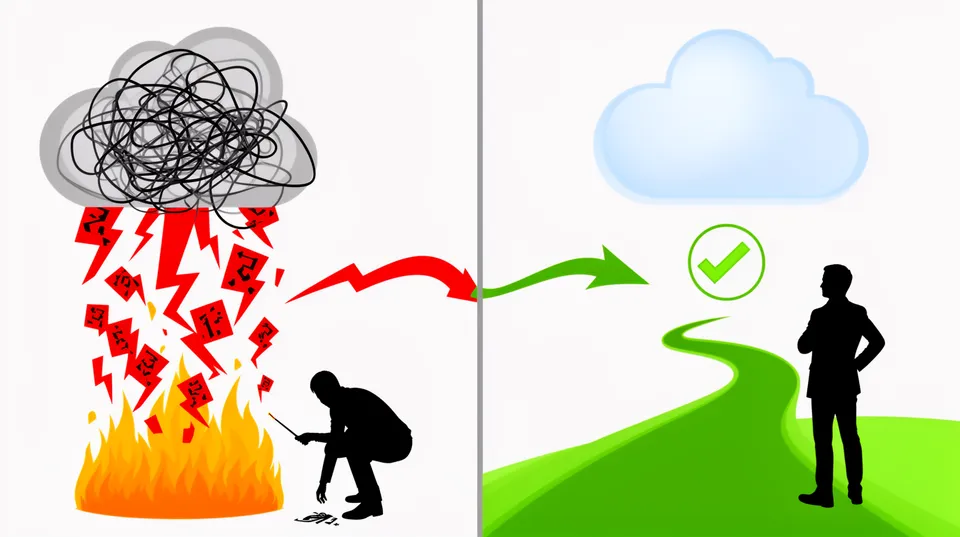
Before you can fix anything, you have to decide what’s important. The Scoping phase of CTEM isn't about scanning everything; it's about defining what assets, if compromised, would cause significant business damage. In a large cloud environment, an untargeted scan is just a recipe for noise.
For our scenario, the goal is to find dangerous IAM role assignments. An effective scope here isn't "all IAM roles." It's "IAM roles attached to internet-facing compute resources in production accounts."
How to Define Scope Operationally
You need to use the data and tools you already have to draw these boundaries. This means combining infrastructure knowledge with business context.
- Leverage Asset Tagging: Good tagging is non-negotiable. Filter for assets with tags like
env:prod,data-classification:confidential, orapp:payment-gateway. This immediately separates critical assets from thousands of ephemeral dev resources. - Identify Critical Business Applications: Map which applications are business-critical. Your scope should focus on the AWS, Azure, or GCP accounts that host these applications. Isolate these high-value environments from your sprawling dev/test landscape.
- Use Network Boundaries: Focus on roles associated with resources in public subnets or behind public-facing load balancers. An over-privileged role on an internal batch processing instance is a problem, but one on a web server processing user data is a crisis waiting to happen.
Scoping transforms an abstract goal like "secure IAM" into a concrete task like "analyze IAM roles attached to EC2 instances with the tier:web tag within our three production AWS accounts." This focused approach ensures your discovery efforts yield relevant, high-impact findings.
Discover and Contextualize IAM Exposures
With a clear scope, the Discovery phase begins. This is where your Cloud Security Posture Management (CSPM) and Cloud Infrastructure Entitlement Management (CIEM) tools do their work. They scan your scoped environment and identify misconfigurations, including our target: over-privileged IAM roles.
A tool like Wiz or Orca will quickly flag a role attached to a production EC2 instance with a policy allowing s3:* on Resource: "*". But the raw finding is just the start. The real value is in adding context that separates a theoretical risk from a probable threat vector. Given that 70% of cloud security breaches are identity-based, understanding this context is paramount.
From Finding to Contextualized Exposure
Don't just look at the permission. Analyze the metadata surrounding the finding to understand its real-world implications.
- Effective Permissions: Look beyond the attached policy. Does a Service Control Policy (SCP) at the OU level or a permissions boundary limit the role's power? The "effective permissions" are what an attacker can actually use.
- Network Path: Is the EC2 instance using this role accessible from the internet? A tool that maps network paths can show if a path exists from 0.0.0.0/0 to the instance, elevating the risk significantly.
- Data Access: What S3 buckets can this role actually access? If it can reach buckets tagged with
data-classification:pii, the severity skyrockets. This connects a configuration flaw to potential data exfiltration.
This contextualization, often performed by modern CNAPP platforms, turns a generic alert ("over-privileged role") into a specific, high-risk exposure: "A public-facing production web server role has write access to all company S3 buckets, including those containing customer PII." Now you have a problem worth solving immediately.
Prioritize Fixes Based on Exploitability, Not Static Scores
Your discovery tools likely surfaced dozens of "critical" IAM issues. The Prioritization phase is about cutting through that noise to find the handful that matter most. This means moving beyond CVSS scores or vendor-defined severities and evaluating risk based on exploitability and business impact.
Consider two findings, both flagged as "Critical":
- Finding A: An IAM role has
iam:CreateUserpermissions but has not been used in 180 days. The role is attached to a monitoring instance in an isolated network. - Finding B: An IAM role has
ssm:GetParameterpermissions. The role is attached to a public-facing EC2 instance, and the SSM Parameter Store holds database credentials.
A static severity score might rank these equally. But in reality, Finding B represents a clear and present danger,a direct path to sensitive credentials from a publicly exposed asset. Finding A is a latent risk that should be addressed but doesn't require an all-hands-on-deck response. This is the essence of risk-based prioritization. It aligns security effort with actual attacker behavior. This becomes even more critical as Gartner predicts that by 2026, unpatchable attack surfaces will increase significantly, shifting focus to misconfigurations like these.
Validate the Blast Radius Before You Remediate
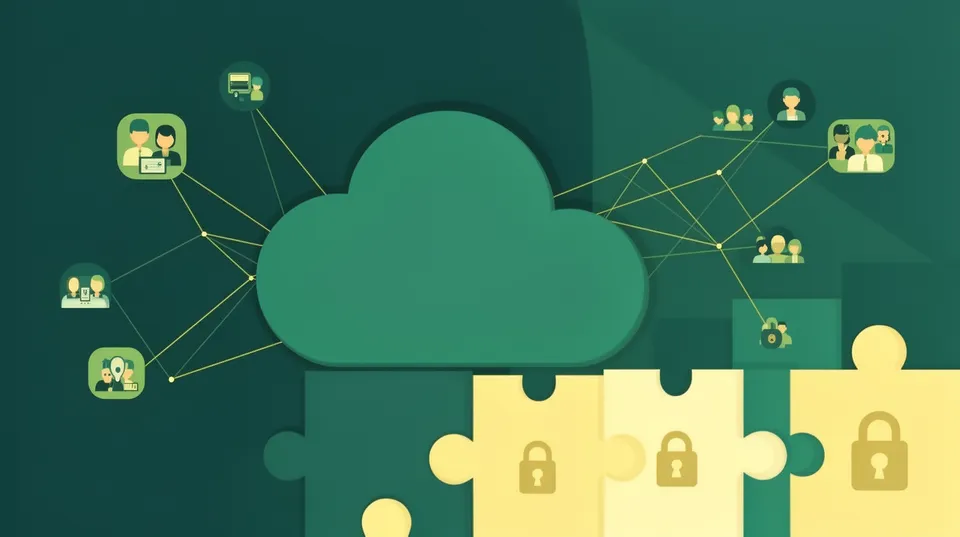
This is where most security programs fail. The Validation phase answers one simple question: "If I fix this, will I break something?" It’s the firewall between a well-intentioned security change and an unexpected production outage. Pushing a remediation without validation is how security teams lose the trust of engineering.
For our over-privileged S3 role, the remediation seems simple: replace s3:* with a least-privilege policy. But what if a legitimate, but rarely used, application function relies on s3:DeleteBucketPolicy? Removing it blindly could cause a failure that only appears during a quarterly report generation or a disaster recovery test.
A Practical Validation Playbook
Validation requires interrogating your logs and using access analysis tools to confirm that a permission is truly unnecessary.
- Use IAM Access Analyzer: Before generating a new policy, use AWS IAM Access Analyzer to generate a policy based on actual CloudTrail activity over a defined period (e.g., the last 90 days). This is your baseline for what the role *actually* does.
- Query CloudTrail Directly: For permissions deemed excessive by the analyzer, run targeted queries against CloudTrail to double-check. For example, if you plan to remove
s3:PutObjectAcl, search for that specific event name associated with the role's session. - Communicate with the Asset Owner: Present your findings to the application owner. Don't just send an alert; show them the data. "We've confirmed this role only uses
s3:GetObjectands3:PutObjecton bucketapp-data-xyz. We propose removing 15 other S3 permissions. Do you foresee any issues?"
This step builds confidence and turns remediation from a mandate into a collaborative effort. It also provides a crucial data point for a rollback plan if something does go wrong.
Mobilize Engineering with Production-Safe Fixes
The Mobilization stage is about executing the fix. This is where the output of the previous four stages converges into a concise, low-friction task for the engineering team. It’s the difference between creating a problem ticket and delivering a solution.
The wrong way is to create a Jira ticket that says: "Fix role arn:aws:iam::123456789012:role/ProdWebServerRole. It's over-privileged with s3:*." This ticket lacks context, provides no solution, and forces an engineer to repeat the validation work, delaying the fix.
Delivering an Actionable, Production-Safe Remediation Package
A proper mobilization effort delivers a ready-to-implement package. Tamnoon orchestrates this by packaging validated findings with production-safe actions. For our IAM role, this package would include:
- The Validated Finding: A clear summary of the risk, including the asset, the exposure path, and the potential business impact.
- The Proposed Fix (as Code): Not a description, but the actual JSON for the new, least-privilege IAM policy.
{ "Version": "2012-10-17", "Statement": [ { "Sid": "AllowReadWriteSpecificBucket", "Effect": "Allow", "Action": [ "s3:GetObject", "s3:PutObject" ], "Resource": "arn:aws:s3:::specific-prod-app-bucket/*" } ]
}- The Rollback Plan: Instructions on how to revert to the previous policy if an issue occurs. This is often just the original policy JSON.
- Clear Ownership and Next Steps: An assignment to the correct team with a link to create a pull request in the relevant IaC repository (Terraform, CloudFormation, etc.). Check out this remediation blueprint for over-permissive IAM for more detail.
This approach dramatically reduces Mean Time to Remediate (MTTR). It respects engineering time by providing a complete, validated solution instead of a vague problem statement. It makes fixing security issues as easy as reviewing and merging a pull request.
Building a Continuous Feedback Loop for Lasting Security
CTEM is not a one-time project; it's a continuous cycle. Once our IAM role is remediated via an IaC update, the process doesn’t end. The outcome feeds back into the system, making it smarter and more efficient.
The updated Terraform module for the web server now enforces a least-privilege policy, preventing the same misconfiguration from recurring. The discovery of this critical exposure might also trigger a re-evaluation of the Scoping phase: should we be more aggressively scanning for roles with access to PII? This feedback sharpens the entire process for the next cycle.
This continuous, operational approach to security is why the Continuous Threat Exposure Management market is projected to reach $11.4 billion by 2034. Organizations are realizing that passive scanning is not enough. To defend complex cloud environments, you need an active, integrated program that moves systematically from alert to remediation excellence.
See how Tamnoon can help you mobilize remediation and shrink your MTTR. Visit Tamnoon to get started.

Tamnoon helps security teams remediate cloud risks faster with AI-augmented managed services — combining human expertise with automation so nothing falls through the cracks.
Learn more at tamnoon.ioFAQs
How does CTEM differ from just running a vulnerability scanner?
A vulnerability scanner focuses on discovery, identifying known CVEs or basic misconfigurations, often generating a long list of findings with static severity scores. CTEM is a full lifecycle program. It goes beyond discovery to prioritize findings based on exploitability and business context, validate that an exposure is real and poses a threat, and finally, mobilize a safe, verifiable remediation. For example, a scanner sees an old library; CTEM confirms if that library is reachable by an attacker and orchestrates the fix, preventing alert fatigue and focusing resources on genuine risks.
Where does a platform like Tamnoon fit into this CTEM process?
Tamnoon operates primarily in the latter, most critical stages of CTEM: Validation and Mobilization. While tools like CSPMs handle Scoping and Discovery, Tamnoon ingests those prioritized findings and helps validate them against production realities. Its core strength is in Mobilization, where it generates production-safe remediation plans, often as Infrastructure-as-Code snippets, and coordinates their deployment with human-in-the-loop oversight. This bridges the common gap where security finds problems but lacks the capability to orchestrate the fix without breaking applications.
Can this framework really reduce the alert noise from our security tools?
Absolutely. Alert fatigue stems from a high volume of low-context findings. CTEM directly combats this through its Prioritization and Validation stages. Instead of staring at 1,000 'critical' alerts, your team first prioritizes them based on attack path analysis and asset criticality. Then, the Validation stage filters out theoretical risks that aren't exploitable in your environment. The result is a much smaller, highly curated list of confirmed exposures that represent genuine danger, allowing your SOC and engineering teams to focus their efforts effectively.
What's the real-world risk of skipping the Validation stage?
Skipping validation is a primary cause of production outages and friction between security and engineering. For example, if a scanner flags an IAM permission as 'unused' and you remove it without validating, you might break a critical business process that only runs once a quarter. When that process fails, engineering has to scramble, and they lose trust in security's recommendations. Validation, such as checking CloudTrail logs to confirm a permission hasn't been used, prevents these self-inflicted incidents and ensures remediation efforts are both safe and necessary.
What specific tool integrations are needed for a successful cloud CTEM program?
A robust CTEM program needs a toolchain that covers all five stages. This includes a CNAPP/CSPM (like Wiz, Orca, or Prisma Cloud) for Discovery. For Validation, you need access to logging platforms (like AWS CloudTrail or Azure Monitor) and potentially Breach and Attack Simulation (BAS) tools. For Mobilization, integration with ITSM platforms (Jira, ServiceNow), communication channels (Slack, Teams), and Infrastructure-as-Code repositories (GitHub, GitLab) is crucial. Finally, a remediation orchestration platform like Tamnoon ties these disparate systems together to manage the workflow from validated finding to deployed fix.